
Beyond Aesthetics: Why Appearance Doesn't Reflect Health
Society has conditioned us to judge health by appearance, our own and others', through media, fitness culture, and even our healthcare system. But looking "fit" doesn't mean you're healthy, and carrying more weight doesn't mean you're unhealthy. We're breaking down why appearance is a terrible health metric, introducing the health triangle (physical, mental/emotional, and social health), and explaining why body composition doesn't tell the whole story. From the social media trap and genetics reality to real stories of coaches who were at their leanest but least healthy, we're covering what actually matters for your wellbeing. Plus, we're giving you actionable steps to stop judging your health by the mirror and start measuring it by what truly counts: how you feel, how you function, and how you're nourishing all dimensions of your health, not just the visible ones.
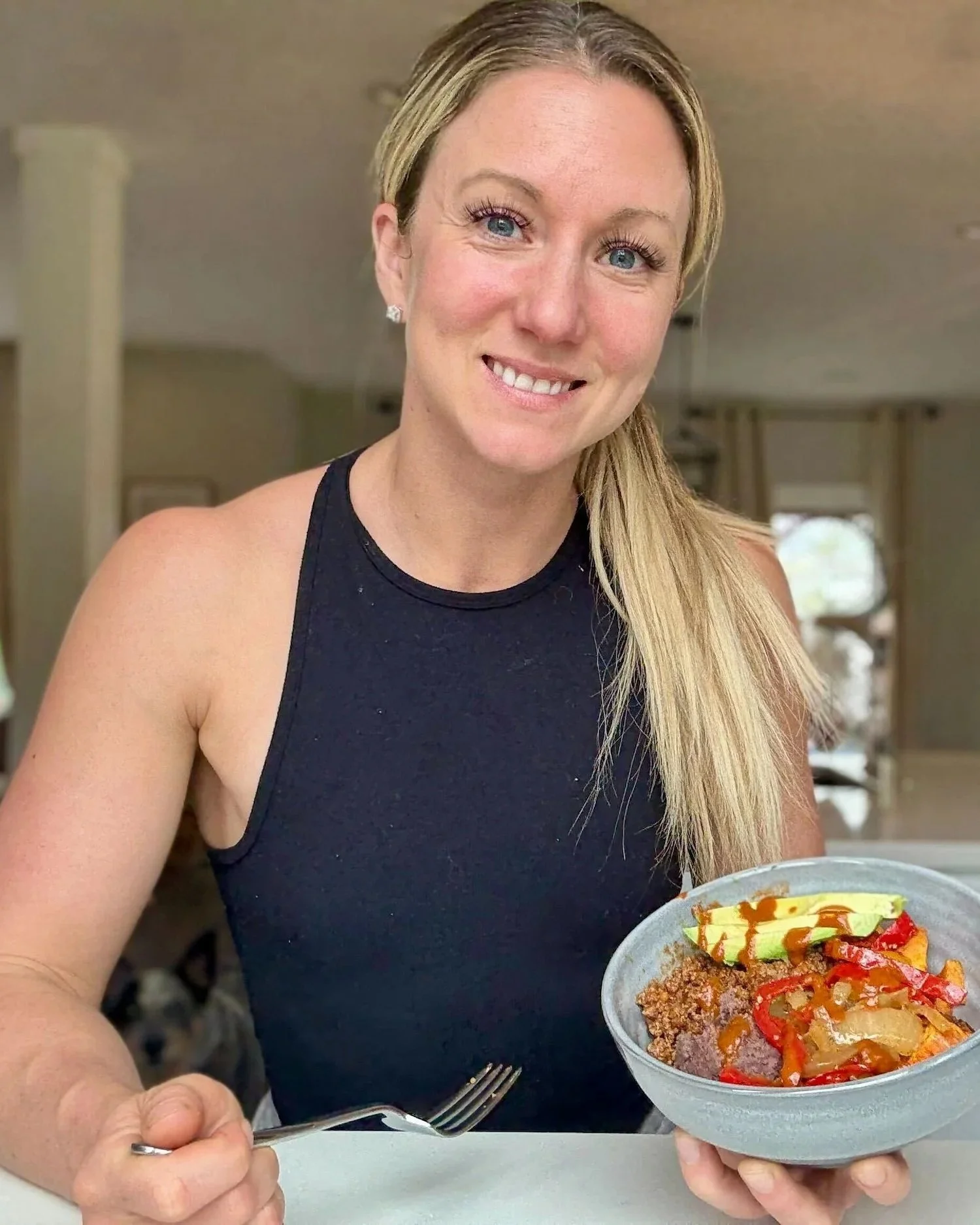
BLACK IRON RADIO EP. 311: So You Want To Ditch Diet Culture in 2026
We've been conditioned to believe health has a look, and that if we don't match it, we must be doing something wrong. That assumption leaves a lot of people feeling like failures, even when they're showing up consistently and doing their best.
Christin, Jess Gordon and Sam (RD) unpack why appearance is a poor proxy for health and how genetics, environment, mental health, access to care, and life circumstances all play a role in what health actually looks like for different people.
The conversation breaks down the limitations of body composition as a metric, why social media distorts our perception of "healthy," and how focusing on behaviors > aesthetics creates a more realistic, compassionate, and sustainable framework for health.
If you've ever judged your progress by the mirror, the scale, or someone else's body, this conversation offers a needed reframe.
📲 Listen & Subscribe: Apple Podcasts | Spotify
Our society has been conditioned, often without even realizing it, by media, Instagram, fitness culture, and even our healthcare system to judge health by appearance. We look at ourselves in the mirror, we look at others, and we make snap judgments about who's "healthy" based solely on what we see on the outside.
As coaches, we see this all the time. Clients feel like failures even when they're doing everything right. They compare themselves to someone else's highlight reel without seeing the big picture, believing that if they just looked like that person, they'd finally be happy and healthy too.
But appearance is such a small, incomplete picture of who someone is as a human being. It's time we dig deeper into what health actually means, and why it has so much less to do with how you look than you've been led to believe.
What Health Actually Is: The Health Triangle
Let's start with a proper definition of health, because understanding this can change everything about how you approach your wellbeing.
Think of health as a triangle made up of three interconnected components that work together to help your body feel well:
Physical Health
This is the most visible side: moving your body, eating in a way that fuels you, sleeping enough, and taking care of your medical needs. It's pretty straightforward and tends to be what people focus on exclusively. But it's only one piece of the puzzle.
Mental and Emotional Health
This is your inside world: managing stress levels, your self-talk, your coping skills, and your emotional wellbeing. Here's a perfect example of why appearance doesn't equal health—you can look "healthy" on the outside while struggling deeply on the inside. And that struggle absolutely impacts your overall health.
Social Health
This includes your support system, connections, friendships, relationships, your ability to communicate, and set boundaries. As humans, we're wired for connection. If this side is weak, everything else becomes harder.
Here's the key: if one side of this triangle is tiny, the rest of the shape collapses. When all three sides are supported (they don't have to be perfect, just supported), that's real, attainable, sustainable health. It's not about perfection—it's about balance across all three dimensions.
The Problem with Using Appearance as a Health Metric
Remember what we teach kids? You can't judge a book by its cover. That wisdom applies here more than anywhere.
You cannot look at a human being and assume you know anything about them—least of all what's going on inside their body.
Someone who appears thin might be struggling with chronic depression, anxiety, nutrient deficiencies, or any number of internal health issues. On the flip side, someone in a larger body could have perfect blood pressure, excellent cholesterol levels, and be metabolically healthy.
When Weight Loss Isn’t What It Seems
Think about this: someone you've known for 10 years loses a significant amount of weight. Your first thought might be, "Wow, they really got their life together. They look so healthy now!" But what if they have cancer? What if they're dealing with a serious illness that's causing that weight loss?
It's not our business to judge others based on their appearance, and we need to stop making those same judgments about ourselves. The belief that "I gained weight, so I'm getting unhealthier" or "I lost weight, so I'm getting healthier" is a dangerous oversimplification. Health and size are not connected in the way we've been taught to believe.
The Social Media Trap
When you're scrolling Instagram and start compare yourself to someone else, remember a few critical things:
You're seeing 60 seconds of someone's 24-hour day. You're not seeing what's happening the other 23 hours and 59 minutes. You're not seeing their struggles, their bad lighting, their bloating, their off days, or their reality.
Lighting is everything. Any influencer will tell you honestly—they know exactly which bathroom, which angle, which time of day makes them look their best. That overhead side lighting with a good tan? Magic. But it's just a snapshot, not reality.
The fitness industry is a small corner of the world. When you surround yourself with fitness content constantly, it feels like everyone is working out six days a week, running in their garage before work, and living that lifestyle. But this is an incredibly niche subset of the population. It can feel like you're behind, but you're comparing yourself to a very specific, very small group.
Everyone curates their content. Just like you'd choose the best photo from your wedding to print and frame, everyone online is presenting the version of themselves they feel best about. That's completely normal and human—but you need to remember that everyone has photos they immediately delete and moments they don't share.
Why Body Composition Doesn't Tell the Whole Story
Your body composition—the ratio of fat to muscle, your bone structure, your frame size—can tell you something about your genetic makeup and family history. But it doesn't tell you nearly as much about your health as you think.
Better Markers of Health
Instead of obsessing over how you look, consider these actual indicators of health:
Blood pressure
VO2 max (cardiovascular fitness)
Cholesterol panel
Blood sugar levels
Liver function
Hormone levels
How you feel and function daily
Notice what's not on that list? BMI. Body fat percentage. The size of your jeans.
The Visceral vs. Subcutaneous Fat Truth
Here's something important: visceral fat (fat around your organs) is a major risk factor for disease. Subcutaneous fat (fat just under your skin) is not nearly as concerning from a health standpoint.
But here's the kicker: you cannot look at someone and know which type of fat they're carrying. Someone in a larger body might have perfectly healthy fat distribution. Someone in a smaller body might have concerning visceral fat. You literally cannot tell by looking.
Our metabolic health is so much bigger than our muscle-to-fat ratio, and there's a wide range of body compositions that are perfectly healthy. This gets lost when we're bombarded with images of ultra-lean people all day on social media.
The Genetics Reality Check
Imagine two people doing the exact same thing every single day—same schedule, same workout routine, same meals. They can still look completely different. Not similar with slight variations—completely different.
Real-World Example
One of our coaches trains with her best friend. They've been CrossFit partners for 6-7 years, doing the same training program, eating similarly, and working toward the same goals. One is leaner and longer, while the other has thick, powerful quads. But here's the thing: they squat the exact same weight.
You'd look at them side by side and assume the one with bigger legs could squat significantly more. But their lifts are identical. One body type isn't better or worse—they're just different expressions of the same strength and capability.
This isn't an isolated example. Another pair of longtime training partners are the same weight and have been for years, but their bodies couldn't look more different. One carries more muscle in her upper body, the other in her lower body. Both are strong, healthy, and capable—just different.
The 9am Mom Crew Phenomenon
Here's a gym reality check that perfectly illustrates this point: the person who walks in looking super fit with visible abs? They might get absolutely demolished by the 9am class full of moms who don't have that aesthetic look.
Those women can row at insane wattages, lift impressive weights, and have cardiovascular systems that put "aesthetic" athletes to shame. They're metabolically healthy, strong as hell, and incredibly fit—but they might not look like what Instagram has told us "fit" looks like.
You're the muscle car sitting in the garage looking pretty, but can you actually go down the street? Can you perform? Because that's what fitness and health actually are.
The Bodybuilding Paradox
Here's something that perfectly captures the disconnect between aesthetics and health: bodybuilders in prep for a competition.
People watch these athletes get leaner and leaner each week and think, "That's the goal. That's health." But every single bodybuilder will tell you that what they're doing during prep is not healthy. They're the first ones to say it. The extreme leanness you see on stage? That's not sustainable, it's not healthy, and it takes a massive toll.
We see the stage picture—the sparkly bikini, the heels, the perfect lighting—but we don't see the brutal cut that got them there. Those athletes know very well that their competition physique is a snapshot, not a lifestyle. Chasing that look as your everyday reality would send you down a dangerous path very quickly.
When Aesthetic Goals Hold You Back from True Fitness
Here's a heartbreaking reality we see as coaches: athletes who want to fit a certain aesthetic mold, and it holds them back from achieving their actual fitness and performance goals.
They're afraid of gaining a few pounds or not having visible abs year-round (which isn't a marker of strength or health, by the way). So they undereat, underperform, and never reach their potential.
The Weight Moves Weight Truth
If you want to lift heavier weights, you need to fuel adequately—and often, that means weighing more. You can't gain 30 pounds of muscle without gaining 30 pounds. The scale has to move up if muscle mass is truly your goal.
This is a hard pill to swallow when you're attached to a certain clothing size or a specific number on the scale. But here's the reality: those tiny running shorts from 10 years ago? They might not fit anymore if you achieve your strength goals. And that's not a failure—that's progress.
Real Stories from the Trenches
One of our coaches shared her experience: when she was at her leanest 10 years ago, competing in a lighter weight class, people would look at old photos and say, "Wow, you were so shredded!" And yes, you could see all those little muscle definitions.
But here's what they didn't see: she was freezing cold all the time, standing over the toaster at work just to warm up. Her period was irregular, and she kept attributing it to other things instead of recognizing it as a red flag. She dealt with injuries constantly.
After gaining weight and fueling properly? No more injuries. Regular cycles returned. She got stronger and hit PRs she couldn't touch before. That "shredded" look? It came with a massive health cost that wasn't visible in the photos.
Another coach was told by her nutrition coach, "Honey, we have to gain some weight if you want to get stronger." Her response? "Wait, I thought I was supposed to be skinny." She had to unlearn everything diet culture taught her about what fitness "should" look like.
The Chapter-of-Life Perspective
Here's some grace you need to give yourself: your life is going to change. The chapters you're in will shift. Your goals will evolve. The way you see yourself will transform.
You'll go through seasons where stress, anxiety, and social aspects of life are really hard, and the physical side of your health triangle takes a back seat. You'll go through other seasons where you feel like you've got it all together, but maybe you're not as strong as you were before.
And that's okay. You're not always going to have a perfect health triangle, and that's just part of being human.
This is exactly why having a coach is so valuable—someone who can help you navigate these seasons, adjust your approach, and keep perspective on what actually matters for your health in each phase of life.
What Black Iron Does Differently
At Black Iron, we're behavior-focused. We can work with macros if that's helpful for you, or we can take a completely macro-free approach. We truly meet you where you're at.
Every coach on our team has been both the client and the coach. We've lived through the struggles of trying to fit an aesthetic mold, learned the hard way that appearance doesn't equal health, and come out the other side with a much more balanced, sustainable approach.
Goals should be based around behaviors and actions—things you can actually control. We can't always control outcomes. As we've established, everyone's genetics are different, and no coach can guarantee you'll look exactly like someone else.
What we can control right now, today, is a behavior. Focusing on health behaviors—not just physical health, but mental, emotional, and social health too—is how we actually nourish our wellbeing.
Actionable Takeaways
If you're reading this and recognizing yourself—if you've been judging your health based on appearance or comparing yourself constantly to others—here are concrete steps you can take:
Clean Up Your Social Media Feed
If someone makes you feel bad about yourself when you see their content, unfollow them immediately. Even if it's someone you know personally, Instagram has features that let you mute or hide their posts without unfollowing.
Your social media should inspire you, educate you, or bring you joy. If it's making you feel inadequate or triggering unhealthy comparisons, it needs to go. You're probably doing much better than you think you are.
Create Non-Aesthetic Health Metrics
Sit down for 10-15 minutes and create some long-term metrics for assessing your health that have absolutely nothing to do with your body size or appearance:
Track your blood pressure over time
Monitor your resting heart rate as your fitness improves
Get regular lab work and watch your cholesterol, blood sugar, and other markers
Measure your performance: Can you run farther? Lift heavier? Recover faster?
Assess your mental health: Are you sleeping better? Feeling less anxious? Managing stress more effectively?
Evaluate your social connections: Do you have people you can rely on? Are your relationships fulfilling?
Set aside the scale and the tape measure for a bit. Find other ways to measure your progress that actually reflect your health across all three sides of the triangle.
Ask Yourself What Really Matters
Think deeply about what will actually make you happy. Is that number on the scale really going to change your life? Or is it the people you connect with, the community you surround yourself with, the way you talk to yourself, and the energy you have to live your life fully?
It's probably not a physical picture or a number. It's probably everything else around you.
Give Yourself Compassion
You're navigating a world that has constantly told you that your worth is tied to your appearance. That's a heavy burden to carry, and it's not your fault that you internalized those messages.
Be patient with yourself as you unlearn these beliefs. Seek help when you need it—whether that's a coach, a therapist, or a supportive community. Find balance where you can, and extend yourself the same compassion you'd offer a friend struggling with these same issues.
The Bottom Line
There is so much more to your health than what you see in the mirror or on the scale. Your deep health, your genetics, your mental and emotional wellbeing, the quality of your relationships—these things matter infinitely more than whether you have visible abs or fit into a certain size.
When you allow your health to be what it is in your current chapter of life, when you look for help and find balance, and when you give yourself compassion instead of criticism, you can go so much farther and feel so much better day to day.
Your body is not an ornament—it's the vehicle that carries you through your life. Treat it with respect, fuel it adequately, move it joyfully, and measure its success by what it can do, not how it looks.
Because at the end of the day, health isn't about fitting into someone else's aesthetic ideal. It's about having the energy, strength, and mental clarity to live the life you actually want to live.
Ready to work with coaches who prioritize your actual health over arbitrary aesthetic standards? Check out our coaching services at Black Iron Nutrition. We're here to help you build sustainable habits that support your wellbeing across all dimensions—not just the physical.
🎙️ WANT MORE? SUBSCRIBE TO BLACK IRON RADIO!
If you enjoyed this conversation, check out more episodes of Black Iron Radio, where we cut through the noise and give you real, no-BS advice on feeling, performing, and looking your best. Each week we share practical nutrition, training, and wellness strategies and tips to help you succeed.
📲 Listen & Subscribe: Apple Podcasts | Spotify
