
Aging & Recovery: How to Adapt as You Get Older
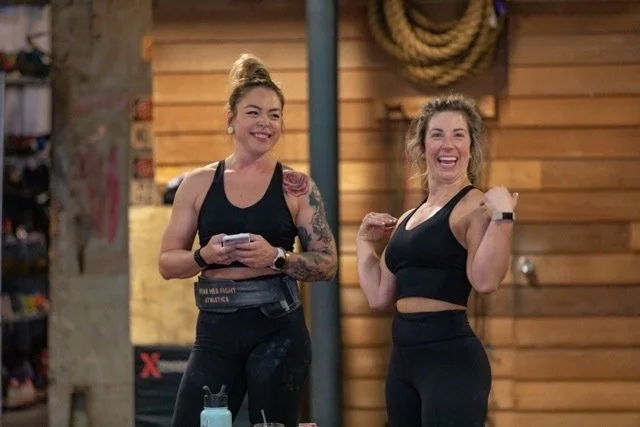
BLACK IRON RADIO EP. 333: Aging & Recovery: How to Adapt as You Get Older
Getting older is not the problem. Acting like you can recover the same way you did a decade (or two) earlier might be.
Morgan, Jess S, and Joyce get into what changes with recovery as you age, and why "I'm just older now" is usually an incomplete explanation. They talk through the real stuff that matters: lower tolerance for stress, shifts in sleep and hormones, slower muscle repair, higher protein needs, and why recovery has to become more intentional if you want to keep performing well and feeling like yourself. They also dig into wearables, HRV, and recovery scores, including how to use that data without letting it ruin your day.
If you've been feeling more beat up, more inflamed, or less resilient than you used to, this one will help you stop guessing and start recovering smarter.
📲 Listen & Subscribe: Apple Podcasts | Spotify
Here is the truth about recovery that nobody really wants to hear: the older you get, the more seriously you have to take it.
That is not a doom and gloom statement. It is actually really empowering information. Because unlike a lot of things that change as we age, recovery is something we have real influence over. We just have to stop treating it like an afterthought.
Morgan, Jess, and Joyce sat down to talk through what recovery actually is, how and why it shifts as we age, and what you can do right now, no matter what decade you are in, to protect your performance, your health, and your longevity.
What Is Recovery, Really?
Recovery is your body's ability to tolerate and adapt to stress. Life is stressful. Training is stressful. And as Joyce put it, recovery comes down to two things: physical readiness and nervous system readiness. Both matter, and they can be affected independently of each other.
You might have experienced this without knowing what to call it. You show up to the gym, your muscles feel okay, but your hips just are not snapping on the clean. The bar feels slow. Nothing is firing the way it should. That is not a bad attitude. That is an under-recovered nervous system.
This is where wearables can actually be useful. Heart rate variability, or HRV, is one of the best indicators of nervous system readiness. A dip in HRV can mean your sleep was disrupted, your body is fighting off something, your hormones are fluctuating, or you under-ate the day before. It does not give you a verdict, but it does give you data, and watching the trends over time is where the real value is.
Creatine kinase, or CK, gives you a separate but equally important picture: how much tissue disruption is happening in your muscles. Think of HRV and CK as telling you two different stories. One is about your brain and nervous system, one is about your body and muscle tissue. You want both telling you that you are ready before you push hard.
What Changes as We Age
As we get older, we produce less testosterone and less human growth hormone. Both of those hormones are directly responsible for signaling your muscles to rebuild and repair after training. Less signaling means slower repair. It is that straightforward.
What this means practically is that the recovery protocol you could get away with in your twenties will not cut it in your forties. It is not that you become less of an athlete. It is that your body requires more intentionality to do the same job.
There is also something called inflammaging, a term for the low-grade, chronic inflammation that quietly builds as we age. It does not always have obvious symptoms, but over time it can contribute to cardiovascular disease, joint degeneration, metabolic issues, cognitive decline, and increased risk of injury. Think of it like background noise in your body that gets louder over the years. When you are 20, the room is silent and you can hear a pin drop. By your fifties, there is constant noise. Your body has less capacity to filter it, which means it also has less capacity to recover without help.
This does not mean you are destined for decline. It means you have to be smarter, more consistent, and more proactive than you were before.
Why Sleep Is Non-Negotiable
We talk about sleep a lot here, and that is not because we have run out of topics. It is because the research keeps pointing back to it as one of the most powerful recovery tools we have.
During deep, slow-wave sleep, growth hormone output peaks. This is when muscle protein synthesis happens, when cognitive tissue repairs, when fat metabolism is supported, and when cellular regeneration occurs. If your sleep is disrupted by late nights, alcohol, stress, or screens, your GH output drops, and so does your body's ability to rebuild.
Here is the kicker: slow-wave sleep decreases naturally as we age. So not only do we have less testosterone and GH during waking hours, we are also getting fewer of the deep sleep cycles where those hormones do their best work. You cannot fully stop this process, but you can protect your sleep quality and make the most of what you have.
A few things worth knowing:
Less than six hours of sleep on average reduces strength gains by about 30% and significantly increases injury and illness risk. People sleeping under six hours are four times more likely to get sick after a viral exposure compared to those getting seven or more. For women, research that finally started accounting for female physiology suggests the actual target is closer to eight and a half to nine hours, not the six-hour floor that older guidelines were built on (built mostly on data from men).
Sleep also plays a major role in immune function. During sleep, your body produces cytokines, proteins that help regulate inflammation and immune response. When you consistently undercut your sleep, those systems become dysregulated. Over time, poor sleep contributes to the same kind of chronic inflammation we already talked about with aging. It compounds the problem.
And for athletes specifically: the skill work you did in your session gets consolidated during sleep. The timing, the movement patterns, the muscle memory. It is not just rest. It is training.
Nutrition Shifts as You Age
Protein is the obvious place to start, and for good reason. As we age, our bodies become less efficient at muscle protein synthesis. That means we need more protein, not less, to maintain muscle mass, support tissue repair, and help with satiety as our lifestyles and activity levels change.
The target we generally work toward is 1.5 to 2 grams of protein per kilogram of body weight, and for older athletes we tend to lean toward the higher end of that range. If you are a master's athlete who has been steeped in diet culture and has spent years eating less to weigh less, this might feel counterintuitive. But under-eating is one of the most common things we see in that demographic, and it is also one of the things that makes aging harder.
Chronically undereating raises stress hormones and increases inflammation. If you are already dealing with the background noise of inflammaging, under-fueling is pouring gas on the fire.
Carbohydrates are also a recovery tool, and one that gets unnecessarily villainized. Carbs replenish glycogen in your muscles and liver, and they help lower cortisol after hard training sessions. Cutting carbs post-workout, especially as you get older, is counterproductive. Pairing protein with carbs around training is one of the most effective things you can do to support recovery.
A few micronutrients that matter more as we age:
Vitamin D directly supports muscle function and immune regulation. Deficiency is extremely common in older adults, and even more so in people with more melanin, since the skin's ability to synthesize vitamin D from sunlight decreases with higher melanin levels. Most people benefit from supplementing.
Magnesium supports sleep quality, muscle relaxation, and helps reduce inflammatory markers. Most athletes are at least subtly deficient, and it is tough to get enough from food alone.
Zinc supports tissue repair and hormone production. It is commonly taken during cold season, but its benefits go well beyond immunity.
As always, food first. Get as many of these from whole foods as you can, and supplement where it makes sense after that foundation is in place.
What to Prioritize by Decade
Recovery is not one-size-fits-all, and it does not look the same at 25 as it does at 55. Here is a general framework based on what we know about how the body changes over time.
In your twenties: Sleep and eating enough are the two biggest levers. You have the most biological cushion right now, but you are also building habits and a foundation. Use it wisely.
In your thirties: Life stress is usually higher, careers are demanding, families are growing. Sleep quality matters just as much as duration now. Deep, uninterrupted sleep is the goal, not just time in bed. Train smart, not just hard.
In your forties: Connective tissue recovery slows down. Protein becomes a non-negotiable priority. Active recovery and lower-impact training days are worth adding deliberately, not just on days you feel beat up.
In your fifties: Joint stiffness is a structural reality. Nervous system fatigue is more noticeable. Build longer warmups and cooldowns into your training. Low-intensity work for blood flow and circulation matters more here, not less.
In your sixties: Tissue resilience decreases and the injury threshold is lower. The worst response to this is to stop training altogether. The goal is frequent, smart movement: mobility work, low-resistance training, protected sleep hygiene, and protein every single day.
What We Are Actually Doing
At the end of the day, all of this information only matters if it changes behavior. So here is what actually makes a difference in practice.
Joyce focuses on anti-inflammatory foods, colorful produce and berries every morning, olive oil, and leafy greens, and she has gotten more intentional about winding down before bed. No intense TV or disturbing content in the hour before sleep. It matters more than most people realize.
Jess, who recently turned 37, prioritizes her sleep environment as a non-negotiable. The bedroom is only for sleep, and she and her husband work as a team to protect their rest even with a baby in the house. She also gets bloodwork done with a functional medicine doctor every three months to stay on top of her markers and catch anything before it becomes a bigger issue.
Morgan gets outside first thing in the morning for sunlight exposure and has made a habit of reading before bed instead of scrolling or watching something. The difference in sleep quality is noticeable.
For nutrition, the simplest rule: every time you sit down to eat, make sure there is a protein source on the plate. It does not have to be complicated. A handful of rotisserie chicken, a few slices of deli meat alongside your oatmeal, Greek yogurt with your fruit. Just make it a habit at every meal.
Recovery does not require a complete lifestyle overhaul. It requires a little more attention than you used to give it, and a willingness to take it as seriously as your training. Start there.
Want to go deeper on sleep and how it affects performance? Check out Sleep and Gains: How Rest Reshapes Your Results. And keep an eye out for an upcoming deep dive on inflammation, what it actually means, how to tell the difference between the hype and the real risk, and what you can do about it.
🎙️ WANT MORE? SUBSCRIBE TO BLACK IRON RADIO!
If you enjoyed this conversation, check out more episodes of Black Iron Radio, where we cut through the noise and give you real, no-BS advice on feeling, performing, and looking your best. Each week we share practical nutrition, training, and wellness strategies and tips to help you succeed.
📲 Listen & Subscribe: Apple Podcasts | Spotify
