
26.3 CrossFit Open Nutrition Strategy
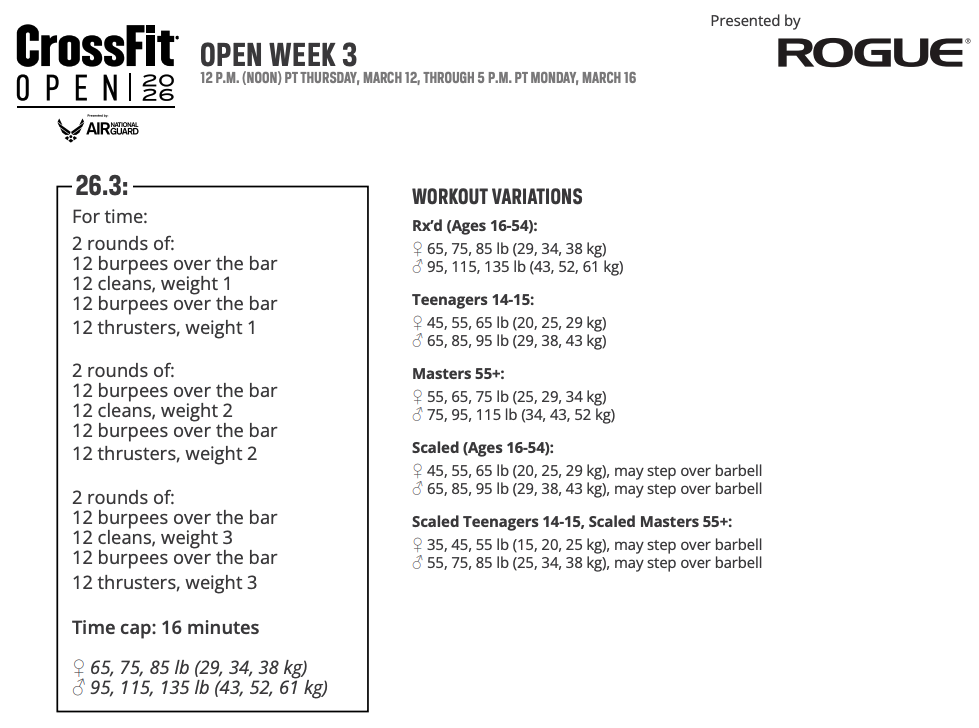
So total volume is:
144 burpees over bar
72 cleans
72 thrusters
Our Thoughts:
99% of us are not going to finish this workout, so our mindset is we have a 16-minute workout.
There is not much "skill" in this workout. The limiting factor for some may be the increase in weight. So, we may see some PRs on the cleans and thrusters — how cool!
For both of these cases, eating some extra carbs won't hurt. Feel free to eat a bit more carbs than you normally do the night before and day of the workout.
As always, we do not want to try new foods the day before or day of the workout.
Nutrition Strategy: If You Plan to Do the Workout in the Morning
90-120 minutes before the workout, eat a light, higher carb, moderate protein meal that digests easily. Do not try any new foods — stick with what you know sits well and digests easily for you. Minimal fiber and lower fats.
Macro targets (varies based on athlete):
40-80g carbs
20-35g protein
15-20g fat or less
Good options:
Oatmeal or overnight oats w/ protein powder and dried fruit/nuts
Banana w/ PB and honey on an English muffin w/ Greek yogurt
Rice cakes topped w/ honey and a protein shake
Toast w/ PB & jam and eggs or egg whites
Bagel w/ butter, jam/honey and whey protein
Drink 16-20 oz water w/ electrolytes and 100-200mg caffeine if you normally use it.
15-20 minutes before the workout: If you feel like you need a small boost, add some quick carbs like half a banana, an applesauce pouch/Fuel 4 Fire, a small carb drink (15-20g carbs), or gummy snacks/strips. For this workout, a little top-off may be helpful!
Nutrition Strategy: If You Plan to Do the Workout in the Afternoon
Your breakfast should look very similar to what you normally eat on a day you train later in the day. Consistency is actually one of the best things you can do for performance. If anything, slightly prioritize a bit more carbs. Since workouts like 26.3 are high intensity and glycolytic, leaning a bit more toward carbs is helpful. Think a slightly bigger oatmeal portion, a little extra fruit or honey, an extra slice of toast, or oats topped with granola. Most athletes perform best when they don't dramatically change food choices on competition days.
Lunch timing: Ideally eat 2-3 hours before the workout. This gives enough time for digestion and allows glucose to enter the bloodstream for training. If you're working out closer to lunch (60-90 min after), the meal should be smaller and very easy to digest.
Goal macros (varies by athlete):
30-45g protein
60-90g carbs
10-15g fat
Low fiber
Carbs should be easy-to-digest starches.
Example lunch options:
Chicken breast w/ white rice, guac, and a piece of fruit
Turkey sandwich on sourdough w/ fruit and pretzels
Lean ground beef bowl w/ potatoes or rice and pickled veggies
Protein smoothie w/ bagel, honey, or jam
20-30 minutes before the workout: Add a small carb top-off if needed. Quick carb options (15-25g): applesauce pouch, half banana, honey packet, or a small sports drink.
Aim for 20-30 oz fluids between lunch and the workout, plus 100-200mg caffeine if that's your norm!
Nutrition Strategy: If You Plan to Do the Workout in the Evening (Friday Night Lights)
This is when most people will perform the workout. You'll likely have time to get 2-3 meals in before hitting it. Here is what we suggest:
Meal 1: Feel free to eat your normal breakfast. Ideally we want a balance of protein, carbs, and fat. If you normally eat more fat later in the day, we would recommend increasing the fat in this meal and decreasing it at meal 3.
Meal 2: This is the meal where we start increasing carbohydrates and decreasing fat. We also want to drop the fiber here as well. If you normally eat a chicken, rice, and broccoli bowl — think about ditching the broccoli and increasing the rice!
Meal 3: This is your pre-workout meal. Ideally this will be 1.5-2 hours before you hit the workout. Keep this meal low in fiber. The workout is pure work — we don't need any GI issues. Remember, nothing new. This pre-workout meal should be what you normally eat before every training session.
10-15 minutes before you start: Take a few small sips of Gatorade or have a few gummy candies.
Tips from Coach Kelly: Focus on What We Can Control
You may love this workout, you may hate this workout. The idea here is that the workout is what it is. What we can do is focus on what we can control.
Sleep: What we do the night before matters!
Mindset: Choosing a mantra before you start can be so helpful when you are in the "pain cave." Pick one that you can rely on when you want to stop, slow down, or quit. Two of Kelly's favorites: "In a little bit this will be over and I won't remember the hurt" and "One rep at a time, chip away."
Attitude: How you show up matters. This is what Kelly likes to call "fake it til you make it." Even if you hate this workout, fake that you like it. Just a switch in attitude can take us from "this sucks" to "I am going to do my best!"
Strategy: If you want the best outcome, it may mean leaving your ego at the door. Proving you can go unbroken is cool, but it may leave you standing around with your hands on your knees later in the workout. Pace the race!
Did You Know? Why Sleep Matters
Good sleep leading into big workouts supports:
Muscle repair
Glycogen (energy) storage
Hormone balance
Nervous system recovery
Better power, coordination, and reaction time
Lower perceived effort during hard workouts
Practical tips to improve sleep before an event:
Go to bed 15-60 min earlier the 2-3 nights before. Even incremental shifts can make a huge difference!
Cut caffeine by noon
Dim lights and limit screen time 60 min before bed (bonus if you can get morning and/or evening natural light exposure outside)
Keep your room cool, dark, and quiet
Write out your workout plan before starting your wind-down routine to clear your brain and reduce pre-bed stress
Eat a carb-rich dinner early enough to avoid going to bed over-full
Sleep before a big workout matters — but one bad night won't ruin your performance. Pre-competition nerves are normal, and many athletes sleep poorly the night before. If you've been prioritizing sleep all week, your body is resilient enough to handle it.
Focus on getting quality sleep earlier in the week so one restless night doesn't derail you.
