
Common Period Side Effects and How to Manage Them
BLACK IRON RADIO EP. 335: Common Period Side Effects and How to Manage Them
Periods can bring a whole lineup of side effects: cramps, mood swings, sleep disruption, bloating, digestive chaos, and the sudden urge to fight your partner because they breathed wrong.
Morgan, Lauren, and Amanda break down what's actually happening physiologically during the menstrual cycle, why some symptoms hit harder than others, and what can help from a non-medical, practical standpoint.
They get into cramping, insomnia, mood changes, gut issues, water retention, stress, magnesium, and the difference between normal cycle-related changes and signs that something more serious may be going on. It's a grounded conversation on how to better understand your body, manage common symptoms, and stop feeling like you need to just suffer through it.
📲 Listen & Subscribe: Apple Podcasts | Spotify
If you've ever felt like your period is working against you, you're not alone. Between the cramps, the sleepless nights, the mood swings, and the digestive chaos, it can feel like your body is staging a full revolt once a month. But here's the thing: a lot of what you're experiencing isn't random, and it's not weakness. It's biology, and understanding it can genuinely change how you relate to your own cycle.
In this post, we're breaking down some of the most common period symptoms, including cramping, insomnia, mood shifts, and digestive changes, and covering practical, non-medical interventions you can actually use at home.
Cramping (Dysmenorrhea): What's Really Happening
Cramping during your period comes down to prostaglandins, hormone-like compounds that trigger uterine contractions to help shed the uterine lining. The catch is that those contractions don't stay contained to the uterus. They affect the surrounding muscles and organs too, which is why you might experience everything from lower abdominal pain to what can only be described as "butt lightning" (yes, that sudden stabbing pain that shoots up from the rectum, a real and extremely unpleasant thing) to more frequent bowel movements, aka the period poops.
Reduced blood flow during this time lowers oxygen delivery to the muscles, which amplifies pain. And if your cramping is severe enough that you're missing work, skipping workouts, or flattened on the couch with Advil that isn't even touching it, that may be worth a conversation with your doctor to rule out conditions like endometriosis, adenomyosis, or fibroids.
For most people, though, there's a lot you can do to take the edge off:
Movement helps ease muscle contractions, and it doesn't have to mean the gym. A walk, some yoga (there are even specific flows designed for menstrual cramps), or gentle stretching can all make a real difference.
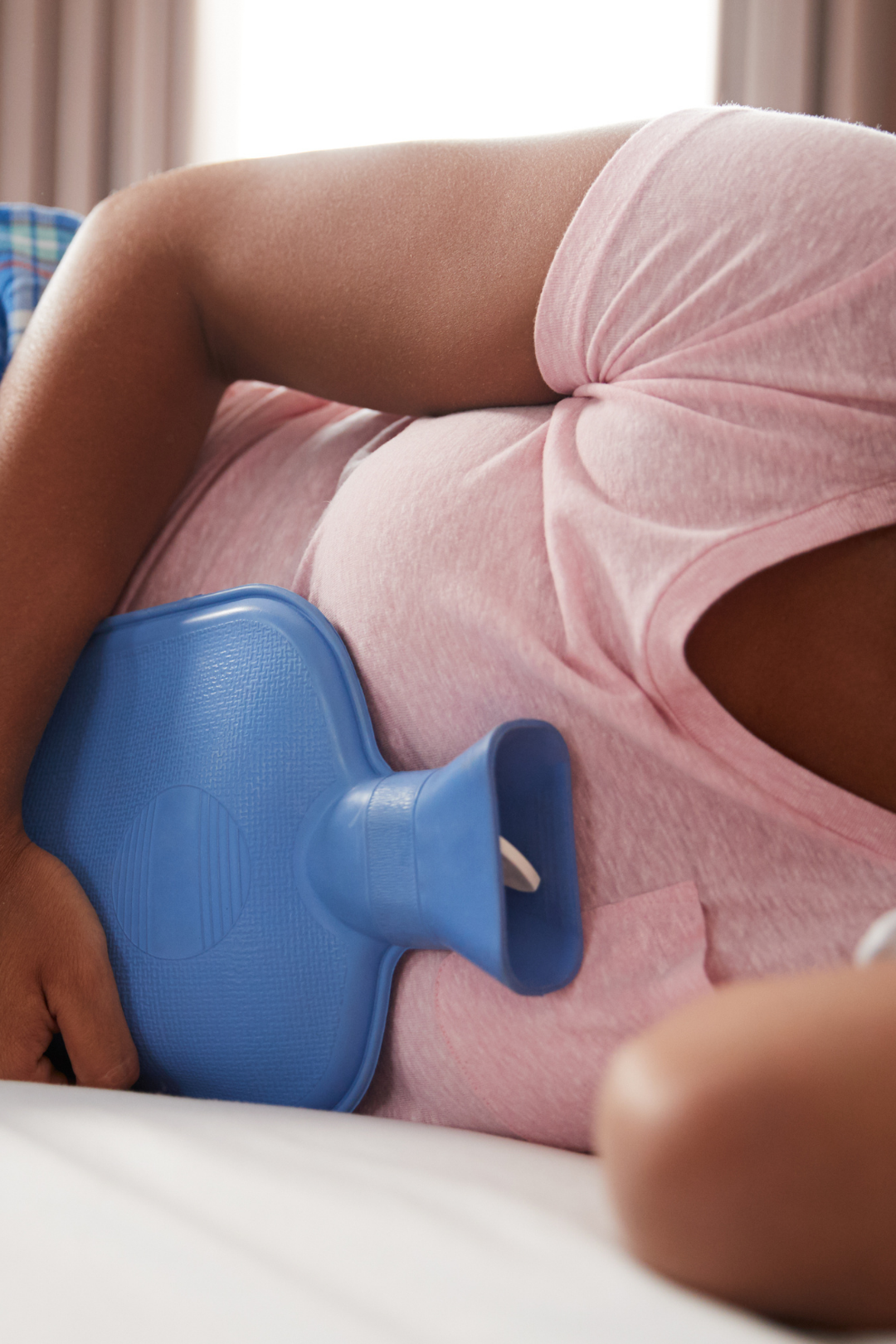
Heat is your friend. Heating pads, hot baths, and warm wraps increase circulation and help relax tight muscles.
Magnesium is probably the biggest supplement worth knowing about here. It helps relax uterine muscles, improves circulation, and calms pain signaling at the nervous system level. Magnesium glycinate tends to be well-tolerated and effective; magnesium citrate and malate are also options. Starting about three to five days before bleeding and continuing through the first day or two of your period is a reasonable approach, though always check with your doctor for any contraindications.
You can also get magnesium through food: dark chocolate, avocado, nuts, seeds, legumes, dark leafy greens, bananas, and fatty fish like salmon are all solid sources. If your diet is already magnesium-rich, you may find your cramping is less severe to begin with.
Other anti-inflammatory supports worth considering include ginger tea, fish oil, and curcumin or turmeric. And as with most things, reducing alcohol, moderating sugar intake, and prioritizing sleep in the days leading up to your period can also help reduce overall symptom severity.
Insomnia and Sleep Disruption: Why Your Brain Won't Quiet Down
If you've ever gone from sleeping totally fine one night to waking up at 2 a.m. for no apparent reason the next, there's a neurochemical explanation for that. During the luteal phase (the window right before your period), progesterone drops, and with it, GABA support decreases.
GABA (gamma-aminobutyric acid) is an inhibitory neurotransmitter that acts like your nervous system's brake system. It regulates mood, sleep, and stress response, and it peaks around ovulation. When it dips during the luteal phase, your nervous system shifts into a more activated state. Pain feels louder, stress feels bigger, and sleep becomes fragmented, even if you're in bed for a long time.
Body temperature also plays a role. Core temperature is slightly elevated during the luteal phase and drops again once you move into the follicular phase. Since a cooler environment supports better sleep, you might find that turning on a fan, cracking a window, or taking a warm shower before bed (which triggers a cooling effect as you drift off) makes a noticeable difference during this window.
The magnesium connection matters here too. Magnesium is a co-factor for GABA activity, so if you're already running low on magnesium, thanks to training demands, chronic stress, or just diet gaps, your sleep disruption during the luteal phase can be even more pronounced.
Standard sleep hygiene still applies and is especially important during this time: consistent sleep and wake times, cutting caffeine after noon, and a predictable wind-down routine. One thing that tends to get overlooked is stimulus reduction. Even content you normally enjoy, podcasts, news, social media scrolling, can feel like too much when your nervous system is already running hot. A lot of people find that putting the phone away earlier and keeping evenings low-input during the luteal phase genuinely helps them settle.
Mood Shifts: It's Not in Your Head
This one comes up constantly. During the late luteal phase, irritability, anxiety, tearfulness, and short fuses are incredibly common, and they have a real physiological basis.
The star of the show here is allopregnanolone, the neurosteroid that progesterone produces. It's what increases GABA activity and keeps your emotional responses regulated. When progesterone drops and allopregnanolone follows, that filter disappears. Things that wouldn't have bothered you on a Tuesday can feel genuinely threatening on a Friday in your late luteal phase.
Here's the evolutionary piece that makes this make a lot more sense: when your body registers that you're not pregnant after ovulation, your brain shifts from a nurturing, community-oriented mode into a hyper-threat-focused one. It starts scanning for danger, for social fractures, for unmet needs. Old insecurities surface. Past failures feel current. Your partner's minor irritating habits suddenly feel like evidence of their fundamental inadequacy.
This isn't irrational. It's your brain trying to protect you during a phase when your iron is lower, your energy is reduced, and your body is more physically vulnerable. It wants you embedded in a safe, trustworthy environment. But in modern life, it means you might feel like everything is catastrophically wrong when actually, you're just in your luteal phase.
Knowing that doesn't make the feelings go away, but it can help you not act on every single one of them. Some things that can help:
Reduce stimulus. This isn't the week to have the hard conversations, catch up on upsetting news, or fall down a social media spiral before bed. Keeping evenings low-key and connection-focused, rather than rehashing the most stressful parts of your day, can keep your nervous system from tipping further into overdrive.
Brain dump instead of suppressing. Journaling or even just writing down the thoughts that are circling doesn't require any formal process. It just gets them out of your head. You can always revisit them later when you're in a more regulated state and assess which ones are actually worth addressing versus which ones were just the luteal phase talking.
Look for patterns across cycles. If the same theme keeps coming up every month, whether it's a relationship concern, a career regret, or something you keep putting off, that's worth paying attention to. Your period isn't creating problems out of nowhere; it's lowering your threshold for noticing things that are already there.
A Note on Cortisol and the Stress Connection
If you're someone who's chronically stressed, this section matters. Pregnenolone is a steroid hormone synthesized from cholesterol that acts as the precursor for all of your steroid hormones, including estrogen, progesterone, testosterone, and cortisol.
When you're in a prolonged stress state, your body prioritizes producing cortisol over producing progesterone. This is known as the "pregnenolone steal." Less progesterone means more disrupted cycles, more intense PMS symptoms, lower GABA activity, and more estrogen dominance, all of which amplify the symptoms we've been talking about.
Cortisol itself isn't the villain here. You need it to wake up, maintain energy throughout the day, and respond to real stressors. The problem is when it's chronically elevated, which depletes your mineral stores (including magnesium), keeps you in fight-or-flight mode, and makes every part of your cycle harder to manage.
Managing stress isn't just a nice-to-have during your cycle. For a lot of people, it's the foundational piece that determines how severe everything else gets.
Digestive Changes: The Full Spectrum
We touched on this with cramping, but it deserves its own moment. Prostaglandins affect the muscles and organs surrounding the uterus, and that includes your intestines and rectum. Which is why some people deal with frequent loose stools or diarrhea around their period while others experience constipation.
If you're dealing with significant diarrhea, the BRAT diet (bananas, rice, applesauce, toast) can help bulk things up. Be thoughtful about magnesium supplementation during this time since it can loosen stools further; getting your magnesium through food instead can give you the benefits without making things worse.
The constipation side of things is often tied to the hormonal shift itself, particularly the estrogen drop and progesterone rise.
One thing worth noting: sometimes what looks like a period-related GI symptom is actually just a response to changes in eating patterns. Cravings during the luteal phase are real (more on those in a second), but if your diet does a significant 180 during this time, your gut is going to notice. Leaning into comfort foods doesn't have to mean abandoning fiber and variety entirely; you can include the foods that feel good while still giving your gut the support it needs.
Cravings: Yes, They're Real, and Here's Why
Your caloric need does increase slightly in the days before your period, typically by around 100 to 300 calories per day. Your blood sugar sensitivity changes. Serotonin and dopamine production shifts, and your body naturally gravitates toward foods that restore those levels quickly.
The cravings that show up, for salt, for carbs, for chocolate, aren't random. Salt cravings reflect sodium losses. The pull toward dark chocolate is actually your body asking for magnesium. The carb drive reflects your brain's increased energy demands as your period approaches.
None of this means you're "out of control." It means your body has an internal signaling system, and it's working. The goal isn't to white-knuckle through it. It's to respond to it in a way that actually makes you feel better, which usually means including what you're craving alongside foods that are also genuinely nourishing.
A Word on Training
Performance often dips during the luteal phase. Lower power output, reduced motivation, and higher perceived effort are all documented and real. What you do with that information is up to you.
If you're training toward a goal and can't move your schedule around, you can absolutely train through it. Your body is capable. If you have more flexibility and you know from tracking that this is your hardest week, adjusting expectations or scheduling a deload around your luteal phase is a completely valid strategy.
The main thing is not using a rough training session as evidence that you're failing. Maybe 80% felt like 100% today. That's a data point, not a character flaw. Find the small win in the session and move on.
Water Retention and Bloating
Another common one: your clothes feel tighter, you feel puffy, and the scale might be up a few pounds. This is largely driven by shifts in sodium balance and gut motility. Staying well-hydrated, incorporating potassium-rich foods, moderating heavily processed and salty foods, and leaning on ginger or peppermint tea can all help reduce that uncomfortable bloated feeling.
The Bigger Picture
A lot of what makes period symptoms feel so manageable or so unmanageable comes down to the same handful of things: magnesium status, stress load, sleep quality, and how well your overall diet is supporting your hormone metabolism and neurotransmitter production.
Tracking your symptoms from month to month, noting what you ate, how you slept, how stressed you were, and what actually helped, is one of the most useful things you can do. Over time you'll start to see your own patterns clearly enough to get ahead of them.
Your period isn't working against you. It's a complex, evolving system that has a lot to tell you about what your body needs, if you're paying attention.
🎙️ WANT MORE? SUBSCRIBE TO BLACK IRON RADIO!
If you enjoyed this conversation, check out more episodes of Black Iron Radio, where we cut through the noise and give you real, no-BS advice on feeling, performing, and looking your best. Each week we share practical nutrition, training, and wellness strategies and tips to help you succeed.
📲 Listen & Subscribe: Apple Podcasts | Spotify
