
The Role of Play in Fitness: Sports, Games, and Fun Movement
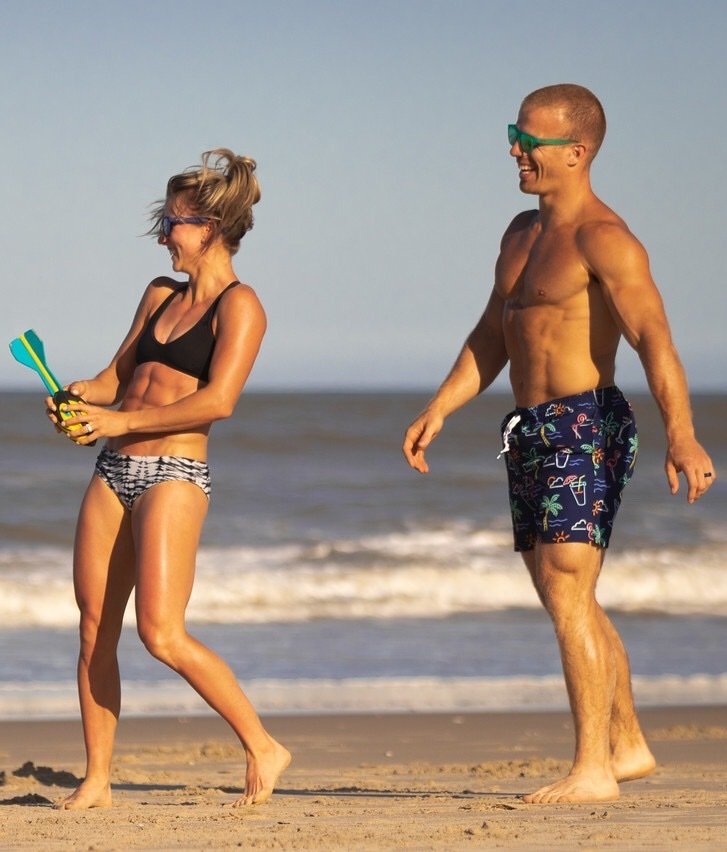
BLACK IRON RADIO EP. 337: The Role of Play in Fitness: Sports, Games, & Fun Movement
When fitness starts to feel like one more thing to optimize, play is usually the first thing to go.
Christin, Kelsey, and Krissy talk about the role of play in fitness and why fun movement still matters, even for people who love structure, progress, and training hard. They get into how easy it is to lose that playful side when everything starts revolving around performance, body composition, or doing things the "right" way.
They also unpack why play is not just extra credit. It can support longevity, expose you to movement patterns your normal training might miss, help with stress, and make fitness feel a whole lot more sustainable. From rec leagues and dog walks to dance parties and messing around outside, this is your reminder that movement does not always need a purpose, a metric, or a gold star to count. Sometimes the point is just to enjoy being a person with a body that can do cool stuff.
📲 Listen & Subscribe: Apple Podcasts | Spotify
Somewhere between childhood and adulthood, most of us stopped playing. Not because we lost the ability, but because we got busy, got serious, and started treating every workout like something that needed to be optimized. Sets, reps, heart rate zones, calories burned. The fun kind of quietly disappeared.
But what if play isn't just something kids do? What if it's actually one of the most underrated tools for long-term fitness? Christin, Krissy, and Kelsey sat down to dig into exactly that, covering everything from the physical benefits of moving your body in new ways to the mental health case for just going outside and running around for a while.
What We Even Mean by Play
Before getting into the why, it helps to define what we're actually talking about. Play doesn't mean you have to join a league or sign up for anything. It means moving your body in a way that's enjoyable to you, without a specific training outcome attached.
That could look like a low-key rec league. It could be pickleball with a friend, a hike, throwing a frisbee, playing tag with your kids, or dancing around your living room when nobody's watching. There's no wrong answer here. The only requirement is that you're actually enjoying it.
This is pretty different from how a lot of us approach fitness once we get serious about it. When performance becomes the goal, everything starts getting tracked and measured and evaluated. That's not inherently bad, but it can quietly squeeze all the fun out of moving your body. Play is the antidote to that.
Why Play Matters for Long-Term Fitness
For someone to maintain long-term fitness, it has to be something they actually enjoy. It's not about finding the perfect program or the right coach. When clients hit a wall or feel burnt out, the question worth asking is simple: what do you actually want to do? Not what you think you should do. What sounds fun. If the answer is pickleball with a friend or a low-key rec league, that's a great starting point. The buy-in is already there.
Play also gives you a reason to stay active that has nothing to do with hitting a number or chasing a goal. And during seasons of life when structured training is harder to prioritize, that matters a lot.
The Physical Benefits Are Real
There's a genuinely compelling physical case for play, and it goes beyond calorie burn.
Most structured training, even CrossFit which is intentionally varied, tends to move in predictable planes. You're going up and down, forward and back. What's largely missing is lateral movement, change of direction, and the kind of reactive athleticism that comes naturally when you're actually playing a sport.
When we're kids, we're constantly changing direction. We're sprinting, stopping, pivoting, and anticipating. Those skills don't just serve us on a field or a court. They carry over into injury prevention and overall physical resilience as we get older.
There's also this: a pretty significant percentage of people never truly sprint again after age 30. They stop jumping. They stop moving quickly in unexpected directions. It happens gradually, and most people don't even notice it until they try to do something outside their normal routine and realize how different their body feels.
That doesn't mean you should go out and go all out the first time you pick up a sport you haven't played in years. Christin and her husband learned this the hard way when they decided to get back into sprinting and couldn't walk right for a week. The lesson isn't to avoid it. It's to ease into it.
Play and Your Mental Health
This one deserves its own conversation, because the mental health case for play might actually be stronger than the physical one.
Life is stressful. Most of us are running at capacity a lot of the time. And while training is a proven stress reliever, play does something a little different. It triggers genuine dopamine release. You do something fun, your brain registers it, and you want to do it again. That feedback loop is a powerful thing.
There's also the social element. Training by yourself with a singular performance goal can be isolating in a way that's hard to name until you step out of it. Getting outside with friends, joining a community class, playing a sport with other people, that kind of connection is something your brain genuinely needs. The mental lift from it is real.
Even something as simple as taking your dogs to the park for 30 minutes when you don't have time to train can reset the day. Not because you hit a calorie target or stayed in a specific heart rate zone, but because you were outside, moving, and present for a little while. Sometimes that's exactly what the body and the brain need.
It's Okay to Not Track It
This one is worth saying out loud: play doesn't need to go into your Apple Watch. You don't need to log it on Strava. You don't need to know what zone you were in.
That's actually kind of the point. When you strip away the metrics and just move because it's fun, you tend to move for longer and enjoy it more. The calorie burn and the NEAT bump are real, but they should be treated as a bonus, not the goal.
If you find yourself checking your watch every five minutes to see how many calories you've burned during a pickup game, that's a sign you might be making play feel a little too much like work.
You Have to Give Yourself Permission
The biggest barrier most adults face with play isn't logistics. It's permission.
There's a productivity culture that tells us every hour should be spent working toward something. When you don't have much time and you have fitness goals, it's really tempting to think: I only have this much time to move this week, so I should spend all of it training and none of it playing. But that's a false trade-off.
Even carving out 30 minutes to do something fun, whether that's a neighborhood walk, a dance party in your living room, or throwing a football in the backyard, is worth protecting. It fills a cup that structured training doesn't always fill. And for moms especially, that cup matters. You can't take care of everyone else if you're running on empty.
A Few Ways to Add More Play
If you want to start incorporating more play into your life, you don't need a big plan. A few simple starting points:
Find a low-level rec league in something that sounds fun. The goal is to be in it for the enjoyment, not the competition. Look for the D or E league and just go have a good time.
Schedule movement hangs with friends instead of just coffee. A walk, a skate, a ski day, a hike. Social connection plus physical activity is a genuinely hard combo to beat.
If you have kids or pets, use that time. Play with them in a way that gets you moving too. It counts, and it's good for all of you.
Try something new that you've always been a little curious about. Pickleball, boxing, fencing, whatever sounds interesting. It's okay to be bad at it. Bring a friend so you can both be bad at it together.
And if none of that is possible today, put on a song you love and just move around your living room. It sounds small, but it genuinely works.
The Bottom Line
We only get one body and one life to live in it. That's a pretty good argument for making the movement in that life feel like more than just a grind. Play is how we stay connected to the version of fitness that was never about metrics or outcomes. It was just about the joy of moving.
The physical benefits are real. The mental health benefits are real. And the long-term payoff of actually enjoying how you move your body is probably the most underrated factor in sustainable fitness there is.
So go find your version of fun. It doesn't have to be pretty, and it definitely doesn't have to be tracked.
🎙️ WANT MORE? SUBSCRIBE TO BLACK IRON RADIO!
If you enjoyed this conversation, check out more episodes of Black Iron Radio, where we cut through the noise and give you real, no-BS advice on feeling, performing, and looking your best. Each week we share practical nutrition, training, and wellness strategies and tips to help you succeed.
📲 Listen & Subscribe: Apple Podcasts | Spotify
