
So You Want to Stop Procrastinating Your Workouts
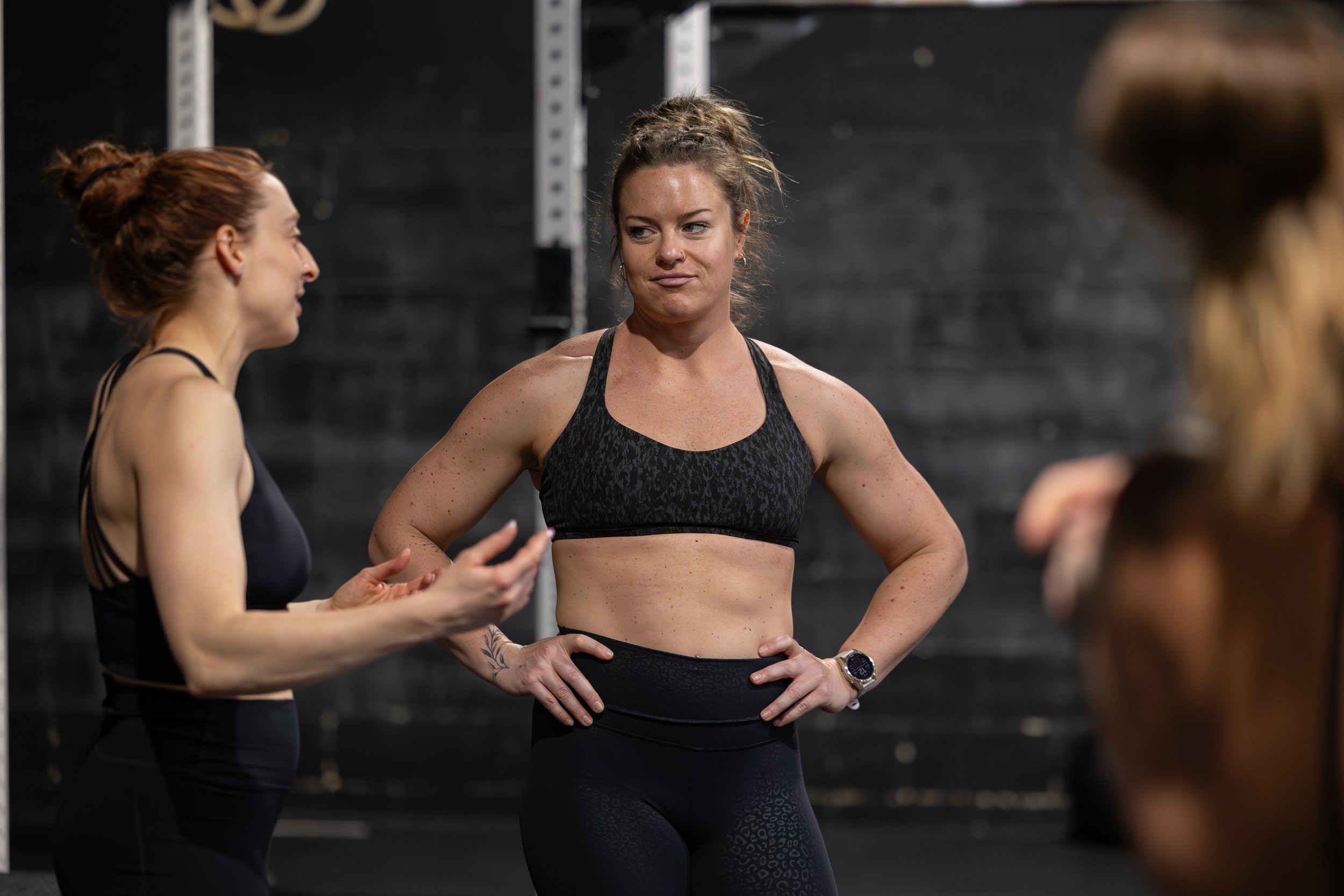
BLACK IRON RADIO EP. 382: So You Want to Stop Procrastinating Your Workouts
Wanting to be fit and talking yourself out of a workout can very easily coexist since the hardest part of a workout is usually the part where you decide to do it.
Amanda and Christin get into why procrastinating a workout is almost never a discipline issues. It's usually a friction, expectations, or decision-making issue. They talk about why the couch always wins in the moment, why "if I can't do the whole session I might as well skip it" keeps you stuck, and why the goal isn't to make yourself want to work out. It's to stop making the workout depend on wanting to.
Plus how to stop renegotiating a decision you already made, why "I'll work out sometime Tuesday" is a setup, and how becoming the kind of person who trains beats waiting to feel motivated.
You get excited about a new workout routine. You plan to train right after work. Then work happens, you're tired, so you sit on the couch "for a minute," and suddenly it's 8:47 PM and you're negotiating with yourself about whether it's fine to just start tomorrow instead.
In this episode of Black Iron Radio, Amanda and Christin dig into why procrastinating a workout is so universal, and why it's almost never actually about laziness or a lack of discipline. The real problem is usually a mismanagement of friction, expectations, and decision-making, and once you see it that way, it's a lot more fixable.
This Isn't a Discipline Problem, It's a Decision Problem
Here's the thing people get wrong about themselves: you can genuinely want the outcome while repeatedly avoiding the behavior that gets you there. That's not a character flaw, and it's not proof you don't care enough. It usually means you've made the workout contingent on a bunch of conditions lining up first, like having enough motivation, the perfect amount of time, feeling fully recovered, or being in the right headspace.
The fix isn't figuring out how to want to work out more. It's changing the question entirely, from "how do I make myself want this" to "how do I make it easier to just start."
Your Brain Chooses the Couch Because the Math Favors It
There's a real mechanism behind why the couch wins so often, and it comes down to cause and effect. Sitting down with your favorite snack gives you an immediate dopamine hit. You feel good right now. A workout is the opposite. There's no instant payoff, you don't finish one session and wake up as the fittest version of yourself.
Instead, there's a whole list of costs stacked in front of the reward: you have to change clothes, get yourself to the gym, warm up, be uncomfortable, spend the time training, drive home, and then deal with everything at home that was waiting for you the whole time. Meanwhile the actual benefits, like strength, performance, and body composition change, are delayed. Your brain is very good at weighting an obvious cost right now over a fuzzy benefit later. That's not weakness, that's just how the reward system works.
The All-Or-Nothing Trap Isn't Just a Food Thing
A huge chunk of workout procrastination comes from the standards people set before they even walk in the door. If I don't have a full 60 minutes, it's not worth doing. If I can't hit my programmed percentages or reps, I'll just skip it and do it tomorrow. That's the same all-or-nothing mentality that shows up around food, and it's just as irrational here. If you spill a little water out of your water bottle, you don't dump the rest of it on the counter. Nobody does that. But that's exactly the logic behind skipping an entire session because you can't do 100% of it.
The same trap shows up with fatigue. There's a real difference between needing an actual rest day and just feeling a little tired because you're transitioning from a sedentary workday into "let's freaking get after it." You don't need to feel 100% recovered, fully jazzed, or well-rested to have a good session. If you spend your day sitting at a desk, your energy systems literally downregulate, so sometimes the best way to get energy is to move, not wait until you feel like you have it. And the same all-or-nothing pressure shows up in gyms with leaderboards and Rx boards. Treating every single session like something you have to win or PR turns training into a pass-fail test, and that pressure is exactly what makes people start avoiding the gym altogether.
Stop Negotiating With Yourself
The single biggest procrastination trap is decision-making itself. Every time you ask "should I go today," you're reopening a decision you already made, and you're quietly teaching your brain not to trust your own commitments. That erosion makes you less likely to follow through next time, too.
The way out is to stop relying on motivation and start building an identity, someone who trains, and back it with rules that don't require a fresh decision every day:
Use if-then statements. When I finish work, I change into my workout clothes. When my alarm goes off, I get up, snoozing isn't an option. Specific, time-based triggers beat vague intentions like "I'll work out sometime Tuesday" every time.
Put the workout on the calendar like an appointment. Not something you squeeze in if the day cooperates. Account for transition time too, if your workout starts at 5:00, block your calendar starting at 4:30.
Follow the no-debate rule. You don't have to decide up front whether you're doing the full workout as programmed. Your only non-negotiable decision is whether you start your warmup or walk in the door. Give yourself permission to reassess after 10 to 15 minutes. Most of the time, once you're moving, you finish.
Lower the Activation Energy
Everything you do during the day, every decision and every transition, costs energy. If getting to your workout requires overcoming a pile of friction first, you're going to lose to that friction more often than not. So the move is to strip out as many of those steps as possible, ahead of time:
Pack your bag the night before and put it by the door where you'll see it walking out.
Write your workout down so you know exactly what you're doing and roughly how long it'll take. That removes a decision you'd otherwise have to make standing in the gym.
Keep your equipment visible and accessible, not buried in a closet you have to unpack every time.
Shorten the transition chain. Work, change into your clothes, go straight to your workout. Everything else, chores, laundry, scrolling, can happen after. A short list of steps is dramatically easier for your brain to follow than a long one, and every extra step is another chance to talk yourself out of it.
Go to extremes if you need to. Sleeping in your workout clothes or coaching gear, prepping food the night before, eating a cold breakfast on the way out the door, none of it is glamorous, but it works. Making it stupid easy on yourself isn't cheating, it's the whole strategy.
Give Yourself a Minimum Viable Workout
If your standard is a 60-minute lift, give yourself permission to do 20 or 30 instead. If a full run isn't happening, do an easy 20-minute run. If mobility work feels like a whole extra session, fold it into the warmup and cooldown you're already doing rather than treating it as one more thing you have to find time for. This isn't a permanent downgrade of your effort, it's a strategy for building consistency when life is genuinely busier or harder to manage right now.
And modifying a workout is not the same thing as skipping it. If you drop the weight on the bar so you can actually hit your reps and intensity instead of resting 30 seconds between sets of a weight that's crushing you, that's training smart. If today's RPE 7 is 15% lighter than last week's RPE 7 because you're under-slept, that's still the same stimulus for where you're at today. Cutting two accessory sets isn't going to meaningfully change your strength over time. Training adaptations come from stacking days of consistency, not from a handful of isolated perfect sessions. Skipping because you don't feel like starting is a completely different decision than intentionally adjusting because you're genuinely under-recovered, and only one of those is actually training.
Build the System, Don't Wait to Feel Ready
Once the mindset shift is in place, the practical framework is simple:
Schedule the behavior. Not "it would be nice to work out today." An actual time on the calendar, with transition time built in.
Use environmental cues. A specific playlist, a pre-workout snack, a consistent time of day, anything that tells your brain "it's time" without you having to talk yourself into it.
Track consistency, not perfection. Your win isn't whether you hit every programmed number exactly as written. It's how many times you showed up over a month. Someone who trains perfectly for one week and does nothing for three weeks makes less progress than someone who shows up every day doing less than what's on paper.
Find your personal procrastination pattern. Without judgment, notice what's actually happening right before you decide to skip. Are you truly exhausted, or just avoiding being uncomfortable? Is the session too long, or are you unsure what to do once you're there? Is morning just never going to work for you, no matter how many alarms you set? You can't fix a barrier you haven't named.
The Takeaway
You don't need to become a more disciplined person overnight to stop procrastinating your workouts. You need fewer decisions to make in the moment, less friction between you and the gym, and lower expectations about what a session has to look like to count. Motivation is unreliable and it was never going to be the thing that got you there consistently. Build the system instead: schedule it, remove the friction, let a modified or minimum viable session count, and track whether you showed up rather than whether it was perfect. Action builds momentum, and momentum is what turns a workout into something you just do, not something you negotiate with yourself about every single day.

🎙️ WANT MORE? SUBSCRIBE TO BLACK IRON RADIO!
If you enjoyed this conversation, check out more episodes of Black Iron Radio, where we cut through the noise and give you real, no-BS advice on feeling, performing, and looking your best. Each week we share practical nutrition, training, and wellness strategies and tips to help you succeed.
