
So You Want To Involve Your Kids in Health Habits
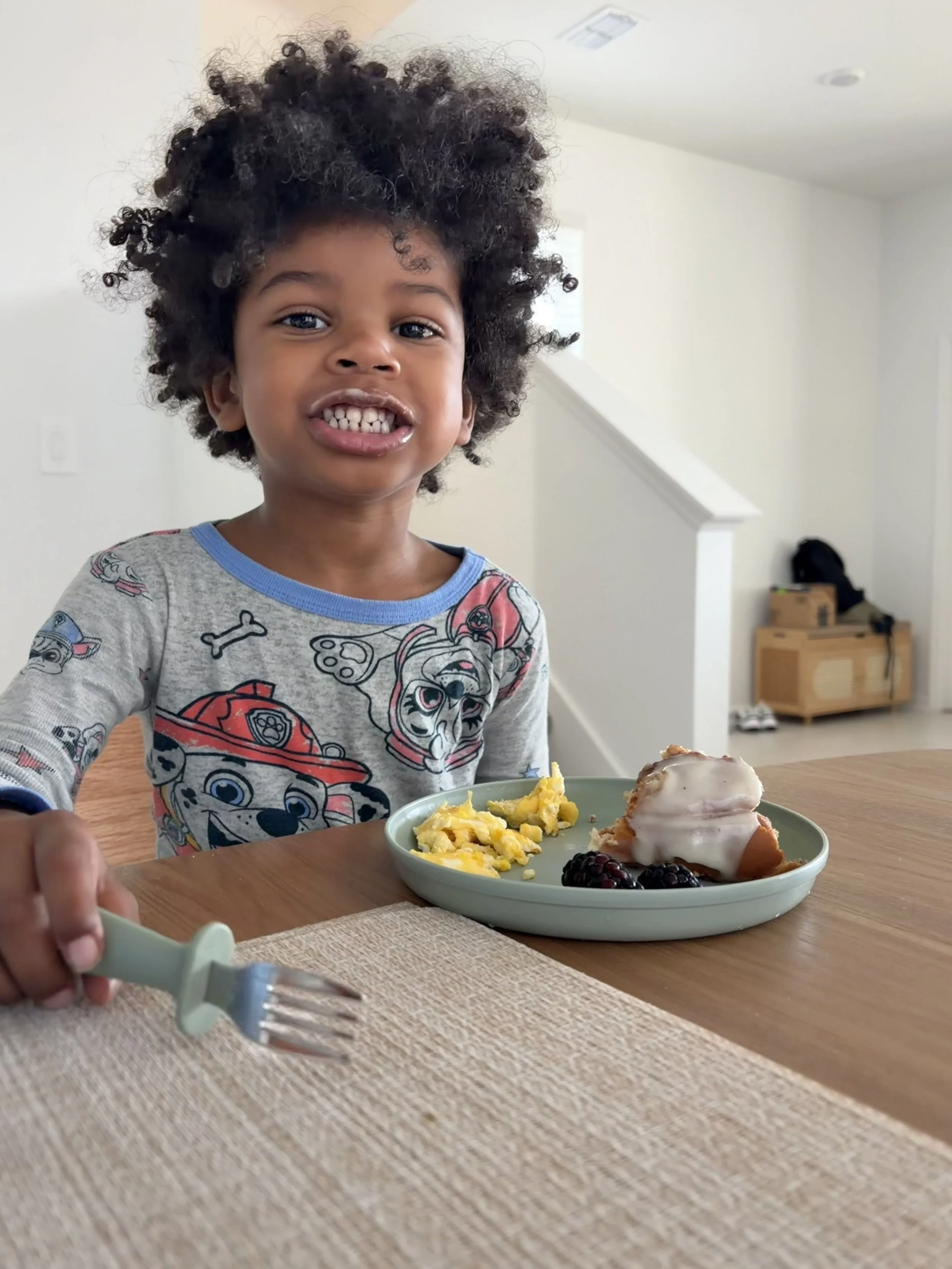
BLACK IRON RADIO EP. 368: So You Want To Involve Your Kids in Health Habits
The goal isn't just to raise healthy kids, but to raise adults who can walk into a room full of food choices and trust themselves.
Morgan, Joyce, and Jess Saxon get into how the way you talk about food and movement in front of your kids shapes their relationship with both for the rest of their lives. They talk about the food rules they grew up with, why restriction almost always backfires, how to give kids buy-in instead of just telling them to eat their broccoli, and why working with your kid's temperament beats forcing them into a box.
Plus a real conversation about parent guilt, unlearning the stuff you thought was required, handling the unsolicited advice from grandparents and grocery store strangers, and why nobody knows your kid the way you do.
Health is never just about what's on your plate. It's habitual, it's environmental, and kids catch every bit of it, whether you meant to teach it or not. On this episode of Black Iron Radio, host Morgan sat down with Joyce Murphy and Jess Saxon, two moms and coaches, to talk about what it actually looks like to raise kids who grow into adults with a healthy relationship to food and movement. Most of that work happens long before a kid can read a nutrition label, and it usually starts with what the parents themselves grew up believing.
What We Inherited
Before getting into strategy, the three traded notes on what they grew up with, because most parenting philosophy starts as a reaction to something.
In Joyce's Dominican household, movement meant sports, and sports meant the boys. Her brothers played basketball, softball, and baseball after school and on weekends. She and the other girls stayed inside, mostly getting their activity from chores instead of games. Nutrition brought its own set of challenges. Her parents had emigrated from a country with a completely different food culture and suddenly found themselves navigating American grocery stores full of ultra processed products they'd never had to think about before. They did their best with what they knew, but a lot of that came out as hard restriction and "bad food" language, which, predictably, made those foods more desirable to the kids.
Jess had close to the opposite experience. Sports weren't optional in her house. Her parents' rule was blunt: play three sports, or get an after school job. She and her sister both picked the sports. Morgan's childhood looked different still, low activity, no organized sports until CrossFit as an adult, and track only because it doubled as a social hour.
None of that means one household did it right and the others got it wrong. It means kids absorb whatever environment they're handed, and that environment gets shaped by culture, gender expectations, and whatever the adults around them didn't know they didn't know.
What Does a Healthy Childhood Actually Mean
Ask most people to define a healthy childhood out loud and they'll stall. Joyce framed it as layered: part education, part trust, part environment.
The education piece isn't "eat your broccoli because I said so." Kids need buy in, which means tying food to something they actually care about. Broccoli helps you run faster. Protein builds the muscles that let you win at tag. Food becomes useful instead of a rule handed down from above, and the same logic applies to movement: frame it as feeling alive and strong and fast, not as an obligation.
Trust is where it gets more specific. Joyce's youngest, the most neurodivergent of her three kids, struggles to sit still at the table for more than a bite or two. Her instinct used to be to enforce the old rule, you sit, you don't move, that's what we do. She eventually realized the better move was working with his temperament instead of against it, letting him get up and move between bites instead of treating dinner as a fight over stillness. Kids do well when they can, and what looks like defiance is sometimes a kid telling you exactly what he needs in order to comply.
She described a similar shift with her son's fearlessness. He jumps off of surfaces constantly, and her instinct used to be to step in and stop him before he could try. What she's unlearned is that reflex. Now she pauses and asks him, "Do you trust your body in this moment?" If he says yes, she lets him go. It's teaching him to check in with his own body instead of waiting for her to decide.
Jess added a point worth sitting with: there's no universal parenting box. Everyone asks whether your kid is off the bottle yet, sleeping through the night yet, eating vegetables yet, as if there's one correct timeline every child should hit. No one else knows your kid's nervous system, temperament, or needs the way you do. Trusting that isn't a failure to parent by the book. It's the actual job.
Modeling Over Managing
Micromanaging a kid's plate doesn't work. Modeling what balance looks like and letting them come to it on their own timeline does.
Joyce read something years ago that reframed the whole approach for her: your child is not a book to be written, they're a book to be read. You didn't build this person from scratch. You're getting to know someone who arrived with their own preferences and pace, and your job is to notice and respond, not dictate. That reframe also does a lot to relieve guilt. A picky phase doesn't mean you failed. Most adults aren't living on chicken nuggets. Palates expand with time, exposure, and watching someone they trust enjoy a wider range of food without turning it into a project.
Jess had her own gut check moment. She caught herself hiding a treat from her one and a half year old daughter because it had high fructose corn syrup or dye in it, then realized the hypocrisy: if she didn't want her daughter eating it, maybe she shouldn't be eating it either. Modeling isn't a tactic you perform for an audience. It's just consistency between what you say and what you do, even when nobody's grading you on it.
Making Food Neutral, Not Moral
A recurring theme was stripping food of its moral charge before a kid gets the chance to internalize "good" versus "bad." Jess offers dessert alongside the meal instead of at the end, so it never gets coded as a prize for good behavior. She and her husband also play with food at the table, turning broccoli into trees or staging sword fights with green beans, and it consistently gets her daughter curious enough to actually try what's on her plate.
Joyce borrowed a rule from her sister in law: fruit is always a yes. Kids don't need to ask permission to grab a piece from the kitchen. It's a small rule, but it quietly reinforces that fruit is normal and always available rather than something rationed out.
Both agreed restriction backfires, and the research backs them up. Tell a kid a food is off limits and you tend to increase their preoccupation with it, not shrink it.
Teaching Kids to Feel Full
Fullness is hard enough to explain to an adult, let alone a toddler. Jess uses a simple check with her clients: leave the table at eighty percent full, wait ten minutes, then check back in. Still hungry? Get seconds. Not hungry anymore? You were probably full to begin with. Joyce uses a different one she calls the banana test: if you'd willingly eat something plain, like a banana, you're probably physically hungry. If a banana sounds unappealing but a cookie sounds great, you're probably chasing a craving instead.
Joyce runs a version of this at home. Once the kitchen closes for the night, her son gets a short list of available snacks, usually fruit or string cheese. If he reaches for one of those, she trusts he's genuinely hungry. If he asks for an Oreo instead, she'll gently suggest the banana might scratch the same itch, without flatly saying no.
Jess takes a similar approach with feeding her daughter: she offers what and when, and her daughter decides how much. Some days that's a huge lunch. Other days she barely touches the plate. Both get treated as normal, and Jess has started asking her directly whether her belly is full, not because a one year old understands the question yet, but to start building the language early.
Repetition matters too. Jess mentioned it can take fifteen to twenty exposures before a kid accepts a food they initially rejected. She offered her daughter kiwi for weeks with zero interest, and then one day she ate three in a row. There's rarely a clean explanation for the shift. The job is just to keep offering.
Discomfort as Data, Not Shame
Joyce's oldest son, now fifteen, once ate an entire box of Pop-Tarts at a friend's house and spent the next twelve hours throwing up. Instead of turning it into a lecture about self control, she and her husband used it to talk through the physical sensation of eating past fullness and into real discomfort, the same way food poisoning teaches your body to avoid a food without anyone saying a word. He was probably just genuinely hungry given how much he trains and moves. The goal wasn't to shame the choice. It was to help him recognize the feeling so he can respond differently next time.
Involving Kids Directly
Every habit lands harder when a kid gets to do it instead of just watch it happen. Jess cooks with her daughter constantly, even though it takes longer and mostly amounts to a toddler mangling a zucchini with a play knife while the real one gets used a foot away. They do a family walk every morning and a bike ride or walk after dinner, framed simply as what this family does together. Her daughter also spends time in their garage gym watching Jess train, throwing in her own version of a push up along the way.
Joyce does something similar with cooking, letting her kids find the recipe when they request something specific, which builds independence and turns cooking into a teaching moment about the food itself. She bought her son a kitchen play set for his third birthday, one tall enough to stand over him, and remembers a friend being surprised she'd buy a boy a kitchen set at all. It never occurred to Joyce that it would be unusual. Her son loved being in the kitchen with her, loved making waffles and muffins, and she wants to raise a boy who can cook for himself and make food choices based on what he's learned, not just eat whatever's put in front of him.
Jess had the opposite instinct when someone offered to buy her daughter a kitchen set of her own. She said no thanks, not wanting her daughter to feel boxed into the kitchen by default. Both approaches come from the same place: wanting kids to have real choice instead of an assumption made for them.
Sleep, Framed Around the Why
Sleep conversations follow the same logic as the food ones: explain the why in terms a kid actually cares about instead of issuing a rule. With Joyce's four year old, that means connecting rest to the ability to keep playing later in the day. With her teenagers, it means tying sleep to specific goals, a basketball game or a dance audition, so the payoff feels real instead of abstract.
Jess admitted this is an area where she and her husband still have work to do. Their daughter goes to bed well before they do, but her husband would happily stay up all night given the choice, and Jess flagged her own phone use specifically as something she'll need to change before her daughter is old enough to notice. It's the same principle as the hidden treat: kids eventually see everything, so the habits worth keeping are the ones you're willing to model out loud, not just the ones you enforce.
Raising Media Literate Kids
The conversation closed on something neither mom grew up having to think about: how do you raise a kid to tell real information apart from content designed to sell them something, when they'll be handed a screen earlier than any generation before them.
Jess's plan is twofold. Delay giving her daughter a phone for as long as realistically possible, and build her sense of self worth now, so that by the time she does run into likes and algorithms, she already knows she's capable and valued without needing a screen to confirm it.
Joyce's approach with her older kids is less about banning and more about teaching them to interrogate what they see. Who is this message actually for? Are they selling me something? Does this leave me feeling informed, or does it leave me feeling like something's wrong with me that needs fixing? If it's the second one, the rule in her house is to bring it back to mom and dad and talk it through. Most of the time, the fundamentals they're already practicing at home hold up fine against whatever claim is circulating that week.
It's a skill adults are still building for themselves too. Morgan pointed out that it took years of scrolling before she noticed every trip to a certain app left her wanting some kind of physical modification, and that noticing was what finally got her to delete it. Teaching kids to pay attention to how a piece of content makes them feel in their body, not just their thoughts, is the same skill underneath portion control, movement, and self trust. It's all the same thread, just applied to a different screen.
The Bottom Line
None of this requires a perfect parent. It requires one willing to keep adjusting, model more than they instruct, and remember that a kid is watching everything, not just the lecture about vegetables but the actual plate the parent is eating from. The same growth mindset you're trying to instill works both ways. You don't need to have this figured out before you start. You just need to keep trying, out loud, where your kids can see it.

🎙️ WANT MORE? SUBSCRIBE TO BLACK IRON RADIO!
If you enjoyed this conversation, check out more episodes of Black Iron Radio, where we cut through the noise and give you real, no-BS advice on feeling, performing, and looking your best. Each week we share practical nutrition, training, and wellness strategies and tips to help you succeed.
