
Optimization Culture: Why Aiming for Perfect Is Getting in the Way of Your Progress
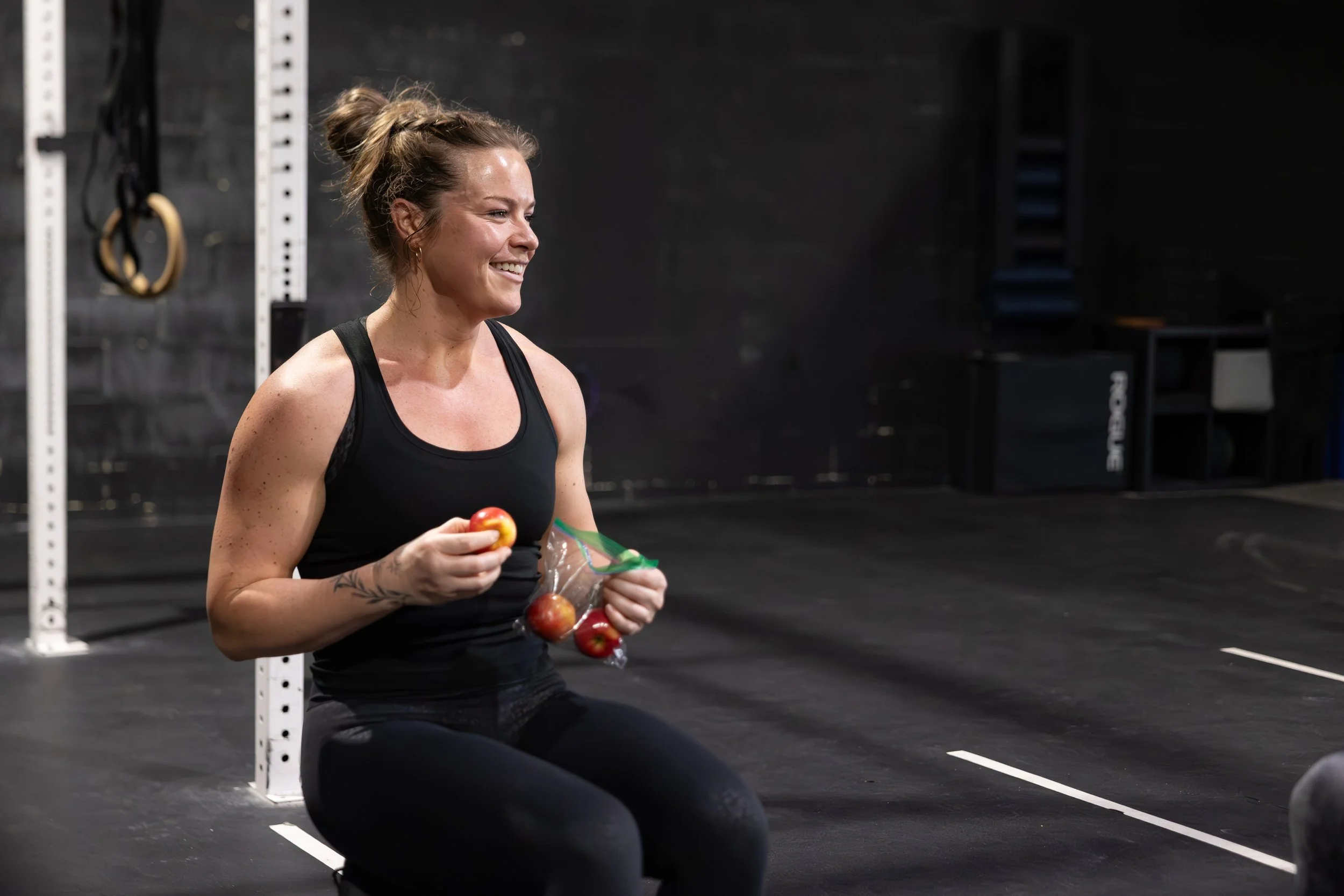
BLACK IRON RADIO EP. 388: Optimization Culture: Why Aiming for Perfect Is Getting in the Way of Your Progress
We're living in a culture obsessed with optimization. The perfect diet, the ideal workout split, the most productive morning routine, the exact right supplement stack, tracking every metric a wearable can give you. The irony is that chasing optimal everything can make it harder to do the basic stuff that actually moves the needle.
Amanda and Brooke get into why your best plan isn't the one that's perfect on paper, it's the one you can repeat in your real life. They talk about the difference between optimal and good enough, why good enough is good enough for most people, the tiers of what actually matters versus what to worry about later, and why the search for the perfect routine is often just procrastination in disguise. Brooke lays out the questions to run anything through before you add it to your plate, and Amanda makes the case for "bore-maxxing"... doing the boring basics on repeat instead of collecting hacks.
Because if your "optimized" life leaves you anxious, exhausted, and scared that you're doing it all wrong, it's not actually optimized!
Picture a three-minute reel called "come with me for my morning routine." It opens with an ice bucket for the face. Then come 19 different lotions, a face roller, eye patches, a smoothie with 19 different powders in it, a chug of olive oil, and oil pulling for the teeth. She goes to Pilates (thank God, she left the house), comes home, does a full wash-down routine with another thousand pads on her face, and finally gets ready for work. At 1:00 in the afternoon. That reel is funny, and it's also exhausting, and it's a pretty perfect picture of where health culture has landed. Somewhere along the way, wanting to feel better turned into managing a thousand variables just to get to noon.
Optimization Culture Is the Belief That There's Always Another Level to Unlock
Optimization culture is the idea that there is always a better, more efficient, more precise way to do everything. The perfect zone two protocol. The perfect morning routine. The supplement stack, the peptide stack, the list of foods you should never eat, the things women in perimenopause apparently should never do. Think video game: next level, next boss.
Social media amplified the hell out of it, because nuance doesn't go viral. "Eat a generally balanced diet, train consistently, sleep enough, and give it time" is not nearly as clickable as "These five foods are destroying your hormones" or "Here's the exact optimal time to eat carbohydrates." So basic physiology gets chopped into tiny check boxes where there's supposedly only one right way to do anything.
To be clear, this isn't all bad. Wanting to be healthy, wanting to do things well, and wanting to learn are all good things. The problem starts when more information creates more uncertainty instead of more useful action. You learn ten new things you could optimize, and instead of feeling more confident, you're terrified you're doing nine of them wrong.
The Search for the Perfect Routine Becomes a Form of Procrastination
Here's how it usually goes. Someone starts with "I just want to eat better." Then it's "What are my exact macros?" Then "What supplements should I take, and what time?" Then the wearables show up: a ring, a watch, a glucose monitor, sleep scores, heart rate variability, recovery scores. Before you know it you've built a four-hour morning routine with journaling, breathwork, sunlight exposure, and a fasted ruck.
At a certain point, searching for the right answer is procrastination wearing a lab coat. You spend so much time arranging pebbles that you never move the boulders. And optimization is more exciting than admitting you only slept five hours last night. Amanda's favorite example: someone hunting for supplements and biohacks to fix their energy, while scrolling their phone late at night doing the research. Her answer is to go to bed. Just go to bed two hours earlier. If you're choosing to sleep five to six hours a night, you don't need to hack your sleep routine, you need to prioritize more sleep.
The irony runs deep. The "health maxing" crowd is obsessed with what's natural and ancestral, while spending thousands of dollars and a ridiculous amount of time on peptides, devices, and trackers our ancestors never had. And maxing things out backfires. Obsessing over your sleep to that degree usually wrecks your sleep. Fiber maxing can cause GI issues and get in the way of energy availability. Protein maxing is the same story: a protein-rich diet has real value, but at some point more is just more.
Good Enough Is Good Enough (and Optimal Requires a Lab)
Optimal, by definition, requires a super controlled environment. Most people don't live in one. So what's realistically optimal for your actual life looks a lot more like good enough.
In nutrition, there's theoretically a perfect meal with the macros, micros, fiber, water volume, and amino acid profile balanced down to the microgram. In real life, a balanced meal is one that hits most of those things, is easy to prepare, tastes good, and can be copy and pasted day after day. Make it as low bandwidth as possible. In training, people often try to cram a five or six-day split into an already packed life. Starting with a three-day program you can actually complete every week gets you a big percentage of the same results, with far less time, bandwidth, and stress.
Consistently maintaining a baseline gets you 90 to 95 percent of the benefit. Is chasing the extra two, three, four, or five percent worth it in your current season of life? Maybe. But you should get to decide that on purpose, not because an influencer made you feel behind.
Two things worth remembering here:
Consistency beats intensity every time. A perfectly optimized program that requires a version of you that only exists for two weeks at a time is not a good plan. If your dream body is a nightmare to maintain, it's probably not your dream body.
You can't max out every part of life at once. Think of your life as a pie chart. Training might be the biggest slice during a focused training block, but then a new baby makes recovery and sleep the biggest slice, or tax season makes work swallow everything. The other slices don't disappear, they just shrink. Progress doesn't require maximizing every variable. It requires knowing what matters most right now.
Perfectionism Doesn't Always Sound Like Perfectionism
Nobody starts by saying "I need to be perfect." It usually shows up as barrier-to-entry statements: "I'm too busy to start right now, I'll wait until life slows down." "I don't have time to meal prep this week, I'll start next week." "I don't know the calories in this meal, so I just won't track it." "I missed one workout, so the week is ruined."
That's the all-or-nothing cycle. You set a very high standard, follow it perfectly for a short burst, and life inevitably interrupts. You read that interruption as failure, abandon the whole thing, get sick of your own shit, and double down with even higher expectations. Round and round.
The fix is to lower the bar. If you want to build consistency at something, make it so easy to start that you can't talk yourself out of it. If it turns out to be meaningful, then you can start working on the finer details. If you're starting from scratch, trying to optimize is crazy, because you have no baseline to work from.
Optimization also feels good for a psychological reason: it gives us a sense of control. There's something comforting about believing the perfect protocol exists, that the right supplement, wearable, or routine will mean you're never tired, your weight never fluctuates, and you recover perfectly every time. But bodies don't work like that. Genetics, aging, stress, illness, and a baby who woke up six times all exist. A lower HRV doesn't mean something is broken. A weight that's up a couple of pounds after a high-sodium dinner doesn't mean your diet stopped working. A lot of the time, variation is just what a normal human body does. The more things you measure, the more chances you give yourself to decide something is wrong.
Sort Everything Into Three Tiers Before You Optimize Anything
This is the framework Brooke uses with clients. Everything else is built on the fundamentals, so start with tier one and don't move on to the next tier until it's actually working.
Tier one is the boring fundamentals. Eat enough food, with adequate protein, carbs, and fats based on your lifestyle and movement. Eat some plants and get fiber in. Train consistently (not to kill yourself, just week after week). Move your body outside of training. Get outside. Sleep enough. Stay hydrated. Most of this is free, and it accounts for the huge majority of your outcome.
Tier two is refining. Meal timing if you're training for performance or a specific event. Adjusting training volume or intensity for a specific goal. Recovery modalities like sauna or massage. Supplements, once you've looked at your tier one intake and identified a real reason you need one.
Tier three is true optimization. Perfecting nutrient timing and macro distributions, wearable metrics, and long-term data. And that means trends over long stretches, not single days or single weeks.
Tier three isn't useless. The problem is obsessing over it while tier one is a dumpster fire. If you're sleeping a couple of hours a night, eating random stuff, skipping training, and living on caffeine and creatine, don't optimize a system that isn't functioning at the foundational level. You have to earn the right to care about the tiny details, and nobody needs to debate which brand of magnesium they take before they're eating enough protein.
And yes, your coach is going to sound repetitive. Brooke recently had a discovery call with someone who'd been with nutrition coaches for four years and said nothing worked, because all they gave her was the basics: eat enough protein, get your fiber, do your steps, go to sleep. Her response was that she could Google all of that. The answer: sure you can, but did you do it? That's why every Black Iron coach is telling roughly 95 percent of clients the same things. And if a coach tells you something that sounds like brand new, mind-blowing information, that's more likely a red flag than a breakthrough.
Five Questions to Ask Before You Add Anything New
Before you add another protocol, tracker, or supplement, run it through these:
What problem am I actually trying to solve? Sometimes it's a problem you don't even have, one social media convinced you of.
Is this a major barrier or a minor detail? Am I moving a boulder or rearranging pebbles?
Do I have the fundamentals consistently in place? If not, go back to tier one.
Will this meaningfully improve my outcome? Not "could this theoretically have a 1 percent effect," but will it create change in the areas I actually care about.
Can I sustain this? It doesn't have to last forever, but could you live in it for a long time?
Then zoom out. Are you optimizing your health, or your Strava numbers? Your nutrition, or your ability to obey every rule you've given yourself? If your "optimized" lifestyle has you anxious, exhausted, constantly self-monitoring, and skipping the social stuff that makes life fun, it's not optimized. The most optimized life is probably the one where you take good care of yourself and have enough flexibility to enjoy being a human being.
Adaptability Beats Control
Progress requires flexibility. Things will go wrong and not go to plan, and that's the norm, not a malfunction. What matters is knowing what can flex, and how to reset when life throws a curve ball, without punishment and without hunting for a magic bullet. You don't need a fix every time life happens. You need to get back to the basics. Your ability to adapt is a better predictor of long-term success than your ability to follow a plan perfectly.
And the more variables you try to control, the less resilient you actually become. When something inevitably falls outside your control, it throws your whole game off. Real life is inherently not optimized, and that's okay.
The Takeaway
Stop trying to win at optimization. The goal isn't a life where nothing goes wrong and your body always responds perfectly. The goal is habits that still work when things go wrong or you don't feel great. Get tier one in place, be honest about whether the next add-on is a boulder or a pebble, and ask whether you could actually live this way for the long haul. Your optimal should feel pretty calm, pretty chill, and even enjoyable. Boring habit maxing wins: sleep eight hours, eat enough, go for a walk, repeat.
🎙️ WANT MORE? SUBSCRIBE TO BLACK IRON RADIO!
If you enjoyed this conversation, check out more episodes of Black Iron Radio, where we cut through the noise and give you real, no-BS advice on feeling, performing, and looking your best. Each week we share practical nutrition, training, and wellness strategies and tips to help you succeed.
