
Learning To See Progress Beyond Just Looks
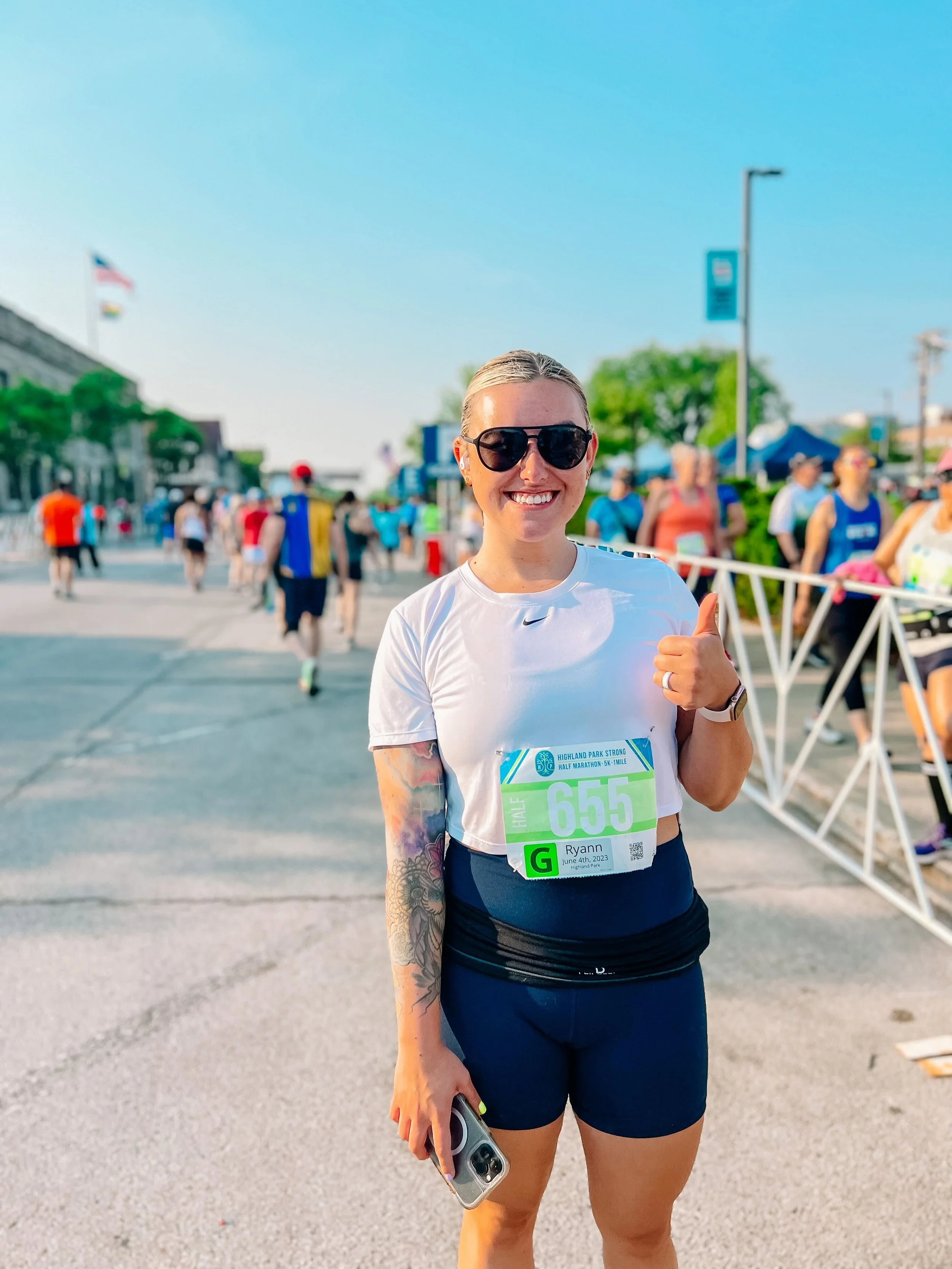
BLACK IRON RADIO EP. 389: Learning To See Progress Beyond Just Looks
Somewhere along the way, most of us learned to measure our progress by what we see in the mirror. But the mirror leaves out almost everything cool and interesting.
Ryann, Jess Gordon, and Nic get into why looks are so easy to nitpick, where all that pressure comes from, and how to start measuring progress by something other than your reflection. They talk about the moving goalposts of the "ideal" body, how following the wrong social media accounts can rewire how you see yourself, why the people closest to you don't keep you around for your abs, and the affirmations that actually work (hint: it's not the ones you don't believe).
Nic makes the case for neutral-at-worst self-talk, Jess breaks down building your Rolodex of things you like about yourself, and Ryann gets into performance and hobby goals that pull the focus off aesthetics entirely.
Because how you look really is the least interesting thing about you.
Jess Gordon spent two to three years working to put on muscle. Then she got into endurance sports, followed a bunch of endurance athletes on social media to see what they were doing, and woke up one morning, looked in the mirror, and thought, "You're too big for this sport." Her coach's response to her check-in was basically, "Hold the phone. Did we not just spend the last few years building this?" Those athletes weren't doing anything wrong. She just soaked up an idea of what a woman's body in that sport is supposed to look like, and it rewired how she saw herself overnight. And Jess is a gym owner and nutrition coach who has done a lot of work on this stuff.
If that happens to her, it's happening to you. Here's why looks are the first thing we reach for when we measure progress, and how to build a better scoreboard.
The Standard Was Never Built on Health
Most of us grew up in a culture that called women fat in magazines and treated being as small as possible as the goal. That pressure has nothing to do with health. It's aesthetics, and a lot of the rules came from men who had no business writing them for us.
It's also deeply contradictory. On one side you hear "love your body the way it is," and then you turn on any TV show and see almost exclusively very thin people. So it becomes "love your body, as long as it fits this mold." Ryann still remembers America Ferrera being cast as the "plus-size" friend in The Sisterhood of the Traveling Pants when she was, in reality, maybe a size six. That kind of thing gets ingrained early, and it says you need to look like a specific person or you're not considered healthy. That's insane.
Clothing sizes make it worse. What does an eight even mean? Nothing, until a designer cuts an eight smaller than your usual eight and you're panicking in a dressing room convinced you gained ten pounds.
We Were Never Supposed to See Ourselves This Much
For most of human history, people only saw their reflection in bodies of water. Now we have mirrors everywhere, front-facing cameras, and a feed full of everyone else's best angle, plus Photoshop and AI setting expectations no real person can meet. We're looking at ourselves multiple times a day and picking apart what we see.
Nic Leland adds the commercial piece: if a company can convince you that you have a problem, it can sell you the solution. That's a business model, not a health strategy.
Men Get This Too
Nic is not a naturally super thin guy, and he does endurance sports in skin-tight, aerodynamic tri-kits. He'll tell you it can be a real struggle. Women get the louder, more relentless version of this pressure, but men are told they need eight-pack abs and big biceps too, and that gets talked about a lot less.
One thing that helps is remembering what you're actually comparing yourself to. The people whose physiques make you feel bad usually have some combination of three things: a genetic predisposition to look that way, a job that is literally to look that way, and performance-enhancing drugs they're not talking about. What you're seeing may be flat-out impossible for you, based on your genetics, your time, and the fact that you probably don't want to do steroids. Ryann adds that messing with your hormones like that won't do you any favors as you get older either.
Ask What Your Dream Body Actually Costs
Jess has had a six-pack. She also packed her own food for parties and would not take a date night with her husband to have pizza, because at that point the physique was the goal. Now she'll have cake with everybody else, and if her abs aren't visible, she's not mad about it. Her body works in the gym and in life, and she can fully live her life.
Her point: if your dream body is a nightmare to maintain, it's not your dream body. The body you can fully live your life in is the dream body.
Nic gives you a simple filter for the next time you see a physique online and think "I need to look like that":
What will it actually take? Be honest about the food, the training hours, and the lifestyle it demands.
Is it even achievable for you? Some people build muscle and lean out easily. Others store fat in different places and have a different shape, and that comes down to genetics.
Is the path worth it to you? Getting to the body you want usually means weighing more than you think you need to and building more muscle than you think you need to. It's also boring and it takes a really long time, which is a pretty bad sales pitch.
Nic says that in every single case he's run through this, the answer to that last question has been no. If you're 5'8" and your goal body is Chris Hemsworth, that's not realistic for most people, and it's not a reasonable goal to beat yourself up over.
Curate Your Feed and Stop Body Checking
Two practical habits before we get to goals:
Use the block and unfollow buttons. What you see online should leave you feeling empowered, not worse about yourself. There are plenty of inspiring people on social media, and plenty who will make you feel like shit, and that's especially easy to run into in health, wellness, and fitness spaces. You don't owe anyone your attention. Jess also points out that people in fitness spaces often feel entitled to comment on your body, and you have to learn to block that out or it will get in your head.
Notice what you do when you look in the mirror. Do you do a 360, suck in, and say mean things? Or do you think "great hair day" and move on? If you're regularly looking at yourself for more than a minute, that's a sign to step back and put your attention somewhere else, because otherwise you're feeding a cycle of picking yourself apart.
Talk to Yourself Like You'd Talk to a Friend
Nic recently asked a client this: if a friend came to you and said they didn't like something about their body, would you tell them they suck and they're ugly? Of course not. But that's the shit we say to ourselves in the mirror, and somehow it feels normal.
There's also more than feelings at stake. Ryann points to newer research showing that speaking kindly to yourself helps with self-soothing, anxiety, and depression, helps build self-esteem, and may even reduce the risk of dementia and Alzheimer's. Not bad for something that costs nothing.
Affirmations are one way to put this into practice, and there are a few ground rules from the coaches:
It has to be something you believe. Standing in front of the mirror telling yourself you look like a famous actress when you don't believe it does basically nothing.
It has to be positive. Start with low-hanging fruit if you need to, like "I'm having a great hair day," then build on it over time.
Neutral counts. Nic likes statements such as "I am well-nourished today," "I am well-hydrated," or "I slept well last night." They aren't over the top, and they still keep you out of the negative.
They don't have to be about your body. "I'm capable. I'm intelligent. I'm a good friend, a good parent, a good coworker." Saying what you truly believe about the rest of who you are reminds your brain that your appearance is not the totality of you.
Ryann's motto for clients is positive at best, neutral at worst. You don't have to spiral into the negative, but you also don't need toxic positivity where you don't even believe what you're saying.
It'll feel weird at first. Jess has clients who can list five things wrong with their body instantly, but have to search the Rolodex to name three things they love. That's not because those things don't exist. It's because they haven't practiced finding them. Give it time and the good stuff moves to the top of the Rolodex.
Build Goals That Have Nothing to Do With How You Look
This is the biggest shift. Changing your appearance is a fine goal, and every coach on the team has had aesthetic goals. What we don't want is for it to be the end-all, be-all, or your whole personality. Swapping in other goals takes pressure off and gives you something to actually enjoy. Here are the kinds the coaches use with clients:
Performance goals. A race, a meet, a competition. They're empowering and push you out of your comfort zone, and all three hosts have done them.
Hobby goals. Not everyone wants to sign up for an event. Ryann encourages lifestyle clients to pick up something they loved as a kid, and several of them have started dance classes. Jess mentions swimming, cycling, and yoga, things that can be competitive but don't have to be. Nic is heading back into Colorado's 14,000-foot peaks with his fiancée, purely because climbing to the top of a mountain and looking around is sick.
Health goals. Ryann recently onboarded a client who came in sedentary with a high A1C, and whose doctor suggested a GLP-1. She wanted to try nutrition and lifestyle changes first, so her doctor gave her three months before follow-up bloodwork. She's now walking daily, adding at-home workouts, and eating more fiber and nutrient-dense foods. Goals like that are what will make you feel your best 20 years from now.
Fun goals. Breaking old food rules counts. Ryann has clients who thought brownies were the worst thing you could possibly eat, and part of their work is enjoying foods they wouldn't let themselves have a few years ago.
When your focus shifts from what your body looks like to what your body can do, gratitude becomes the ultimate positive affirmation. Jess has a sign at her gym that reads "You don't have to, you get to." (There are no mirrors in her gym either, for all the reasons above.) If you can walk in and move your body, that's something to be grateful for. Ryann has been following a woman who broke her spine and hip in a car accident, wasn't sure she'd walk again, and is now training for a full Ironman while fueling properly, not exercising as punishment, and keeping other hobbies. Following people like that beats following people who make you feel like you're not enough.
Your Best Accomplishments Probably Aren't Aesthetic
Ryann asked Nic and Jess to name their greatest accomplishments, and none of the answers were about appearance.
Nic's is his Ironman, about a year of slow, progressive training. Nobody who hears about it tells him he should have gone faster or asks what he weighed the day before the race. They just think it's a crazy, impressive thing to have done, because it is. He doesn't need to add anything after "I did an Ironman."
Jess pointed out that when her body looked "best" by other people's standards, she was her skinniest, and she was drinking, smoking, and in a very dark place. Today she weighs about 40 to 50 pounds more. She could sign up for a 10K without a second thought, just did a half-marathon, and could hold her own at a powerlifting or Olympic weightlifting meet. Back then, she says, she would have gotten crushed by a barbell or a run. If you only look at aesthetics, you miss so much life, so much strength, and so much opportunity.
Ryann's is her marathon in her home city of Chicago, with friends and family out on the course making sure she felt supported every mile, and she got through it despite ovarian cysts during the hardest training runs.
Also worth remembering: people are thinking about you a lot less than you think they are. Think about your five closest friends. What do you appreciate most about them? It's almost never how they look. It's that they show up, they're funny, they work hard, and they're good people. That's what people are saying about you, too.
The Takeaway
Your appearance is the least interesting thing about you. Wanting to change how you look is okay, but it can't be the only way you measure progress, because the goalposts keep moving, and the body you're chasing on social media may not be realistic, sustainable, or even worth it. Mute the accounts that make you feel bad, catch yourself when you start body checking, talk to yourself the way you'd talk to a friend, and set a goal that has nothing to do with your reflection: a race, a hobby, a lab result, a mountain, a brownie. This is a lifelong practice, not an overnight fix, since social media and unsolicited opinions aren't going anywhere. When we're happy and healthy, we tend to have a better body image, so picture how you want to feel 20 or 30 years from now and build your goals from there.
🎙️ WANT MORE? SUBSCRIBE TO BLACK IRON RADIO!
If you enjoyed this conversation, check out more episodes of Black Iron Radio, where we cut through the noise and give you real, no-BS advice on feeling, performing, and looking your best. Each week we share practical nutrition, training, and wellness strategies and tips to help you succeed.
