
Massage Guns, Saunas, and Ice Baths: What's Actually Worth the Hype?
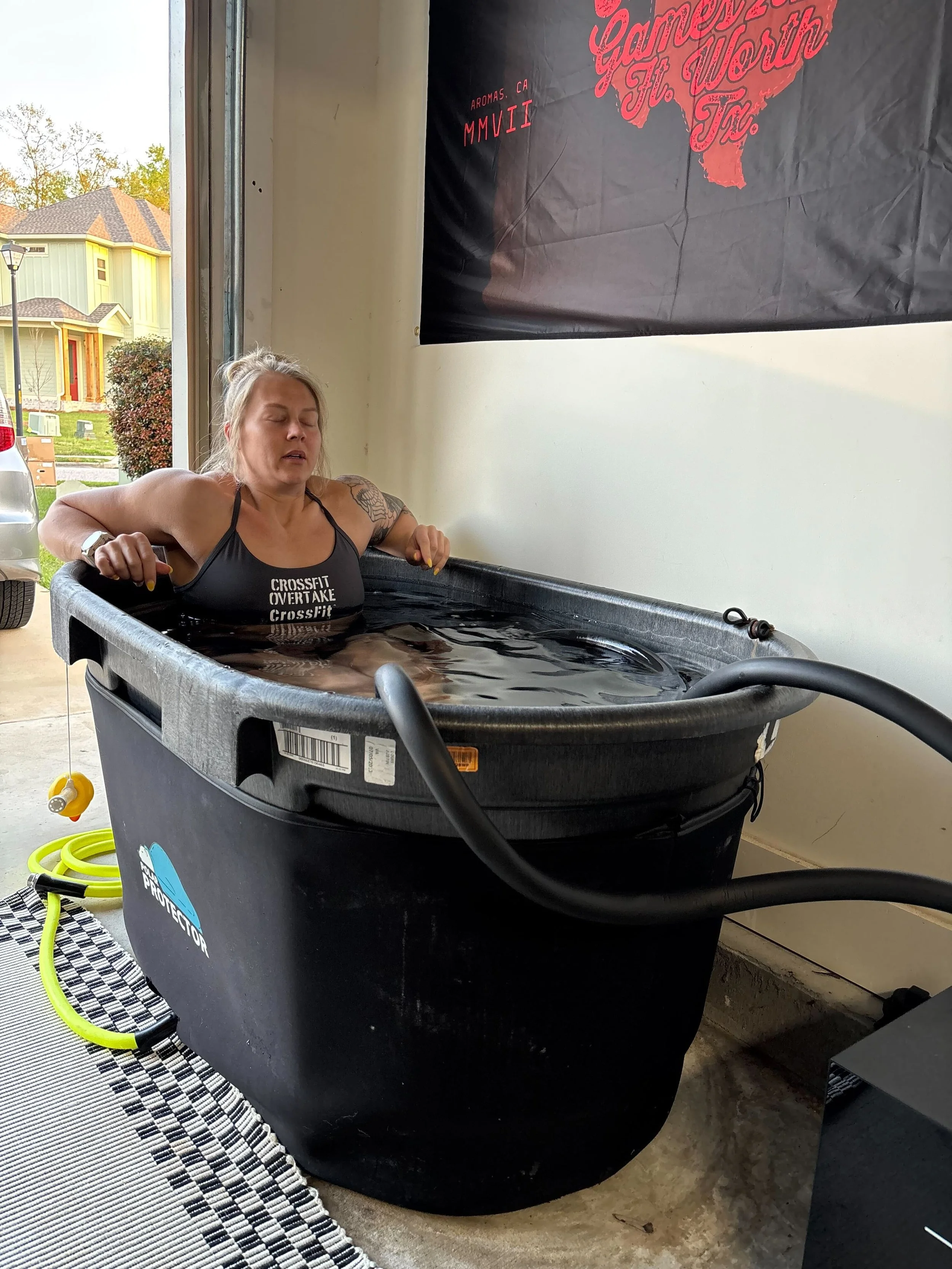
BLACK IRON RADIO EP. 339: Massage Guns, Saunas, and Ice Baths: What's Actually Worth the Hype?
Everyone wants recovery to be sexier than it is.
So now we've got massage guns in every gym bag, cold plunges in every backyard, and garage saunas getting treated like some kind of secret weapon for better performance. But are these things actually useful, or do they mostly just make people feel accomplished?
Amanda, Brooke, and Joyce get into what the research actually says about massage guns, saunas, and ice baths, where these tools can be useful, where they're wildly overhyped, and why feeling better is not always the same thing as recovering better. They also talk through the big caveat nobody wants to hear: the boring basics still run the show.
Sleep, nutrition, hydration, stress management, and training you can actually recover from will outperform almost every flashy recovery trend on the market. Every time.
This one is for the athletes wondering what's worth their time, money, and energy, and what's mostly just wellness-world glitter.
📲 Listen & Subscribe: Apple Podcasts | Spotify
Recovery has become a multi-billion dollar industry. Scroll through Instagram or TikTok for five minutes and you'll see someone sitting in an ice bath in their garage calling it a game changer, or an athlete using a massage gun between sets, or a luxury gym selling contrast therapy memberships and sauna packages. It's everywhere.
But here's the thing: recovery is something your body is literally designed to do. So the question worth asking is whether these tools actually help athletes perform and recover better, or whether they're just expensive wellness trends dressed up to convince you that you'll live longer, be more productive, and be fitter than the person next to you.
In this post, we're breaking down three of the most popular recovery tools right now: massage guns, ice baths, and saunas. We'll look at what the research actually says, who might genuinely benefit, and how they stack up against the boring fundamentals that actually drive results.
What Recovery Actually Means
Before we get into the gadgets, it's worth grounding ourselves in what recovery actually is, because it's a lot more than "I'm not sore today."
Real recovery involves rebuilding and repairing muscle tissue, replenishing glycogen stores so you can continue training day after day, reducing systemic inflammation and fatigue, and regulating your central nervous system and hormones. The whole point is adaptation. You don't get better from the workout itself. You get better from how well you recover from it.
And most of that work is done by the basics: sleep, nutrition, hydration, and stress management. Recovery tools can add value in the right context, but they're not doing the heavy lifting. Some of them can even interfere with the adaptation process, which we'll get into.
Massage Guns: A Feel-Good Tool, Not a Recovery Hack
Massage guns use percussive therapy, which is just a fancy way of saying rapid, repetitive pressure applied to your muscles. People say they break up knots, reduce soreness, improve blood flow, and speed up recovery. Those claims sound great. The research tells a more nuanced story.
What the evidence actually shows is that massage guns can produce short-term improvements in range of motion and temporary pain relief. You might feel looser and move better right after using one. But when you zoom out, one trial comparing percussive therapy to doing nothing at all found no significant difference in muscle soreness, strength, or general recovery markers over the following week.
There's also some evidence suggesting they can temporarily improve mobility, which does have practical value. If you can move better before a workout, you might perform better in that session. But again, that's a short-term effect, not a long-term adaptation.
A note on safety: for most people, massage guns are perfectly safe. Aggressive or improper use can cause bruising and tissue irritation, and in rare cases of extreme overuse on already-fatigued muscles, there have been reports of rhabdomyolysis, a severe form of muscle breakdown. More is not better with these things.
The bottom line on massage guns is that they're more about perception than physiology. If using one helps you want to move more, feel less stiff, or mentally prepare to train, that's not nothing. But they haven't been shown to improve strength, endurance, or long-term performance, and they don't actually speed up the muscle repair process.
If you have one and enjoy it, use it. Just be clear on what it is: a feel-good tool, not a recovery superpower.
Ice Baths: The Most Misunderstood Tool in the Game
This post is not here to hate on cold plunges. But ice baths are probably the most misunderstood and misapplied recovery tool in the current zeitgeist, and the hysteria around them has led a lot of people to use them in ways that are actively working against their goals.
Cold water immersion has been used in sports performance for decades. It's not new. Your favorite podcaster didn't invent it.
The research-supported protocol for cold therapy is actually way less intense than what you see influencers doing: roughly two to five minutes per session across multiple sessions per week, totaling about 11 minutes, at a water temperature of 50 to 59 degrees Fahrenheit. The more extreme the protocol looks, the more it's probably selling you something.
When used appropriately, cold water immersion can reduce delayed onset muscle soreness, improve perceived recovery, and sometimes help restore power output after intense exercise. Meta-analyses suggest soreness ratings may drop by around 20% compared to passive recovery within the first 24 to 48 hours.
Here's the big catch: cold exposure blunts inflammation, which is part of the adaptation process. Your body needs that inflammatory response in order to get better at whatever you're training for. Research on resistance training specifically shows that regular post-exercise cold immersion can reduce muscle protein synthesis and hypertrophy signaling. That's the opposite of what most people are trying to get from their training.
So when do ice baths actually make sense? A few situations stand out. If you have multiple competitions in a short time frame, like a wrestling tournament, a stage race, or a multi-day CrossFit competition, cold immersion can help you turn around faster. If you're training in high heat, a cold plunge can help restore core temperature and reduce nervous system fatigue. And if you're managing extreme soreness situationally, sometimes the short-term benefit outweighs the cost to adaptation.
When do they probably not make sense? During hypertrophy or strength-building phases when you're intentionally trying to accumulate stress and build adaptation. And definitely not daily. If you're cold plunging every single day, you're likely slowing your progress.
Ice baths are good for feeling better fast, and they may have some mental toughness upside if that's your thing. They're not going to make you stronger or better in the long run. Use them sparingly and strategically.
Saunas: The One With the Strongest Case
Of the three tools on this list, sauna and heat therapy has the most solid research behind it, the most diverse applications, and the most meaningful potential for performance benefit when used consistently and correctly.
Sauna use is not a new biohack. Nordic cultures, endurance athletes, and people training in hot environments have been using heat exposure for a long time. Research-supported protocols typically fall somewhere in the range of 160 to 200 degrees for 10 to 30 minutes.
What's actually happening physiologically is interesting. When you're in a sauna, your heart rate increases, blood flow increases, and you expand plasma volume. That last part matters a lot because more plasma volume means better oxygen delivery and better thermal regulation. Over time, consistent sauna use can actually mimic some of the cardiovascular adaptations you'd get from aerobic training, improving endurance capacity and heat tolerance. There's specific research showing around a four to seven percent improvement in time to exhaustion after consistent sauna use. That's meaningful.
Beyond performance, there are broader lifestyle benefits: stress reduction, better circulation, improved sleep, and general relaxation. These tie directly back into the foundational habits that drive recovery.
There are a couple of important caveats though. Dehydration is a real risk. The cardiovascular benefits of sauna use depend on adequate hydration, and if you're going in under-hydrated, you're canceling out a lot of the upside and compounding any existing dehydration from training. Drink before, during if possible, and after.
Heat is also a stressor on the body. More is not always better. Going back and forth between a cold plunge and a sauna repeatedly isn't automatically "more recovery." Overdoing it adds stress and can increase fatigue rather than reduce it.
For endurance athletes especially, those training or racing in summer heat or at altitude, sauna access is absolutely worth discussing as part of your protocol. There are even cross-adaptations between heat exposure and altitude acclimation that are worth leveraging. But if you don't already have sauna access, it's an incremental gain at best. The basics still matter more.
The Stuff That Actually Matters Most
All three tools above have their place. None of them replaces what your body actually needs to recover and adapt. Here's what does.
Sleep is the most powerful recovery tool available. Growth hormone peaks during sleep. Muscle protein synthesis and repair increase. Glycogen storage replenishes. Your nervous system resets. Athletes who consistently sleep eight or more hours show faster reaction time, better endurance, lower injury rates, and reduced perception of effort. This is the recovery tool you should care about most.
Nutrition drives the recovery process directly. After training, your body is ready to repair and rebuild, and protein is what makes that happen. Somewhere between 20 and 40 grams of protein post-workout, ideally containing leucine, is a strong starting point. For the full day, 1.6 to 2.0 grams of protein per kilogram of body weight supports muscle repair and retention. Carbohydrates replenish glycogen and support your next session. And overall calorie intake matters more than most people want to hear: consistently undereating means your body doesn't have the resources to recover properly. Lingering soreness, unexpected drops in performance, stalled progress, and persistent fatigue are often signs of being underfed, not undertrained.
Hydration is probably the most underrated and most ignored piece of the puzzle. Being as little as 2% dehydrated can start to negatively impact performance and recovery. A practical starting point is half your body weight in ounces per day, plus 16 to 24 additional ounces per hour of training (more in heat or humidity). If your urine is dark yellow, you're behind.
Stress management rounds it out. Your allostatic load is the sum of all the stressors on your system: life stress, work, relationships, sleep deficiency, nutritional gaps, training volume. Chronic elevated cortisol impairs muscle recovery, sleep quality, and immune function. Managing your total stress load is as much a part of recovery as anything else on this list.
The Takeaway
The fundamentals are not sexy. They're also not optional. Consistent sleep, solid nutrition, adequate hydration, and manageable stress will always outperform any recovery gadget on the market.
If you're sleeping five hours a night, chronically undereating, and training intensely every single day, an ice bath is not going to fix anything for you.
Once the basics are dialed in, recovery tools can add value as supplemental inputs, chosen based on your specific goals, your training phase, your access, and what actually gives you a psychological or physical edge. But always in that order.
If there's one thing worth taking away from all of this: you can only adapt from what you can recover from. Train hard, recover smarter, and stop outsourcing the basics to a gadget.
🎙️ WANT MORE? SUBSCRIBE TO BLACK IRON RADIO!
If you enjoyed this conversation, check out more episodes of Black Iron Radio, where we cut through the noise and give you real, no-BS advice on feeling, performing, and looking your best. Each week we share practical nutrition, training, and wellness strategies and tips to help you succeed.
📲 Listen & Subscribe: Apple Podcasts | Spotify
