
Sodium and Potassium: The Forgotten Electrolyte Balance
BLACK IRON RADIO EP. 343: Sodium and Potassium: The Forgotten Electrolyte Balance
Electrolytes don't start and end with tossing some sodium into your water and hoping for the best.
Brooke, Sabrina, and Lauren talk about the sodium-potassium balance that helps hydration do its job. They break down why sodium gets all the attention, why potassium is usually the missing piece, and how this balance affects energy, recovery, cramping, performance, and how you feel day to day.
They also get into why so many people are under-eating potassium, why more water is not always the answer, how athletes' needs can differ from the general population, and what to watch for if your hydration strategy is falling flat. From salty sweaters to supplement marketing to practical food swaps, this one covers the stuff people usually miss.
Most people's hydration strategy starts and ends with "drink more water." And while that's not wrong, it's only part of the story.
In this episode of Black Iron Radio, Brooke sat down with Sabrina and Lauren to break down one of the most overlooked pieces of nutrition: the balance between sodium and potassium. We talk about what this balance actually does in your body, why so many people are getting it wrong, and what you can start doing today to fix it.
What Electrolytes Actually Do
Electrolytes are minerals that carry an electric charge when dissolved in fluid. They're distributed throughout your body and are responsible for a long list of critical functions: cellular metabolism, nerve signaling, muscle contractions, and what's called osmotic equilibrium, which is just a technical way of saying the balance of fluid between the inside and outside of your cells.
That balance is regulated by something called the sodium-potassium pump, which is constantly shuttling sodium out of your cells and pulling potassium in. This process is what maintains the resting state of your cell membranes and makes nerve impulses possible. Every time your muscles contract or your brain sends a signal, this is happening.
Here's how the two minerals divide up their territory: sodium is the primary ion found outside your cells, and potassium is the primary ion found inside. The body wants to keep them where they belong. When sodium gets into the cell, it carries glucose and amino acids with it. When potassium stays inside, it supports cellular growth, muscle mass, and glycogen storage. That pump in your muscles after eating carbs? That's potassium and glycogen doing their job.
When these two minerals fall out of balance, things go sideways. On the mild end: muscle cramps, fatigue, brain fog, headaches. On the extreme end: seizures, arrhythmia, and worse.
Why Sodium Gets Such a Bad Rap
Sodium's reputation took a hit, and it wasn't entirely undeserved. Americans do tend to consume more than the recommended 2,300 milligrams per day, with average intake sitting closer to 3,300 to 3,400 milligrams daily. When that's combined with too little exercise and not enough potassium to balance it out, it can contribute to high blood pressure, cardiovascular stress, and strain on the kidneys.
But the overcorrection is just as problematic. Plenty of people hear "watch your sodium" and swing all the way to 500 to 1,000 milligrams a day. That's not the answer either.
We hear the sodium fear from clients all the time. Someone comes in with high blood pressure, their doctor told them to cut sodium, and now they're terrified to salt their food. What we often find when we actually look at what they're eating is that the sodium isn't the real problem. The potassium is almost nonexistent.
One client came to us training for a triathlon in the middle of summer while also starting strength training. His doctor's entire recommendation was "eat less sodium." When we looked at his actual food log, his potassium was consistently under 1,000 milligrams a day. That was the missing piece. Not because his sodium was perfect, but because nothing can compensate for that kind of imbalance.
We're not here to shame anyone for their sodium intake. We're here to help people understand the full picture, because most people have never been taught to look at it that way.
Potassium: The Missing Piece
Potassium doesn't get nearly the attention it deserves. An estimated 80 to 90 percent of people in the US aren't meeting the recommended intake, which tracks because the majority of our potassium comes from fruits and vegetables, and most people aren't eating nearly enough of those either.
When we start talking to clients about potassium, something interesting happens: they get excited. It's genuinely new information for most people. They've heard about sodium their whole lives. They've never thought about potassium at all.
The practical shift we encourage is this: instead of focusing on lowering sodium, focus on raising potassium. That one reframe changes the whole approach. Rather than taking things away, you're adding foods in. It's less restrictive, more sustainable, and often more effective.
High-potassium foods that are easy to work with include potatoes, bananas, avocados, yogurt, and legumes. None of these are obscure or hard to find. They're just foods people aren't prioritizing.
A simple goal we use with clients: try to get your potassium higher than your sodium. Not right away necessarily, but as a starting point. The longer-term target is roughly double the amount of potassium relative to sodium, but if someone is way off from that, we're not going to lead with the overwhelming version of the goal. Start with matching it. Then beat it.
Signs Your Balance Is Off
If your electrolytes are out of whack, your body will usually give you signals. The trick is knowing what to listen for.
Common signs include constant fatigue, brain fog, poor coordination, dizziness, muscle cramps or twitching, feeling flat in workouts, and slower-than-usual recovery. Extreme cases can feel like the flu: achiness from head to toe, difficulty moving. If you've ever pushed through a really long workout and then felt completely destroyed in a way that seemed out of proportion to the effort, electrolytes are a good place to look.
Another cue worth paying attention to: strong cravings for salty foods. Your body is often sending a signal when this happens. It might mean you've been too aggressive about cutting sodium, or you've been training hard and sweating a lot without replenishing. It's not a guarantee, but it's worth taking seriously rather than dismissing.
Athletes Have Higher Needs
For someone training an hour or more a day, especially in heat or humidity, the standard recommendations don't fully apply. High-output athletes lose significant sodium through sweat and often can't make up for it through food alone. That's when supplemental electrolytes become genuinely useful rather than just trendy.
One easy field test: taste your sweat after a hard session. If it's noticeably salty, or if you see white residue on your skin or clothing after a tough workout, you're likely a high sodium loser and may need to be more intentional about replenishment.
Climate matters too. Training in warm conditions raises your electrolyte needs compared to working out in cooler environments. And for older athletes specifically, total body water naturally decreases with age, thirst sensation diminishes, and sweat rate slows. These changes mean hydration and electrolyte strategies that worked at 30 may not be enough at 50.
When it comes to potassium specifically, we don't lose nearly as much through sweat as we do sodium. But athletes eating to match higher calorie needs will generally consume more across the board, so overall intake tends to stay in better proportion as long as food quality is solid.
What You Actually Need to Know About Electrolyte Supplements
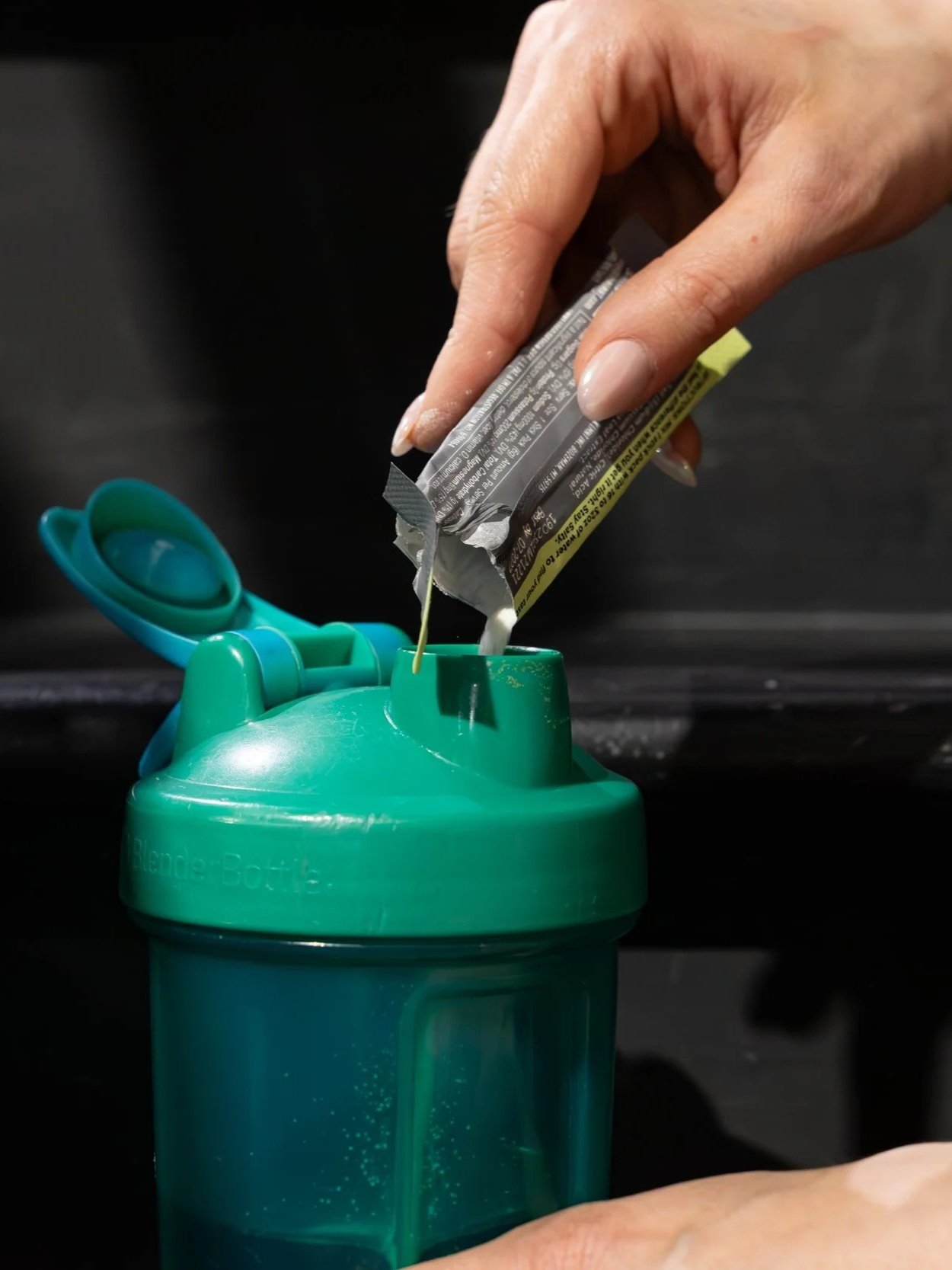
Electrolyte supplements are everywhere, and they're not all created equal. One thing that often gets overlooked when evaluating them: carbohydrates matter.
Going back to the sodium-potassium pump, the cell needs glucose to facilitate the transfer of electrolytes across the membrane. If you're taking an electrolyte supplement with zero carbohydrates, you may not be absorbing it the way you think. The sodium isn't going where it needs to go without something to carry it in.
Some brands do this well. Products that combine electrolytes and carbohydrates in one drink, like Skratch Labs and Vitargo, handle this automatically. If you're using something like LMNT that has no carbs, pair it with a piece of fruit or another carbohydrate source at the same time. Otherwise, you may be getting very expensive urine and not much else.
The same goes for timing. If you're drinking electrolytes first thing in the morning and then not eating anything for two more hours, you're likely flushing most of it before it gets to work. Pairing electrolytes with food, especially carbohydrate sources, is where you get actual return on that investment.
Where to Start
If any of this is sounding familiar, here are the places to begin:
Start looking at your food labels and tracking your total sodium intake for a few days. You might be surprised in either direction. If you're eating mostly whole foods that you season yourself, your sodium is probably lower than you think. If you're relying heavily on packaged or processed options, it might be higher.
Season your food. Seriously. Bland chicken and broccoli doesn't have to be a rite of passage. Salt your food, use spices, make it taste good. There's no reason not to, and it often helps bring sodium closer to a useful range while also making eating healthy feel a lot less miserable.
Add potassium-rich foods. Potatoes, bananas, avocados, yogurt, legumes, leafy greens. Pick one and work it into regular rotation before adding another.
If you're an athlete training hard or for long durations, take your electrolyte strategy seriously. Look at what you're taking, when you're taking it, and what you're pairing it with. Small adjustments here can have a big impact on recovery and performance.
And if you've been stuck in the "drink more water" loop while still feeling flat, fatigued, and under-recovered, this is probably the thing you've been missing.
🎙️ WANT MORE? SUBSCRIBE TO BLACK IRON RADIO!
If you enjoyed this conversation, check out more episodes of Black Iron Radio, where we cut through the noise and give you real, no-BS advice on feeling, performing, and looking your best. Each week we share practical nutrition, training, and wellness strategies and tips to help you succeed.
📲 Listen & Subscribe: Apple Podcasts | Spotify
