
So You Want to Improve Your Body Comp Without Sacrificing Performance
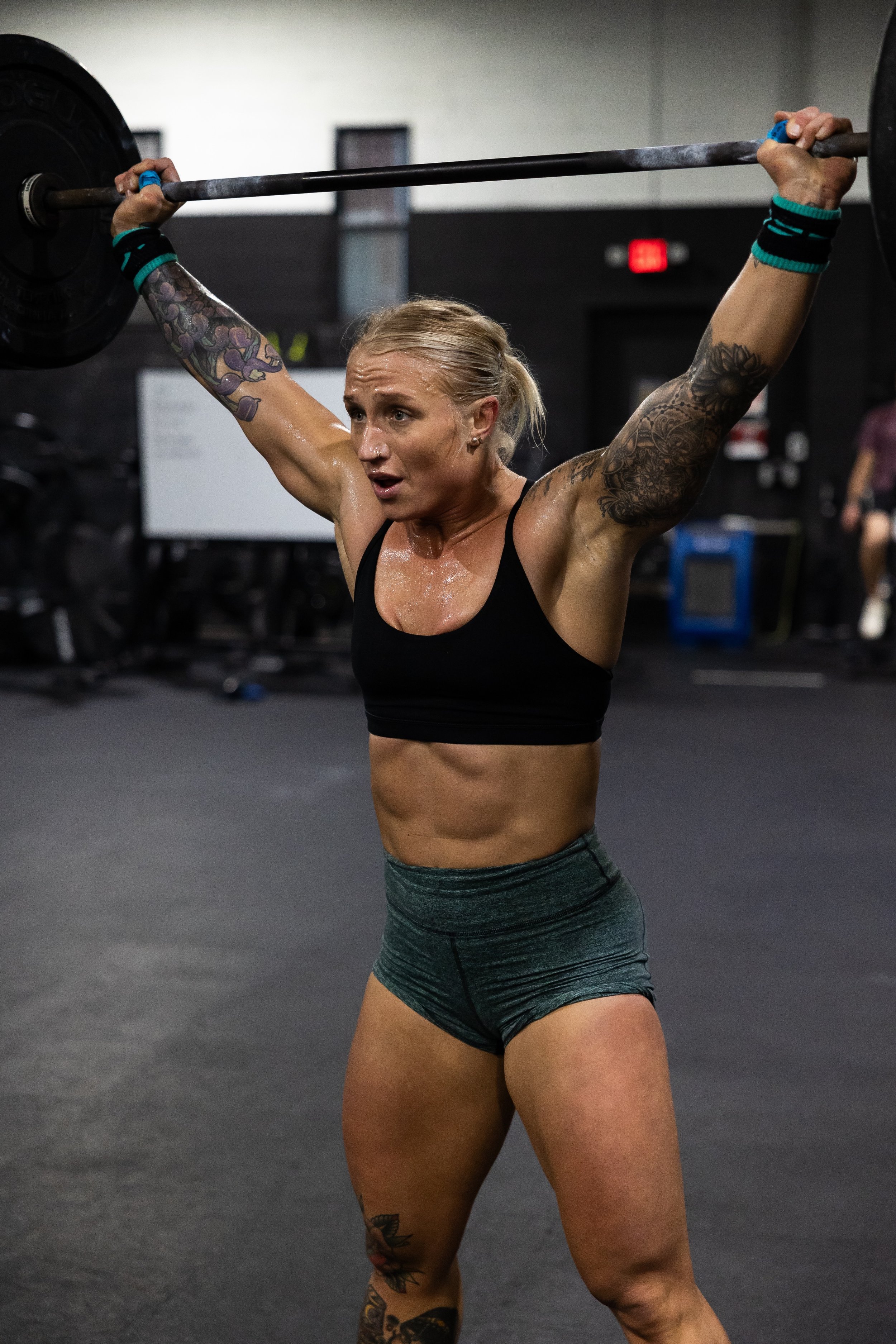
BLACK IRON RADIO EP. 362: So You Want to Improve Your Body Comp Without Sacrificing Performance
Wanting to change your body composition as an athlete is common. Knowing how to do it without tanking your performance is a different story.
Krissy, Kelly, and Kelsey get into what body recomposition means for performance, why being your leanest is almost never the same as performing your best, and why the slower and less dramatic the process is, the better. They cover how to periodize your nutrition around your training season, what a realistic body recomp timeline actually looks like, why performance does not improve infinitely as body fat decreases, and why the athlete you are comparing yourself to on social media has probably been training for ten-plus years to look that way.
This one is specifically for people who train for a purpose. If your primary goal is performance, this conversation will change how you think about the relationship between your body and your sport.
Let's start by saying something that might be a little uncomfortable: there are no shortcuts, tricks, or hacks here. There is nothing fast, sexy, or extreme about improving your body composition as an athlete, and the slower and less extreme you make the process, the better the outcome.
Krissy, Kelsey, and Kelly sat down to talk through all of it. What body recomposition actually is, why the timeline is longer than most people want to hear, and what actually works for athletes who want to change how they look without tanking their performance in the process.
First, Some Definitions
Fat loss and body recomposition are not the same thing. Fat loss means losing fat while hopefully preserving muscle, but potentially losing some muscle depending on the approach. Body recomposition is losing fat and gaining muscle at the same time, or at least within the same period of time, not necessarily in the exact same moment.
And when we talk about physical performance, we mean the body's ability to execute athletic tasks effectively. That's a broad umbrella that covers strength, endurance, agility, and motor control. Your ability to do those things well is what we're protecting while you work toward a body composition goal.
One more thing worth noting before anything else: losing fat looks much more dramatic than gaining muscle does. Put on 10 pounds of muscle and the visual change is subtle. Lose 10 pounds of fat and it's significant. This matters because it shapes how we measure progress and how patient we need to be.
Performance First. Body Composition Second.
If you are an athlete with a performance goal, that goal needs to come first. This isn't just a philosophical stance. There are actual consequences to prioritizing aesthetics over performance, and most of them show up in your training.
Performance does not improve infinitely as body fat decreases. This is a point Kelly made clearly, and it's one that tends to get lost in the CrossFit space in particular, where athletes look at elite competitors and assume that getting leaner will make them better. What they don't see is that those athletes have been training consistently for a decade or more to look the way they do. Their body composition is a long-term output of years of athlete living, not a starting point.
There are sports where body composition is tied more directly to performance or judging criteria, whether that's gymnastics, figure skating, bodybuilding, or sports with weight classes. If your sport is one of those, the calculus is different, but for most athletes, being at your leanest does not improve performance.
Kelsey brought up her own experience with this. She actually performed better at certain gymnastics movements when she was a little heavier and stronger, not when she was at her lightest. The relationship between body weight and performance is more nuanced than most social media content would have you believe.
Why This Takes So Long
Body recomposition is one of the slowest processes in all of fitness. We're not being dramatic about that. Kelsey told clients they might not notice even the smallest change for three-plus months. Krissy added that if you're noticing changes, you're probably going too fast.
Kelly compared it to strength training progress. When you first start lifting, you're adding five to ten pounds to your major lifts every week. That pace doesn't last. Eventually those increments get smaller and the time between PRs gets longer. Body composition works the same way. The more trained and the leaner you already are, the slower and more subtle the changes become. Kelsey's two-pound snatch PR that took a year and a half? Still a win. That's how it goes at a high level.
The athletes whose bodies you admire have usually been living what you could call the athlete lifestyle year-round for years. Not necessarily being perfect or extremely strict. Just consistently training, paying attention to the basics, and never taking extended time off from movement. That consistency compounds over time in a way that no short-term effort can replicate.
How to Actually Do This
Here is where we get into the part that is admittedly not very exciting. But that's the point.
Calories: stay close to maintenance. There should be no extremes in either direction. For most athletes pursuing body recomp, we're talking about a very small surplus or deficit of maybe 100 to 200 calories, possibly a bit more depending on your size and total intake. Kelly put it well: you don't renovate a house while hosting a party. Deficits should only happen outside of peak training blocks and never close to competition.
Fat tissue and muscle tissue are separate systems. You can technically lose fat and gain muscle even in a slight calorie deficit, but only if a lot of conditions are consistently in place over a long period of time. For athletes who already carry significant muscle or have very high training volume, a small surplus might actually produce better body composition results than a small deficit. It truly depends on the person, the season, and their goals.
Protein: adequate, not extreme. This is where Kelly pushed back a little on the culture around protein, and it's worth hearing. You do not need to be eating 180 grams of protein if you weigh 150 pounds. The protein market has gotten completely out of control, with protein Pop-Tarts and protein popcorn and everything in between, and it's creating a distorted picture of what's actually necessary. About 0.8 to 1 gram per pound of body weight is enough. Spread it throughout the day so you're not trying to hit 70 grams at dinner.
Carbohydrates: do not slash them. This is the biggest mistake Kelly sees athletes make when they try to change their body composition. Glycogen is the primary fuel source for high-intensity exercise. Low glycogen makes you feel weak, sluggish, and disinterested in training. If you need to reduce calories, reduce them from multiple sources rather than just cutting carbs. Bookend your training sessions with more carbohydrates and less fat, and shift that ratio in the other direction during non-training periods.
Training: add what you're missing, not more of what you already do. If you're a strength or power athlete who lifts a lot, adding more lifting is not the answer. Low-intensity cardio like walking or some HIIT-style work is probably what's missing. If you're an endurance athlete, a runner, a triathlete, an ultra competitor, you're already getting cardio. The lever you need to pull is lifting, and it needs to be an actual program with progressive overload, not random workouts you're copying from your favorite influencer online.
Kelsey mentioned this in the context of CrossFit, which happens to combine heavy compound lifting with high cardio output in a way that makes it particularly effective for body composition. But the principle applies everywhere: train the thing you're not already training.
NEAT: move more outside the gym. Non-exercise activity thermogenesis, or NEAT, is your non-training movement throughout the day. If you train for an hour or two and then sit for the rest of the day, you're leaving a lot on the table. More walking, getting up from your desk, general daily movement all contribute to your energy output in ways that don't spike hunger the way intense cardio does. Sabrina, who has been on the podcast before, mentioned that her best body composition came during a period when she was lifting heavy, doing CrossFit, and walking constantly. She was hitting around 20,000 steps a day and not doing hours of additional cardio on top of her training.
Sleep: non-negotiable. Kelsey called herself a self-proclaimed sleep snob and was not apologetic about it. Seven to nine hours of quality sleep is the target. When you're sleep-deprived, you lose muscle faster, your central nervous system doesn't recover properly, training performance declines, and injury risk increases. Your sleep environment matters too. Same bedtime every night, a dark room, white noise if it helps, a comfortable temperature. These sound like small things but they compound.
How to Track Progress
The scale is probably not your best tool here. Daily weight fluctuates for so many reasons, from inflammation to hydration to sodium to sleep, and it tells you almost nothing about what's actually happening with body composition. Some of the most impressive body recomposition results look like zero change on the scale, because someone lost fat and gained muscle in equal amounts over two years.
Progress photos are one of the best tools available, and they don't need to leave your phone. Krissy made this clear: you don't have to show them to your coach, your partner, your friends, anyone. Take them for yourself. Looking at where you were six months ago versus today gives you a visual reference that the scale simply cannot. Most people are very glad they have them.
Body measurements are another useful option. Clients whose waist measurements are going down while the scale is creeping up are seeing exactly what they should be seeing, even if it doesn't feel like progress in the moment.
And then there's performance itself. PRs, race times, lift numbers, benchmark scores, whatever is relevant to your sport. If your performance is going up, your program is working. That matters more than what any photo from a bad angle at a competition suggests.
One More Thing About Those Photos
Kelly brought this up and it landed. She was at the CrossFit Games, at the peak of her sport, and there were photos where she thought she looked terrible. People looking at her Instagram from that period would tell her she looked incredible. The reality is that action photos from competition are often unflattering by nature. You're lifting something heavy off the ground. You're mid-stride. The camera catches a moment that doesn't represent what you actually look like standing up.
A marathon runner Kelly coached PR'd her race by 20 minutes, felt amazing, and then saw photos from the course and was suddenly focused entirely on how she looked rather than what she had just accomplished. This is extremely common, and it's worth naming it as a pattern before it drives decisions about whether to start a fat loss phase.
A photo taken at a bad angle during an athletic effort is not a reason to overhaul your nutrition. Sometimes a photo just doesn't look great. That's true of the Amalfi Coast too.
The Takeaway
Slow. And then slower than that. No timelines, no deadlines, no milestones attached to how quickly this happens. Let this be something your lifestyle produces over time, because when it happens that way, it's easy to maintain. It is just your body. It is just your performance.
Lift heavy. Get some cardio in. Eat enough protein. Don't cut carbs. Sleep. Move throughout your day. Take progress photos for yourself. And stop letting the scale or a competition photo tell you whether any of this is working.
🎙️ WANT MORE? SUBSCRIBE TO BLACK IRON RADIO!
If you enjoyed this conversation, check out more episodes of Black Iron Radio, where we cut through the noise and give you real, no-BS advice on feeling, performing, and looking your best. Each week we share practical nutrition, training, and wellness strategies and tips to help you succeed.
