
Cutting Back on Alcohol: What to Know and What to Try
BLACK IRON RADIO EP. 363: Cutting Back on Alcohol: What to Know and What to Try
Alcohol consumption in the US just hit its lowest point in nearly 90 years, and the conversation around drinking has gotten a lot more nuanced.
Ryann, Sabrina, and Nic get into why people are drinking less, what is actually driving the change, and what the growing market of alcohol alternatives looks like for people who still want something in their hand at a social event. They cover the real impacts of alcohol on sleep, recovery, performance, and mental health, how to think about it if you have a complicated family history with it, and why there is a meaningful difference between not drinking and demonizing people who do.
Plus a breakdown of the actual alternatives, which ones are worth trying, which ones are mostly marketing, and how to figure out what actually fits your lifestyle.
Alcohol use in the United States is at its lowest point since Prohibition. According to a 2025 Gallup poll, 54% of Americans reported drinking alcohol, down from 60% in 2023. That is a significant shift, and it is happening for a lot of reasons: mental health awareness, fitness culture, the sober curious movement, and honestly, the fact that a cocktail now costs $18 at most bars.
In a recent episode of Black Iron Radio, coaches Ryann, Sabrina, and Nic talked about their own relationships with alcohol, why more people are choosing to drink less, and what the actual alternatives look like when you want something in your hand that is not a flat water.
Why People Are Drinking Less
There is not one single reason the numbers are dropping, but a few things keep coming up in the conversation.
COVID was a turning point for a lot of people. When the structure of office life, client lunches, and after-work happy hours disappeared, many people realized they were still consuming the same amount of alcohol without any of the social context around it. For some, that was the moment things clicked. For others, the removal of those obligations simply meant fewer reasons to drink in the first place.
Fitness culture has also played a role. If you have ever tried to show up for a training session after a night of drinking, you already know how quickly that stops feeling worth it. A lot of people who get into CrossFit, running, triathlons, or any kind of consistent training start to feel the direct trade-off and make different choices.
Mental health awareness is probably the biggest factor. The connection between alcohol and anxiety, disrupted sleep, and low mood is better understood now and more openly discussed. People are not just hearing that alcohol is bad for them in a generic sense. They are connecting it to how they actually feel day to day.
Marijuana legalization has also shifted things in states where it is legal. Some people simply prefer it as an alternative for taking the edge off socially, and it tends to offer a bit more control over the experience for most users. That said, the same principle applies: the goal is balance, not replacement of one dependency with another.
What Actually Happens When You Stop
The benefits people notice when they cut back or stop drinking entirely tend to show up fast.
Sleep is almost always the first thing. Even a small amount of alcohol disrupts sleep quality before you ever feel buzzed or tipsy, and wearables like the Whoop and Oura have made that impact impossible to ignore. Better sleep leads to better mood, better body image, and more energy to do the things that actually make you feel like yourself.
The anxiety piece is real too. A lot of people do not realize how much of their baseline anxiety is connected to alcohol until they remove it and notice the difference. There is also the anxiety that comes from not keeping promises to yourself, or from piecing together a night you cannot fully remember. That cycle feeds on itself.
And yes, it saves money. Drinks are expensive. That part does not need much elaboration.
The Sober Curious Middle Ground
You do not have to be fully sober to benefit from drinking less. The sober curious movement, which picked up steam with things like Dry January, is really just about questioning your relationship with alcohol and making more intentional choices. That might look like a month off, a few weeks, or just drinking less frequently without putting a label on it.
One thing worth knowing: telling yourself you will never drink again tends to backfire for a lot of people. The strict binary of "I said I would never have it, and now I've had some, so I might as well go all the way" is a pattern that shows up with alcohol the same way it shows up with food. A shorter time frame, just getting through the next two weeks, is often a more realistic and effective place to start. Sometimes two weeks becomes two months becomes a year, and you realize you do not even miss it.
That said, if addiction runs in your family or alcohol is affecting your mental health or daily functioning, those are reasons to take this more seriously than a casual experiment.
The Alternatives
The good news is there are more options than there used to be, and they have gotten a lot better.
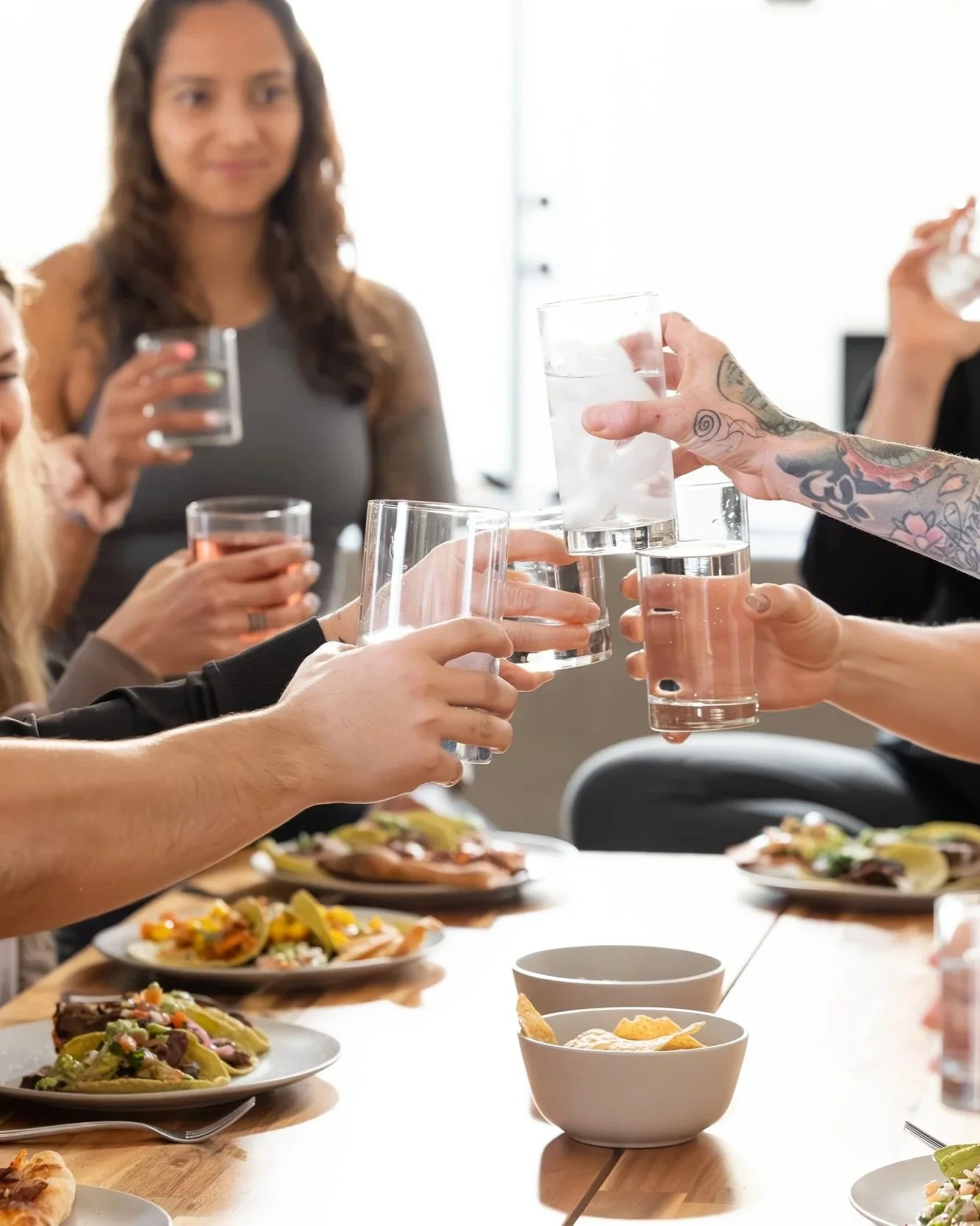
Mocktails. Almost every bar and restaurant has them now, and brands like Seedlip and Ritual make zero-proof spirits that actually taste like a cocktail rather than juice with a garnish on top. There is also a real placebo effect at play here. Being out with friends, having a fancy drink in your hand, being part of the moment: that part of the experience does not require alcohol to feel real.
Non-alcoholic beer and wine. Athletic Brewing has become the go-to for a reason. They have a solid variety, including IPAs and dark beers, not just a watered-down version of a light lager. Budweiser Zero is another one that holds up well compared to the original. NA wine is more of a mixed bag. It tends to taste like a slightly off fermented grape juice to a lot of people, but if you find one you like, go for it.
Functional and adaptogen drinks. Brands like Kin Euphorics and De Soi fall into this category. They are pretty, they are well-marketed, and they are expensive. The research on adaptogens is not robust enough to make strong claims about what they actually do, and most people do not report a clear noticeable effect. They are fine to try if you are curious, but probably not worth the recurring spend.
The basics. Diet Coke, Coke Zero, kombucha, sparkling water. These are genuinely underrated. You can be out until 2 AM having a great time with a cold soda in your hand. No one needs to know. No one really cares. And the next morning, you feel great.
THC beverages. If you are in a state where these are legal and you are not an athlete in a tested federation, THC drinks are an option some people enjoy as a social alternative to alcohol. Brands like Señorita, CAN, and Nowadays are popular. The key is to start with a low dose, around 2 to 5 milligrams, and work from there. A 20-milligram drink as your first experience is not a good time. And the same rule applies as with alcohol: do not drive.
Navigating Social Situations
One of the harder parts of cutting back is the social pressure, or at least the perceived social pressure. In reality, most people are far less focused on what is in your glass than you think they are.
A few things that help:
Having something in your hand. Whether it is a club soda with lime, a mocktail, or a sparkling water, just holding a drink removes most of the awkwardness before it starts.
Telling people ahead of time if you are comfortable with it. A quick "I'm just not drinking tonight, but I'm still in" tends to go over fine with people who care about you.
Having a low-key excuse ready if you need one. Something like "I've got an early morning" or "I've been feeling a little run down" is enough for most situations. Nobody is going to argue with that.
And if someone does push back after you have made it clear you are not drinking, that says a lot more about them than it does about you.
The Bottom Line
There is nothing wrong with drinking if you do not struggle with addiction, it is not affecting your mental health, and it fits your life in a way that feels balanced. There is also nothing wrong with being sober, being sober curious, or just wanting to feel better tomorrow morning than you did last weekend.
The goal is the same either way: knowing what works for you and making intentional choices instead of just defaulting to whatever everyone else is doing. If alcohol alternatives help you get there, they are worth exploring. If a cold Diet Coke at the bar does the job, that works too.
🎙️ WANT MORE? SUBSCRIBE TO BLACK IRON RADIO!
If you enjoyed this conversation, check out more episodes of Black Iron Radio, where we cut through the noise and give you real, no-BS advice on feeling, performing, and looking your best. Each week we share practical nutrition, training, and wellness strategies and tips to help you succeed.
