
So You Want To Get Comfortable Being Uncomfortable
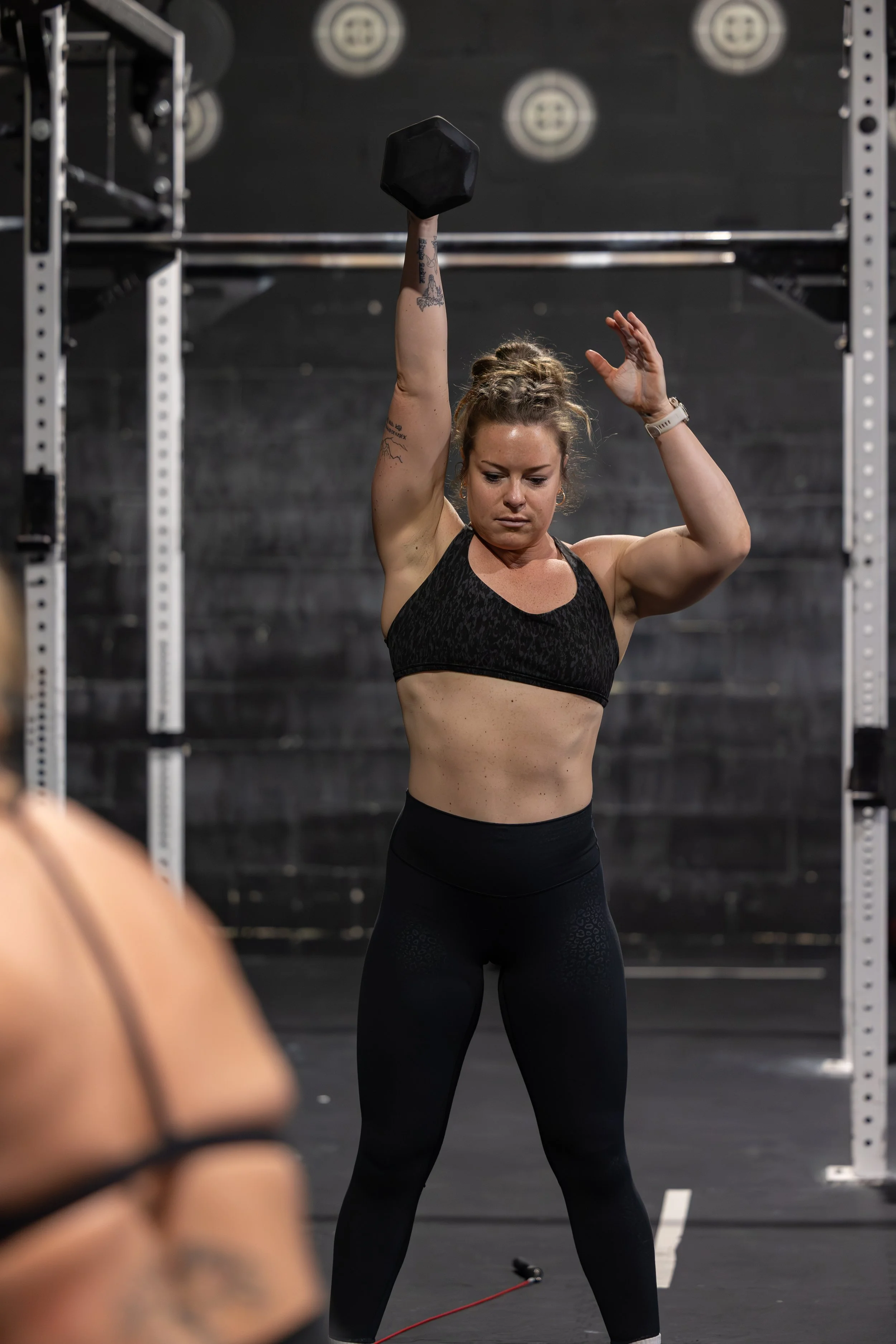
BLACK IRON RADIO EP. 360: So You Want To Get Comfortable Being Uncomfortable
Feeling uncomfortable when you try to change something is not a sign you are doing it wrong. It is a sign your brain is working exactly as designed.
Amanda, Brooke, and Kelly get into the biology and psychology behind why behavior change is so hard, why your brain is literally wired to talk you out of new habits, and why friction is not the same thing as failure. They cover productive discomfort versus the kind of discomfort that is actually a red flag, why people quit new things too soon, the difference between a fixed mindset and a growth one, and how to build the kind of resilience that actually makes habits stick.
This is not an episode about pushing through pain. It is an episode about understanding why this feels hard and building something that can handle it anyway.
If you've ever started a new habit, a new training routine, or a major lifestyle overhaul and found yourself a few days in thinking, "Why is this so hard? Maybe I'm just not disciplined enough," keep reading.
In this episode of Black Iron Radio, Amanda, Brooke, and Kelly break down why behavior change feels so uncomfortable, what separates productive discomfort from unsustainable misery, and how to actually build the resilience to stop quitting before things have a chance to work.
Your Brain Is Not the Problem. It Is Just Doing Its Job.
Here is the uncomfortable truth about comfort: your brain loves it. It is literally wired to seek patterns, protect familiarity, and conserve energy. When you try to change something, whether that is waking up at 5 AM, tracking your food, or committing to meal prep, your brain does not automatically see that as a positive. It sees it as something different, and different requires more effort.
New habits demand more decision-making, more follow-through, and more mental bandwidth. Most people are already running on a packed schedule with a full plate. Adding one more intentional behavior on top of that can feel like too much, and the friction that comes with it often gets misread as failure.
Brooke put it well: resistance does not mean you are doing something wrong. It usually just means you are doing something new.
Kelly added that this is not just about motivation either. Even if you are fully committed to a 5 AM gym session, your brain will try to talk you out of it. It will tell you to sleep in, that you can go later, that tomorrow is fine. That is a completely normal physiological response, not a character flaw.
Why Instant Gratification Always Wins in the Short Run
A big part of why new habits are so hard to stick to comes down to dopamine and the way our brains are wired for immediate reward. Old, comfortable habits often come with instant feedback loops, even when those habits are not serving us. Scrolling endlessly, overeating highly palatable foods, skipping a workout to rest, using alcohol to decompress after a hard day. These all deliver a quick hit of relief or reward, and your brain knows it.
The habits that actually change your life operate on delayed reward. Fat loss, muscle gain, improved health markers, better energy and sleep quality, a stronger relationship with food. None of these come with an immediate dopamine hit. That does not mean you are broken or undisciplined. It means you are human, and it means you have to build the skill of tolerating that gap between action and result.
Productive Discomfort vs. the Kind That Sets You Back
Not all discomfort is created equal, and learning to tell the difference is one of the most useful things you can do.
Productive discomfort is the soreness from a hard training session, the awkwardness of learning a new lift, the minor inconvenience of meal prepping on a Sunday, the social friction of saying no to a drink when you are prioritizing your recovery. These things are uncomfortable, but they signal growth. They are worth leaning into.
Kelly used the example of learning crossover double unders even as a high-level CrossFit athlete. It felt embarrassing and clunky, like the skill just was not clicking. But that awkward phase is a necessary part of learning anything new. The discomfort is not a sign to stop. It is just part of the process.
Red flags look different. Chronic exhaustion that does not go away. A string of nagging injuries that never quite heal. Anxiety around food, obsessing over calories, labeling foods as good or bad. Sleep suffering because you are lying awake mentally reviewing everything you did not accomplish. Feeling mentally consumed by the process to the point where it is affecting your quality of life.
The goal, as Brooke said, is not to make yourself miserable in the name of health. It is to challenge yourself enough to create change while still supporting your physical and mental wellbeing so you can sustain it long-term.
The All-or-Nothing Trap
Leaning too far into the extreme side of discomfort is exactly what makes behavior change unsustainable. And that is where the all-or-nothing mentality starts to do real damage.
Real, lasting change is mostly boring. When you are doing it well, a healthy lifestyle does not feel like a constant rush of motivation or excitement. It feels like going through the motions a lot of the time. Amanda made a great point about this: if every single day felt thrilling and intense, that would actually be concerning. The goal is not to stay fired up constantly. It is to make the behavior your new normal, which means showing up even when it feels like nothing.
Kelly echoed this from the training side: some of the best workouts for making you a better athlete are the ones that do not destroy you. Zone two work, threshold training, consistent movement over time. Not every session should feel like you are dying, and chasing that feeling every time is a fast road to burnout and decreased output.
Less is more. Doing a few things really well consistently will always outperform doing dozens of things halfway.
The Stories We Tell Ourselves
A huge reason people stay stuck is identity attachment: the narratives we have repeated to ourselves for so long they start to feel like facts.
"I am not a morning person." "I am a bad runner." "Drinking is just what my friend group does." "I have always been overweight." These stories feel true, but they are not permanent. They are just patterns that have not been interrupted yet.
Change threatens those self-proclaimed identities, which is why coaches almost always talk about identity change alongside lasting behavior change. If you tell yourself definitively that you are or are not something, you keep yourself stuck in whatever that narrative is. You have to be willing to act your way into a new belief system before you feel like the person you are trying to become. That is not fake. That is how identity change actually works.
Fear of failure is another major one. Brooke pointed out that staying stuck feels safer than risking trying and coming up short. But avoiding failure also means avoiding success, and confidence is not built by waiting until success is guaranteed. It is built by showing up, following through, and learning that you can handle the setbacks.
Kelly also named the fear of judgment as something that keeps a lot of people from ever starting. Walking into a new gym, signing up for a competition for the first time. Most of the time, the judgment we are afraid of is just our own insecurities projected outward. Other people are way too busy worrying about themselves.
How to Actually Build a Tolerance for Discomfort
Start by normalizing it. Stop being surprised that change feels hard. Expect some cravings. Expect soreness. Expect inconvenience, awkwardness, impatience. Expect that reaching your goal will probably take longer than you want it to. When you walk in already knowing those things are coming, you stop interpreting every uncomfortable moment as a sign to quit.
Start smaller than feels necessary. Kelly talked about how motivation tends to peak right at the moment someone is most fed up with where they are. That is also the worst time to go from zero to seven workouts a week. When you are starting from scratch, two workouts is a win. Stack the small wins, make them attainable, and build from there. The goal that feels almost too easy is often the one that actually creates momentum.
She used a powerful example from a podcast she had listened to: a man with 25 years of sobriety sponsoring a younger guy who was worried about missing a beer with his son on his 21st birthday. The advice? Do not drink today. Tomorrow, just decide again. You do not have to solve everything at once. You just have to control what is right in front of you.
Every time you follow through on something small, you create a piece of evidence for your brain that change is possible. Your brain has confirmation bias. It will find proof for whatever story you feed it. Feed it proof that you are someone who shows up.
Urge Surfing: A Practical Tool for Disrupting Impulses
One technique Amanda uses with clients is called urge surfing. The basic idea is to lengthen the time between an impulse and your response to it, because that gap is where your power actually lives.
Here is how it works: make a list of ten things you can feasibly do in most situations that take five to ten minutes each. Simple things: go for a walk, text a friend, read, do a bodyweight circuit, plan your next day of meals. When you get the impulse to act on an old habit, grab your list and do one or two things from it before you decide what to do.
The goal is not to get rid of the discomfort. It is just to stay present in something else long enough to see if the impulse passes. Half the battle is in that initial refocus. And every time you ride out the urge, you build a little more evidence that you can.
Reframe the Language
Kelly made a point that stuck: the language you put around discomfort shapes your experience of it before you even begin.
"These intervals are going to be so hard" sets you up for defeat before you start. "These intervals are going to make me so much fitter" changes your entire approach to the same workout. Same discomfort, different outcome.
"I am not a morning person" keeps you in bed. "I am going to start my day with a big win tomorrow" gets you to the gym.
The reframe does not make the hard thing easy. It just gives you a reason to do it anyway.
Nutrition Discomfort Is No Different
The nutrition side of habit change comes with its own version of productive discomfort. Increasing protein when you are not used to eating much of it. Adding more fiber when your diet has not included it. Navigating social situations when you are trying to reduce alcohol. Eating in a calorie deficit and learning to distinguish between actual hunger and food noise. Eating more food than you think you should in order to build muscle when you have spent years trying to eat less.
None of these feel natural at first. That is normal. What makes them sustainable is the same thing that makes any habit sustainable: doing them consistently enough that they stop feeling like extra effort and start feeling like your default.
The Bottom Line
Comfort has never changed anyone. Consistent discomfort has.
This week, pick one area where you have been avoiding discomfort and ask yourself what you are telling yourself that discomfort means. Then challenge that narrative and commit to one uncomfortable action. Not because it will feel good, but because on the other side of it is the version of yourself you are working toward.
Growth rarely feels comfortable in the moment. But staying the same usually gets pretty uncomfortable too. And that might be exactly why you are here.
🎙️ WANT MORE? SUBSCRIBE TO BLACK IRON RADIO!
If you enjoyed this conversation, check out more episodes of Black Iron Radio, where we cut through the noise and give you real, no-BS advice on feeling, performing, and looking your best. Each week we share practical nutrition, training, and wellness strategies and tips to help you succeed.
