
Raising Kids Without Food Guilt
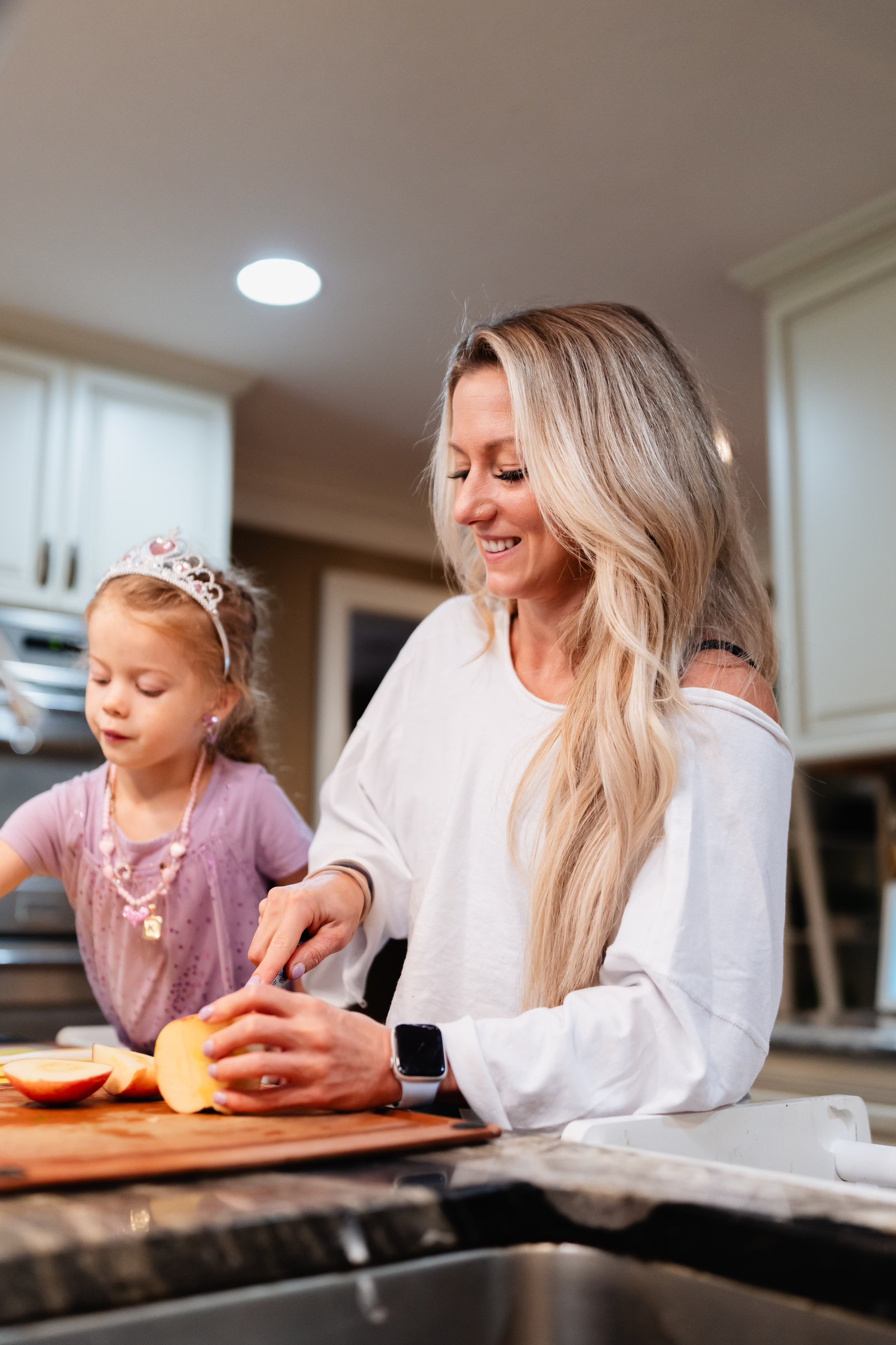
BLACK IRON RADIO EP. 374: Raising Kids Without Food Guilt
You can care about your own nutrition and still raise a kid with a healthy relationship to food. The two aren't in conflict. The language you use is what makes the difference.
Amanda, Christin, and Kelly come at this from three stages of parenthood: hoping to start a family, brand new mom, and mom of a two who now copy everything she does. They talk about how to pursue your own nutrition and performance goals in front of your kids without passing down the food guilt so many of us grew up with. How you talk about what you're doing, not the fact that you're doing it, is what your kids actually absorb.
Plus why kids aren't born with food guilt, why you don't have to hide your habits, how to catch a good habit quietly turning into a restrictive one, and why the energy you bring to food matters as much as the words.
Christin's kids know what foods have protein in them. They also know protein builds strong muscles, which is why her son will eat his steak and then flex at the dinner table like he just hit a new PR. That's the kind of nutrition education Black Iron Radio hosts Amanda, Christin, and Kelly want more parents to feel confident about.
For parents who track macros, weigh their food, or care about body composition, that doesn't have to become a source of stress once kids enter the picture, and it doesn't have to be hidden from them either. The goal, as Amanda frames it, was never to hide these habits from your kids. It's to model why you do them, while teaching them flexibility, curiosity, and self-trust along the way.
Kids Aren't Born With Food Guilt
Food guilt is learned. It's not one comment that does it, it's thousands of small moments stacked over years: dad turning down birthday cake because he "can't eat stuff like that," mom calling herself bad for having dessert, dinner conversations that circle back to calories or what needs to be burned off. Kids are listening to all of it, and they're mimicking it long before they understand any of the nutrition behind it.
That's not a reason to abandon your own goals. It's a reason to get honest about what your kids are actually absorbing, because most parents are still working through their own relationship with food, dieting, and body talk. Having kids doesn't erase that baggage, it just makes you more aware you're carrying it.
Caring About Your Nutrition Isn't the Problem, the Framing Is
Tracking macronutrients, keeping a food diary, training for something, paying more attention to your body, none of that is inherently harmful to your kids. It's the language wrapped around it that lays the foundation, in either direction. The behavior is neutral. The story you tell about it isn't.
Two parents can weigh their chicken to hit a protein target and send their kids two completely different messages. One says, "I need exactly 35 grams of protein or I'm going to ruin all my progress." The other says, "I've made this enough times to know the portion that helps me recover and train better." One teaches fear and rules. The other teaches that food is information about how you feel. Your kids are learning which one to carry.
The same split shows up everywhere:
Skipping dessert: "Ugh, I don't need this, I've already been feeling so fat" versus "I'm not really craving dessert tonight, maybe I'll take a piece home for later."
Exercise: "I have to run five miles because of those cheese steaks last night" versus "I always feel clear-minded after a run." Same workout, two completely different messages, one frames movement as punishment, the other frames it as something you get to do.
Packing a kid's lunch: "You're not eating chips, that's junk food" versus "You've got chips, a sandwich, fruit, and some yogurt, a good mix to keep your energy up."
A Good Habit Gives You More Freedom. A Bad One Takes It Away.
This is the gut check for any food behavior, kids aside: does it open up your life, or does it shrink it? Can you be flexible, go with the flow, and enjoy food with the people you love? Or does it come with rules, anxiety, and a growing list of things you can't do? Your kids feel that difference, even when you don't say a word.
Words to Retire
Christin and Kelly both flagged the same category of language to cut out completely: "I'm being so bad, I have to burn this off," "I can't be trusted around a box of donuts," or any comment that circles back to how you look, "I look fat, I look disgusting." Christin said if she ever heard her own daughter say something like that about herself, she'd be devastated. That reaction is worth sitting with, because kids don't come up with that language on their own. They hear it from us first.
You also don't have to eat the cake to prove a point. Parents will force down cake they don't even want just so their kids won't think they're shaming it. But "I'm not really wanting dessert right now, maybe I'll grab a piece for later" models something more honest. You're allowed to not want the cake. You're also allowed to want it. Food isn't good or bad, it's just food, and the goal is for your kids to internalize that as fact, not as a lesson they have to unlearn later.
Practical Ways to Raise Confident Eaters
Get them involved in the process. Grocery shopping, farmers markets, letting them pick something new to try, prepping vegetables with kid-safe knives, even if the zucchini ends up in giant chunks instead of a perfect sauté. Involvement builds curiosity, and curiosity is the opposite of food fear.
Skip the separate "diet plate." If the kids are having pizza, don't silently eat chicken and broccoli next to them. Have a slice, add a side salad if that works for your goals, but eat the same meal your family is eating. Kids notice when mom or dad never touches what's on the table.
Let go of the clean plate mentality. Forcing kids to finish everything in front of them teaches them to override their own fullness cues, and that disconnect from hunger signals follows a lot of people straight into adulthood. If they're not hungry for the dinner you made, they'll eat when they are.
Answer questions with questions. When kids come home asking about a friend's parent doing a cleanse or something they saw online, ask them where they heard it and what they think about it, rather than lecturing. It teaches them to be critical of information instead of just absorbing it.
Kids are also more perceptive than most parents give them credit for. One mom noticed her seven-year-old repeatedly checking her stomach in the bathroom mirror, only to realize her daughter had been watching her do the exact same thing. Kids don't just hear what you say about food and your body. They watch what you do when you think no one's paying attention.
The Takeaway
Your kids are more likely to remember how you talked about yourself and your body, whether meals felt stressful or calm, and whether food got moralized or just got to be a normal, enjoyable part of growing up, than they are to remember whether you ever weighed a chicken breast. The real goal is raising adults who can eat without guilt, choose vegetables without resentment, enjoy pizza without spiraling, and understand that nutrition is not a referendum on who they are as a person.
🎙️ WANT MORE? SUBSCRIBE TO BLACK IRON RADIO!
If you enjoyed this conversation, check out more episodes of Black Iron Radio, where we cut through the noise and give you real, no-BS advice on feeling, performing, and looking your best. Each week we share practical nutrition, training, and wellness strategies and tips to help you succeed.
