
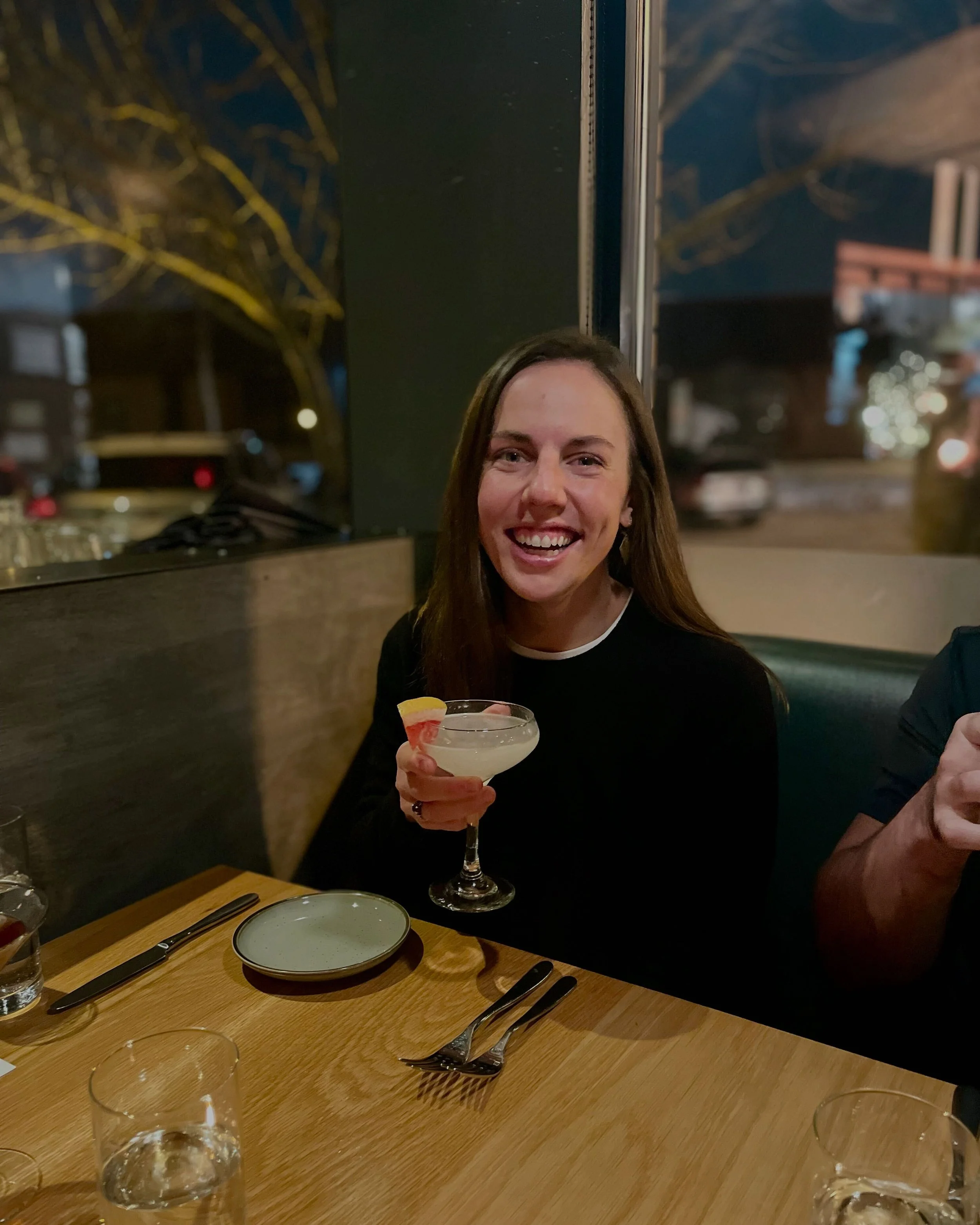
BLACK IRON RADIO EP. 397: Champagne Problems: Alcohol & the Holidays
The holidays can mean multiple social events a week from Thanksgiving to New Year, and a lot of them are built around alcohol.
Morgan, Kelly, and Chelsea talk through why drinking tends to go up this time of year, how to figure out what amount works for you, and how to set a boundary you can keep while still enjoying the party. They also cover what to say when someone asks why you’re not drinking. And if you go past your plan, they talk about how to get back to your normal routine the next day.
Plus: why the first one or two drinks tend to feel the best, and how to practice a boundary at lower-stakes events.
Between Thanksgiving and New Year, a lot of people end up at multiple social events a week, and most of them are built around alcohol. In this episode of Black Iron Radio, coaches Morgan, Kelly, and Chelsea talk through how to handle that season with a plan. None of them are telling you not to drink.
Why drinking goes up this time of year
There are a few things stacking up at once. Events are built around alcohol, “we made it through the year” feels like a reason to celebrate, and everyone is tired. Routines fall apart, and the “screw it, I’ll start over in January” mindset kicks in. If you’re hosting, there’s also the belief that alcohol makes a party more fun.
Check your baseline
After a night of drinking, Chelsea suggests asking three questions. What did the day look like before you started (did you skip meals?), how many drinks did you have, and is that typical for you? If you usually have five, try three at the next event and see whether recovery feels different.
The first one or two drinks
The first one or two drinks are where the relaxed, social, easy feeling shows up. Keep drinking and the effect moves from stimulating toward sedating, and coordination and judgment start to slip. That includes judgment around food, which is how a plan for two glasses of wine can turn into a late-night calzone. More alcohol doesn’t mean more fun. Once you’ve hit that peak, let the buzz ride out and switch to water. Morgan also reminds us there’s no real cure for a hangover. You mostly have to give it time, and some of it is dehydration.
Choose which events get a drink
If you have a work party Wednesday, another party Thursday, and an event Saturday, you don’t have to treat them all the same. Kelly suggests picking the ones where alcohol actually adds to the experience, like brunch with your friends. Lower-stakes events, like a work party, are a good place to practice having one drink and heading home.
Before you go
Don’t under-eat to save calories for alcohol. Chelsea makes sure she’s hydrated and fed, and looks at what the next day holds. If you have to be up early, you may want a slower morning planned. If she wants a good training session, she’ll get it in earlier that day. It’s about getting full benefit from the session, not about punishing yourself for drinking.
At the event
Notice your proximity to the bar or appetizer table.
Alternate with two non-alcoholic drinks between each alcoholic one. NA beer, sparkling cider, and diet ginger beer are all options.
Lighter drinks you sip slowly are easier to pace than shots, so some people set a no-shots boundary.
Before another drink, Morgan asks whether she’s chasing the feeling or actually wants it. She also asks whether she feels safe, has her wits about her, and has a plan for tomorrow.
Step away from the table. If people are playing football outside or a game is going on, join in. It gives you a break and time to decide whether you want another.
Ask what the drink is doing for you
Kelly and Chelsea suggest asking whether a drink is helping you relax and connect, or whether it’s more of a coping tool. How automatic is it? A tradition is often about the routine or the feeling, not the alcohol itself, and you can change it whenever you want. Morgan also encourages you to look at who you’re spending your extra time with, since people will drink to feel comfortable around certain company.
When someone asks why you’re not drinking
Someone usually will, so prepare. Chelsea keeps it direct: “I don’t want to tonight.” You don’t owe an explanation, and having a couple of responses ready that sound like you helps. Kelly points out that it often comes from wanting you to have a good time. Being the driver is another reason people rarely argue with.
Whether you tell anyone your plan is up to you. Morgan prefers to keep a new boundary to herself, and Chelsea tells people. Either way, the boundary is yours to hold.
The morning after
Try to be as on point with nutrition as you can. Eat a balanced breakfast with carbs, protein, fat, and fiber, drink extra water, and have your usual coffee or tea. Return to your normal eating routine, even if you went past your boundary. Chelsea compares it to going over your macros: you still deserve to eat, and restricting yourself the next day won’t make you feel better.
Then reflect without guilt. One of Kelly’s clients journals each week about how she approached alcohol at a social event and how she felt afterward. There’s no judgment, just a chance to see what worked and ask what one tool she can add next time. There will always be another party.
The Takeaway
Cutting alcohol out completely or setting hard, fast rules is rarely the answer, and the same goes for most all-or-nothing approaches. Check your baseline, pick the events where a drink adds something, plan ahead, and let each party teach you something for the next one.
🎙️ WANT MORE? SUBSCRIBE TO BLACK IRON RADIO!
If you enjoyed this conversation, check out more episodes of Black Iron Radio, where we cut through the noise and give you real, no-BS advice on feeling, performing, and looking your best. Each week we share practical nutrition, training, and wellness strategies and tips to help you succeed.
