
Training During Your Cycle: What The Research Says Now
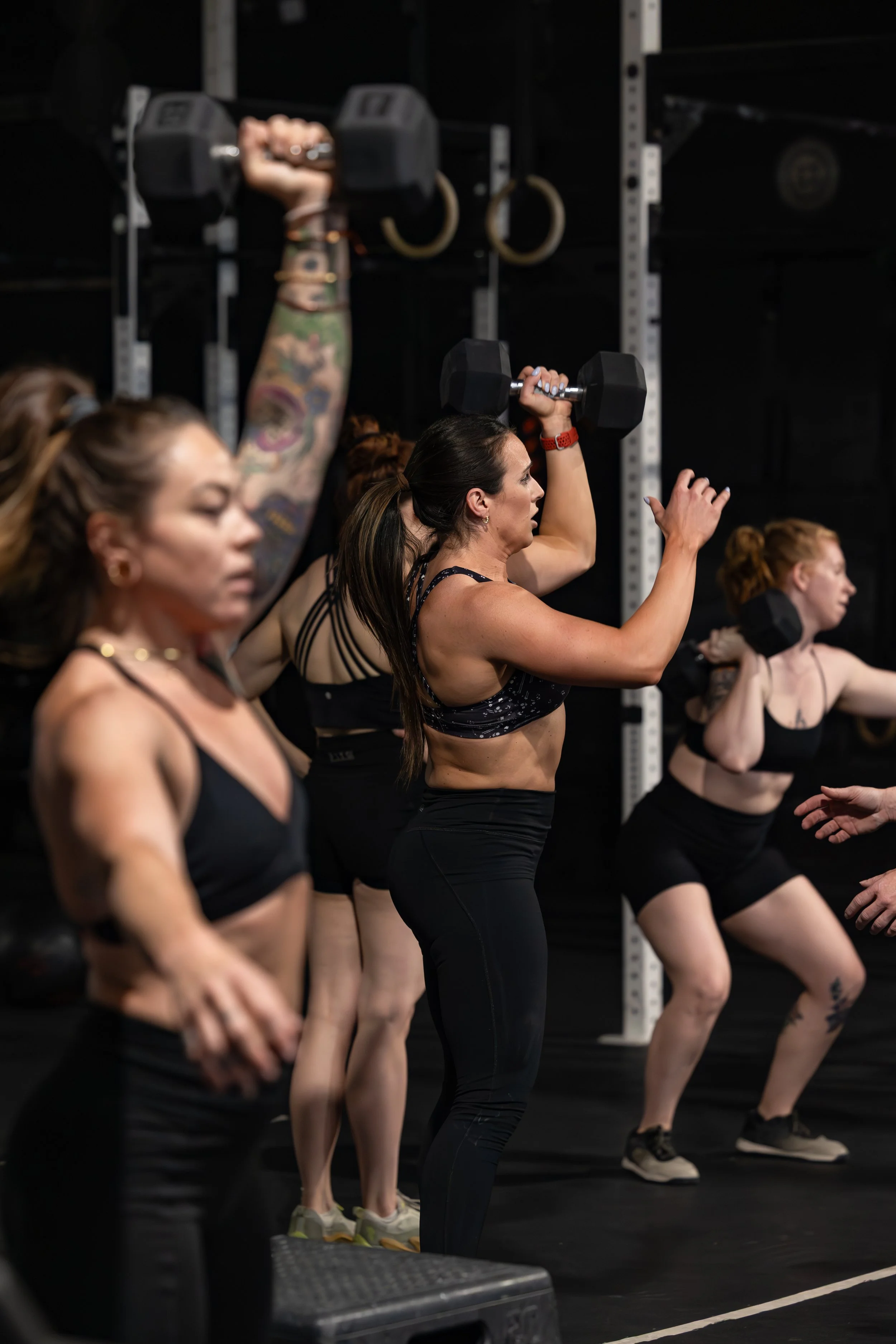
BLACK IRON RADIO EP. 379: Training During Your Cycle: What The Research Says Now
Cycle syncing is all over your feed right now, wrapped in a lot of intensity and a little bit of fear-mongering. So we looked at what the research actually says.
Morgan and Jess Gordon get into the difference between the real, legitimate hormonal changes that happen across your cycle and the internet's version, which somehow always ends with women being too delicate to train hard and needing a sound bath during their luteal phase. They break down the actual phases, why "train on day 14" assumes a textbook cycle that most people don't have, and why the research on performance across your cycle is nowhere near as conclusive as a 30-second reel makes it sound.
Plus why birth control changes the whole conversation, how much your period actually affects your performance output (spoiler: less than the internet claims), and why the story you tell yourself about how you're "supposed" to feel can become a self-fulfilling prophecy.
Less than 10% of medical and health studies use women as the primary subjects. That gap is real, and it's exactly why cycle syncing found such an eager audience. People with a menstrual cycle finally see content that says "this is for you specifically," and after decades of being an afterthought in research, of course that lands. The problem is that a lot of what's filling that gap on TikTok right now isn't research. It's vibes wearing a lab coat.
On this episode of Black Iron Radio, Morgan and coach Jess Gordon went through what TikTok is currently telling women about training around their cycle, then went through what the actual research says. The gap between the two is bigger than you'd think.
The TikTok Pitch
Scroll TikTok's fitness corner right now and you'll run into some version of these claims: your body changes week to week, not month to month, so you have to train "with" your cycle instead of against it. Training at your normal intensity instead of scaling back once your period starts, the pitch goes, is "training like a man," and doing that spikes your cortisol, which then spikes your hunger and wrecks your metabolism. Some of it gets even more literal, framing women as fundamentally incapable of consistency, something about needing to "flow" like the tide instead of grinding like men supposedly can.
None of that holds up. The cortisol-to-hunger claim isn't true, and cortisol doesn't work the way these videos imply, something Black Iron has broken down on its own in prior episodes. And the idea that women biologically can't do consistent training is just not backed by anything, it's a gendered narrative dressed up as science. The videos rarely cite a study. Usually the "evidence" is a creator saying "the science goes way, way back" and promising a follow-up video that explains why. That's not a citation, that's a cliffhanger.
A Quick Rundown of the Menstrual Cycle
Before getting into what the research actually shows, it helps to know what a textbook cycle even looks like, with the caveat that a lot of women don't have a textbook cycle, and that's normal too.
Menstruation: Days one through five, roughly. This is the bleed, the shedding of the uterine lining.
Follicular phase: Days one through 13. It overlaps with menstruation and runs all the way to ovulation.
Ovulation: Around day 14, though "around" is doing a lot of work, this varies quite a bit person to person.
Luteal phase: Days 15 through 28. Estrogen and progesterone fluctuate here, and this is where most of the real physiological effects show up.
That's the average. Cycles anywhere from 26 to 45 days are both real and normal, and hormonal birth control changes the picture entirely since you're not actually ovulating on it. There is no universal "day 14" that applies to every woman, which is a big part of why blanket cycle-syncing plans fall apart in practice.
What 80-Plus Studies Actually Found
When researchers pooled roughly 80 to 90 studies on strength and the menstrual cycle, the average performance difference across the whole cycle was measurable, but tiny, around a .06 effect size. That's not a typo. Researchers went in expecting to find a specific window where women lift best. Instead, they found that women don't respond the same way to each other at all. Some performed better in certain phases, some performed worse, and a chunk of women showed no measurable change whatsoever. The same pattern held for power output, some studies found small improvements around ovulation, others found nothing.
The takeaway from the actual data isn't "here's your optimal training week." It's that individual variance dwarfs the phase effect. Two women on day 14 of their cycle can have completely opposite experiences, and neither one is wrong.
The Physiological Changes That Are Real
This isn't a "your cycle doesn't matter" post. Some of what's happening hormonally is genuinely physical, not psychological. As progesterone rises during the luteal phase, it makes it harder for your body to regulate its core temperature, which is why some women deal with night sweats, needing extra fans, or feeling like they're overheating faster during training in that back half of their cycle. If you're an endurance athlete training in the heat or over long durations, that thermoregulation shift is worth planning around with hydration and electrolytes.
But here's the context that matters: these true physiological changes account for something like less than 5% of your overall performance output. Sleep quality can suffer, which affects recovery, which affects how you feel walking into the gym, but your muscles haven't lost capacity because of where you are in your cycle. Most of what people attribute to their period is actually downstream of eating and sleeping poorly, not a hormonal ceiling on what your body can do.
How to Eat Around Your Cycle
Nutrition is where cycle-based adjustments have the most legitimate research behind them, and the changes are smaller and simpler than the TikTok version suggests.
Protein stays flat. Your protein target doesn't change based on where you are in your cycle. Keep it consistent day to day and week to week.
Early menstrual through follicular, lean into carbs. Your body has a slightly higher capacity for carbohydrates here, so this is a fine window to add 10 to 30 extra grams from things like potatoes, oatmeal, or bread, and pull back a little fat to keep total calories balanced if you're tracking closely.
Luteal phase, lean slightly on fat. You're a bit more reliant on fat in this phase, so an extra serving, like peanut butter on your oatmeal, can help. If you're managing calories tightly, swap a fat serving in for a carb serving rather than adding both.
Expect a modest metabolic bump. Metabolic rate does rise somewhat in the luteal phase, an extra 100 to 300 calories a day is normal. If you're getting real hunger signals at night during this window, that's biology, not a lack of discipline, and it's fine to answer it.
Fuel around training regardless of phase. If you train fasted, some amino acids or a whey shake beforehand helps recovery. A liquid carb source, even something as simple as apple juice, works if solid food before an early session isn't realistic.
One thing worth flagging directly: a lot of the content about carb sensitivity and insulin around your period is pulled from research on sedentary populations, not active, trained lifters. If you're lifting weights and eating adequately, "watch out for carbs during your luteal phase" mostly does not apply to you.
Supplements: Test Before You Guess
Iron and magnesium get recommended constantly as preventative period supplements. Before adding either, get actual bloodwork done. That's the standard borrowed from Dr. Alissa Olenik: test before you guess. Randomly supplementing based on symptoms alone is one of the fastest ways to throw your body further off, not fix it.
The Tool That Actually Matters: Autoregulation
If there's one practical system worth taking from this episode, it's autoregulation, using your rate of perceived exertion, RPE, to guide a session in real time instead of rewriting your whole program around what phase you're in. A coach prescribes a specific weight and rep count expecting it to land at roughly an 8 out of 10 effort based on your training history. What that weight actually feels like on a given day depends on how your body shows up, sleep, stress, fatigue, cycle symptoms, all of it. If it genuinely feels like an 8, you proceed as planned. If that same prescribed weight feels like a 9 or 10 instead, that mismatch is real information, and it's your cue to back off the load or volume based on how the session is actually going, not based on a calendar prediction. This isn't cycle-specific either, it's the same tool anyone uses when they're stressed, sick, or just having an off day.
This matters even more if you compete. If your training plan always backs off during your luteal phase and a competition happens to land there, you'll walk in never having practiced pushing hard in that state. Athletes who want to perform at a high level need to occasionally test those harder efforts across every phase of their cycle, not just the ones that feel easiest.
The Takeaway
Your cycle is real, and some of what you feel during it, especially in the luteal phase, has a genuine hormonal basis worth working around with smart nutrition and hydration. But the actual data says those effects account for a small slice of your total performance, while eating enough, sleeping enough, and staying on a real progressive overload program account for almost all of it. If you're chasing a rigid cycle-synced routine before you've nailed the basics, you're optimizing the 1% and ignoring the 99%. Track your own symptoms and performance instead of borrowing someone else's TikTok script, use RPE to adjust day to day, and trust that showing up and lifting heavy things is still the move, no matter what week it is.
🎙️ WANT MORE? SUBSCRIBE TO BLACK IRON RADIO!
If you enjoyed this conversation, check out more episodes of Black Iron Radio, where we cut through the noise and give you real, no-BS advice on feeling, performing, and looking your best. Each week we share practical nutrition, training, and wellness strategies and tips to help you succeed.
