
So You Want To Bounce Back After Injury
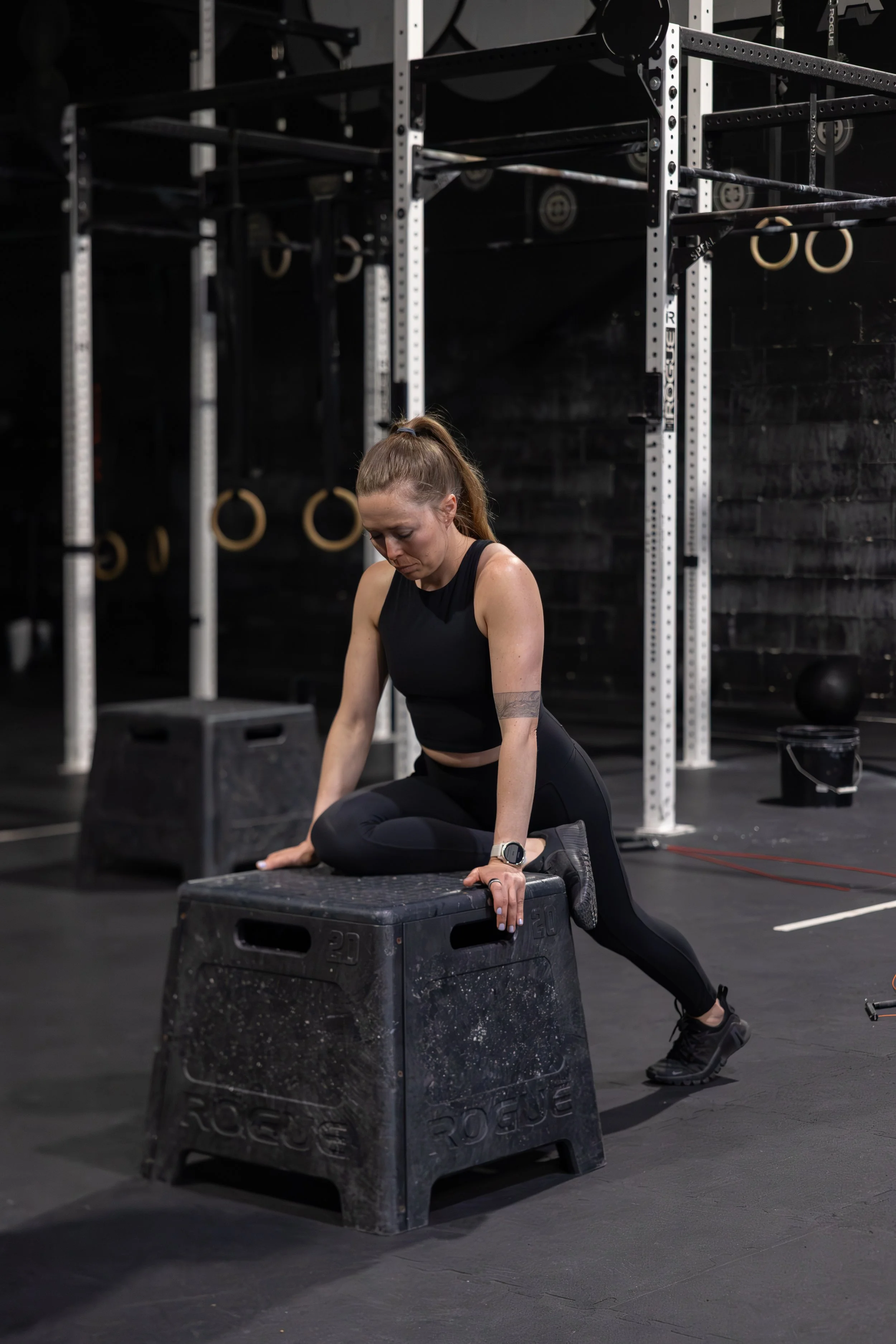
BLACK IRON RADIO EP. 372: So You Want To Bounce Back After Injury
The athletes who come back strongest are not the ones who heal the fastest. They're the ones who respect the biology and rebuild with patience.
Amanda, Jess Saxon, and Whitney (DPT) get into why you genuinely cannot cheat code an injury. They break down the phases of tissue healing and why different tissues heal on wildly different timelines, why "when can I train again" is the wrong question, and why so many people re-injure themselves the second they start feeling better. They cover the shift from RICE to PEACE and LOVE, why medical clearance is not the same as being ready, and why the way you talk about your injury actually changes how your brain perceives it.
Plus why you can PR without getting any stronger, how to keep your identity intact while you heal, and why the comeback was never about proving how tough you are.
Jess Saxon tore her glute med, the result of overuse training her cleans. She kept training through it anyway, still lifting, still competing, still chasing her numbers, and it didn't work. She eventually needed a gluteal tenotomy, and getting back to competition took her two years, not two months. She won nationals in 2020, had surgery in 2021, and didn't compete again until 2023. She doesn't think she would have medaled in 2023 if she'd rushed back in 2022. That gap between what you want and what your tissue is actually ready for is the entire subject of this episode.
Your Tissue Doesn't Care About Your Training Plan
Healing follows biology, not your calendar. Every tissue type goes through the same three phases: inflammation, proliferation, and remodeling. The inflammatory phase is your body sending in a cleanup crew, and the swelling you hate is actually doing its job. Then you move into the proliferative phase, where collagen and protein start rebuilding the tissue itself, and finally remodeling, where the new tissue gets refined enough to actually tolerate load again. You don't get to skip letters in that sequence just because you feel better or you willed it.
The timeline depends entirely on what you're healing. Muscle can bounce back in a couple weeks. Tendon can take up to 12 weeks. Ligaments take longer than that, and bone longer still. Nerves are the slowest of all. Tissue that gets less blood flow, like cartilage and ligaments, heals more sluggishly than tissue that's well supplied with circulation, which is one reason two people with what looks like a similar injury can be on completely different timelines.
RICE Is Out. PEACE And LOVE Is In.
For years the default advice after an injury was RICE: rest, ice, compression, elevation. The rehab world has moved past it. The newer framework runs in two stages, PEACE for the first few days, then LOVE once you start moving again, and it's worth breaking down letter by letter because a couple pieces of it are counterintuitive.
PEACE, for the first one to three days:
Protection: avoid aggravating activities, but only for one to three days, not indefinitely.
Elevation: above the heart, not full immobilization.
Avoid anti-inflammatories: this is the piece that trips people up. NSAIDs and constant icing can actually slow your body's natural cleanup crew down, since that inflammation is part of the repair process, not a malfunction. The one exception is icing short term if pain is keeping you from sleeping, since sleep matters more than avoiding a little inflammation.
Compression: still helps manage swelling.
Education: understanding your actual healing timeline early on helps you build a realistic mindset instead of spiraling.
LOVE, once that acute phase passes:
Load: start loading the tissue early, using pain as your guide rather than avoiding it entirely, because tissue needs stress to adapt.
Optimism: your outlook genuinely changes your outcome here. Catastrophizing an injury, even in the language you use to describe it, can make your brain perceive more danger than is actually present.
Vascularization: cardio work increases blood flow to the area and speeds the whole process along.
Exercise: restores the mobility, strength, and body awareness you lost.
Your Weakest System Sets Your Pace, Not Your Fittest One
Here's where most self-managed comebacks go wrong. People recover based on what they think they can still do rather than what their injured tissue can actually tolerate right now. Your cardiovascular system often recovers faster than your injured structure does. An endurance athlete's lungs might be ready for 15 miles after two weeks off, while their Achilles definitely is not. A lifter's muscles might feel strong enough for heavy squats once acute inflammation settles, while a healing meniscus is nowhere close. Performance is never limited by your fittest system. It's always limited by your weakest one.
That's why return to training should be based on capacity, not motivation, dedication, a competition date, or even the absence of pain. Progressive overload is the tool for closing that gap, and it comes down to four variables: duration, volume, frequency, and intensity. Increase them one or two at a time, and save intensity changes for last, since the type of muscle contraction involved actually affects how the tissue heals. Start mobility work within two days of injury if you can. Since tendon and muscle healing runs on roughly a 12 week clock, starting on day two means your 12 weeks starts now instead of nine days from now when you finally decide to get moving.
The Warning Signs You're Outpacing Your Recovery
Discomfort during the healing process is normal. Pain doesn't automatically mean damage, and at some point you genuinely do have to retrain your brain to trust your body again. But there's a real difference between normal discomfort and your progression outrunning your recovery, and these are the signs worth knowing:
Pain that gets worse each session, or that lasts more than 24 hours after training, beyond typical soreness.
Swelling or inflammation returning out of nowhere.
Limping or compensating in everyday movements, like bending over to grab something.
Range of motion that's decreasing instead of improving.
Performance dropping off in a way that isn't explained by normal training variation.
Compensating with other muscles because the injured area just isn't firing the way you're telling it to.
Sleep getting worse because of discomfort, which isn't a minor inconvenience, it's removing one of the most important tools you have for recovery.
None of these mean you failed. They mean today's load exceeded today's capacity, and you need to respond to that. One bad session won't ruin your long-term progress. Repeatedly ignoring the feedback will.
Nutrition Is Rehab, Not A Fat Loss Phase
One of the most common mistakes injured athletes make is cutting calories the moment their training volume drops. It's a hard no. Your exercise calories may go down, but your body has started a completely different job: instead of fueling performance, it's fueling repair. Reducing inflammation, producing new collagen, repairing muscle or tendon or bone, building new blood vessels, remodeling tissue, all of that is metabolically expensive, and it's happening around the clock, including while you sleep. Resting energy needs often go up during healing even as training volume goes down, the same reason people recovering from surgery or burns often need significantly more calories than they expect. You can't build new tissue out of thin air. Every new muscle fiber and collagen strand has to come from the food you eat. Under-eating during an injury can delay tissue repair, increase muscle loss, extend your return to sport, and increase your risk of re-injury.
Protein is non-negotiable, and you likely need more of it than usual. The research baseline for injury is 1.2 grams per kilogram of body weight per day, up to 2.5 grams per kilogram, and it climbs to a baseline of 2 grams per kilogram if you're immobilized, since that's when muscle atrophy happens fastest. Spread it across meals and snacks rather than loading it all into one shake. If you're also in a calorie deficit, your body will break protein down for energy instead of using it to rebuild tissue, which defeats the entire purpose.
Carbs aren't optional either, even if your training volume dropped to zero. If carbs are covering your energy needs, protein gets to do its actual job instead of getting burned for fuel. Carbs also support collagen synthesis indirectly, immune function, and the cognitive engagement your rehab sessions require.
Micronutrients round out the picture, and the goal is a well-rounded diet rather than a supplement stack:
Vitamin C is essential for collagen synthesis, meaning if you're taking a collagen supplement without adequate vitamin C, you're not getting the benefit of it anyway.
Vitamin D regulates calcium absorption and bone remodeling and is tied to better muscle recovery.
Calcium rebuilds bone tissue and supports muscle contraction and nerve signaling.
Zinc drives DNA synthesis, cell division, and wound healing, and a deficiency can meaningfully delay recovery.
Copper works alongside vitamin C for blood vessel formation.
Magnesium is involved in roughly 300 enzymatic reactions in your body, including protein synthesis and energy production.
Iron supports oxygen transport to healing tissue, but this is one to be careful with: only supplement if a deficiency is actually confirmed, since over-supplementing with iron carries real risk, and correcting a true deficiency helps recovery while supplementing when you're not deficient does nothing for healing at all.
Hydration ties all of it together. Water transports nutrients to healing tissue, flushes waste, and lubricates joints to reduce friction under load. A reasonable target is half your body weight in ounces, and dehydration is directly tied to delayed healing through reduced blood flow and collagen breakdown. You don't need to over-hydrate for an injury. You just need to stay consistently adequate.
Sleep Is Rehab, Not Downtime
If we could prescribe one thing to almost every injured athlete, it would be more sleep. Growth hormone, released during deep sleep, repairs damaged tissue, remodels muscle, supports collagen production, and aids bone healing. Protein synthesis runs around the clock, and sleep is when your body gets the uninterrupted stretch to actually do that construction work. Think of nutrition as delivering the materials and sleep as the uninterrupted time your body gets to do the building.
Sleep and pain run in both directions. Pain makes it harder to sleep, and poor sleep makes you more sensitive to pain. Better sleep won't eliminate pain, but it changes how well you function while you recover. Treat it like a rehab session you're not allowed to skip: consistent bedtime, a cool dark quiet room, and an honest look at whether you're actually giving your body enough time to recover.
Stress management deserves the same attention. Getting injured is like a car alarm going off to alert your system that something's wrong. Ongoing psychological stress tells your body to keep perceiving that threat, which can raise your pain sensitivity and stretch out the inflammatory phase longer than it needs to run. That doesn't mean suppress how you feel. Feeling anxious, frustrated, or low during an injury is normal, especially if training was how you processed stress in the first place. Get support for that side of it too, whether that's a therapist, a coach, or just your people, because it matters as much as any of the physical protocols.
You're Still An Athlete While You're Hurt
An injury to one body part doesn't disqualify you from your identity as an athlete unless you let it. If it's a lower body injury, you can build serious upper body strength. If you're a runner, you can bike or swim to maintain cardiovascular capacity. If you genuinely can't train physically, you can work on breathing, bracing, mobility, or the mental and nutritional pieces that will benefit you the moment you're cleared. The athletes who come back best are the ones who stay engaged with some version of training rather than disappearing from the sport entirely, because that mindset is doing real work even when your body can't.
Getting Back Doesn't Mean Getting Back To Peak
Medical clearance means your risk level is now acceptable, not that you're ready to jump back into your old training. You still have to rebuild through progressive overload, the same duration, volume, frequency, and intensity ladder that got you through rehab, before your tissue can be trusted under real load again.
Training history matters here. Aerobic fitness and strength both come back faster than it took to build them the first time, since your body has memory. But the standard for endurance athletes and strength athletes looks different coming back. Endurance athletes need to respect that frequency compounds, so back to back running days that used to be routine might need a walk or cross-training day mixed in until your tissue can tolerate the repetition again. Strength athletes have to earn the right to lift heavy again rather than assuming their old numbers are still available to them. That doesn't mean the comeback has to be dull. Jess used her own injuries as a chance to fix her technique, working lighter weights, tempo work, controlled eccentrics, and full range of motion, and came back able to PR without necessarily getting stronger, just by moving better. You can improve at your sport without adding weight to the bar.
The Takeaway
Healing runs on biology, not your training plan, your competition date, or your motivation. Respect the phases, use PEACE and LOVE instead of blind RICE, and load your tissue progressively based on what it can actually tolerate today, not what you used to be able to do. Watch your body's warning signs and respond to them instead of pushing through. Do not cut calories during an injury; your body needs more raw material to rebuild, not less, and protein, carbs, micronutrients, and hydration are all part of the job. Prioritize sleep and manage your stress like they're part of the protocol, because they are. And remember that getting medical clearance is the start of rebuilding capacity, not a return to peak performance. The athletes with the best long-term outcomes aren't the ones who heal fastest. They're the ones who recover with patience and purpose.
🎙️ WANT MORE? SUBSCRIBE TO BLACK IRON RADIO!
If you enjoyed this conversation, check out more episodes of Black Iron Radio, where we cut through the noise and give you real, no-BS advice on feeling, performing, and looking your best. Each week we share practical nutrition, training, and wellness strategies and tips to help you succeed.
