
Kathy's Story: 400 Pounds to a Decade of Showing Up
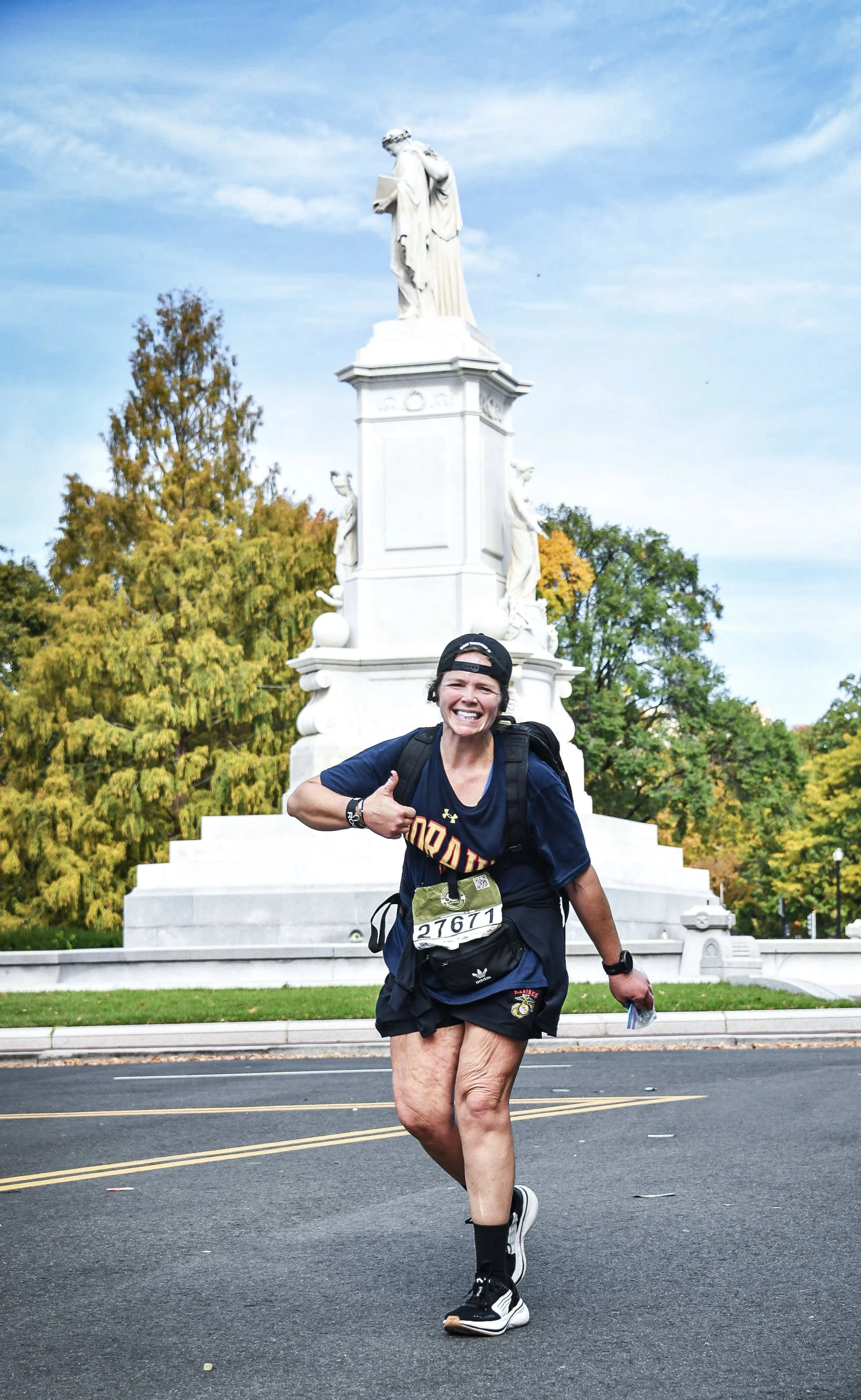
BLACK IRON RADIO EP. 385: Kathy's Story:400 Pounds to a Decade of Showing Up
Kathy was close to 400 pounds at 19, but her weight is genuinely the least interesting thing about her, and that's kind of the whole point of this episode.
Morgan and Brooke sit down with Kathy Novak, Brooke's client of many years and a friend for over a decade. Kathy was close to 400 pounds at 19, and what started as a weight loss journey turned into something bigger: years of setbacks, injuries, plateaus, and slow stretches, and a body she learned to value for what it could do instead of how it looked. She gets into the early rush of watching the scale drop, the long stretches where the number stopped mattering, and the line she keeps coming back to through all of it: thankful for the opportunity to keep showing up.
This isn't really a weight loss story. It's a story about what keeps you going once the novelty wears off and life gets in the way.
Kathy Novak remembers a bike ride better than she remembers any number on a scale. She was nineteen, nearly 400 pounds, and she decided to ride her bike to the library on the military base where she lived. She made it there. She had to walk the bike home.
That's the moment she points to, not a diagnosis, not an intervention, just the realization that her body couldn't do something that simple. Twenty-two years later, Kathy is a longtime Black Iron client, coached by Brooke Haas, and her resume now includes CrossFit competitions, a half Ironman, half marathons, and coaching a developmental club lacrosse team. But ask anyone who's actually heard her tell this story, her coach included, and they'll say the same thing: the weight loss is the least interesting part.
Losing the Weight Was Never the Complicated Part
Here's what actually got Kathy from nearly 400 pounds to a goal weight: a list of foods. That's it. After two of her mom's siblings died two years apart in their twenties (Kathy is literally named after the aunt she lost), her family pushed her to see a nurse practitioner named Lorraine Day. Lorraine didn't hand her a calorie target or a macro breakdown. She gave her a list of foods and said, "I'm not gonna tell you how much. Eat from these foods. I don't care what you do."
Kathy dropped 35 pounds in three weeks. She set a goal to lose 50 pounds by her 20th birthday and blew past it, 54 pounds in two and a half months. That part of the story reads like a before-and-after ad, and it's also the part that fell apart fastest. Once she started working out on top of the restriction, her progress stalled and she had no idea why, because she didn't understand energy balance. Nobody had told her that a body training harder needs more fuel, not less. She kept cutting food to try to force the scale to move, which is the opposite of what her body needed. Losing weight fast was never the hard part. Understanding what she was actually doing to her body was.
CrossFit Didn't Change Her Body First, It Changed What She Was Measuring
Years later in Florida, a friend from her restaurant job dragged her into a CrossFit box tucked into a tiny bay in St. Augustine, run by a guy named Bobby. Three people. Ten kettlebells. Two barbells. Kathy walked in at 280 to 290 pounds.
What hooked her wasn't the results. It was that for the first time, effort counted for more than appearance. "It's not about having a smaller body because I need to look a certain way so somebody accepts me," she said. Inside that gym, success looked like a banded pull-up, a burpee, a 400-meter run, stepping onto a loaded box. A 200-pound pull-up is genuinely easier than a 300-pound pull-up. That's not vanity, that's physics, and it gave Kathy a scoreboard that had nothing to do with the mirror. CrossFit didn't hand her a smaller body. It handed her a reason to care about something other than the size of the one she had.
She Wasn't Training For Herself, She Was Training For Her Family
The backstory here matters. Kathy's mom lost her brother and sister two years apart, both in their twenties, both killed by someone else's mistakes. Kathy is named after the aunt. Her brother is named after the uncle. That loss is the reason her family pushed her to a nurse practitioner in the first place, because the thought of losing another Cathy was unbearable.
Her mom has also been sick for most of Kathy's life. Twenty-eight major surgeries. Cancer. In and out of hospitals for as long as Kathy can remember. Her dad was deployed 90 months during her childhood, and Kathy spent her hardest training years 800 miles from home, carrying a sense of responsibility to "put up a fight" for a family that had already lost too much. She describes some of her early motivation as spite, and she's honest about what that meant: "I don't have hate in my heart. I can't really be mean, but that was my way of being mean." Instead of taking family pain out on another person, she put it into the gym. That's not a strategy anyone should have to invent at nineteen, but it's the one that kept her showing up.
Her Own Head Was the Hardest Coach She Ever Had
For years, Kathy ran on an internal voice she calls "Miss 50," a nickname she used to mock herself for doing things halfway. Finish a half Ironman instead of a full one, and Miss 50 was right there: "Of course you can't do a full Ironman." She'd use that voice on purpose, rage-baiting herself into training on the days she wanted to quit. Her words for it: "I don't need any more than six seconds." It worked, but it's not exactly a sustainable relationship with yourself.
The softer version of Kathy is newer, and she credits the last two years, a lot of it built alongside Brooke, with teaching her how to access it. Even this past winter, she hit a real slump. She'd had a strong season of consistent tracking, then overcorrected into treats and lost steps and spiraled about the treats, then tried to fix that by getting stricter again instead of just recalibrating. It took her two or three months to land on the line that actually fixed it: "You don't have a food issue, you have a food solution." Discipline got her a long way. Learning to talk to herself like someone worth being patient with is what's keeping her there.
Everyone Had an Opinion About Her Body, Nobody Asked For One
As a teenager, Kathy couldn't go out to eat with her family without strangers making comments to her mother about how much food was on the table. Later, after she'd lost weight and started competing, a guy she went on a date with told her he wanted to make her his "project" and get her lean in four months. Her response, on the spot: "Take care. Go play in traffic."
And here's the part that should reframe how anyone thinks about this: once Kathy actually did get leaner, the comments didn't stop, they just switched direction. People in her own gym told her she wasn't "too thin yet," as if her body was still theirs to weigh in on. Bigger, smaller, it didn't matter. Somebody always had a take. That's the part of this story that never gets fixed by hitting a goal weight, because the goal was never other people's approval to begin with.
The Takeaway
Kathy said some version of the same sentence at least seven times on this episode: thankful for the opportunity to keep trying, thankful for the opportunity to keep showing up. Brooke's read on her, after coaching her for the past year and knowing her for over a decade, is that the number on the scale was never the reward for Kathy. The process was. That's the piece Brooke says she wishes every client could borrow.
If you're looking for the tactical playbook here, it's genuinely simple: eat from a real list of food, understand that training harder means fueling more not less, and let effort become the thing you measure instead of the mirror. The part that actually took Kathy two decades wasn't any of that. It was believing she was allowed to try in the first place, and learning to talk to herself like someone worth showing up for. Trust yourself sooner. Take the action instead of sitting with it. Stop asking everyone else for permission to change your own life.
🎙️ WANT MORE? SUBSCRIBE TO BLACK IRON RADIO!
If you enjoyed this conversation, check out more episodes of Black Iron Radio, where we cut through the noise and give you real, no-BS advice on feeling, performing, and looking your best. Each week we share practical nutrition, training, and wellness strategies and tips to help you succeed.
